

Monday, October 26, 2026
Science
No Result
View All Result
  • Login
  • HOME
  • SCIENCE NEWS
  • CONTACT US
  • HOME
  • SCIENCE NEWS
  • CONTACT US
No Result
View All Result
Scienmag
No Result
View All Result
Home Science News Medicine

Sports team participation accounts for part of students’ physical activity association

October 26, 2026
in Medicine
Ophelia Keating
By Ophelia Keating Scienmag Editorial Profile - Health Services Research
Reading Time: 3 mins read
0
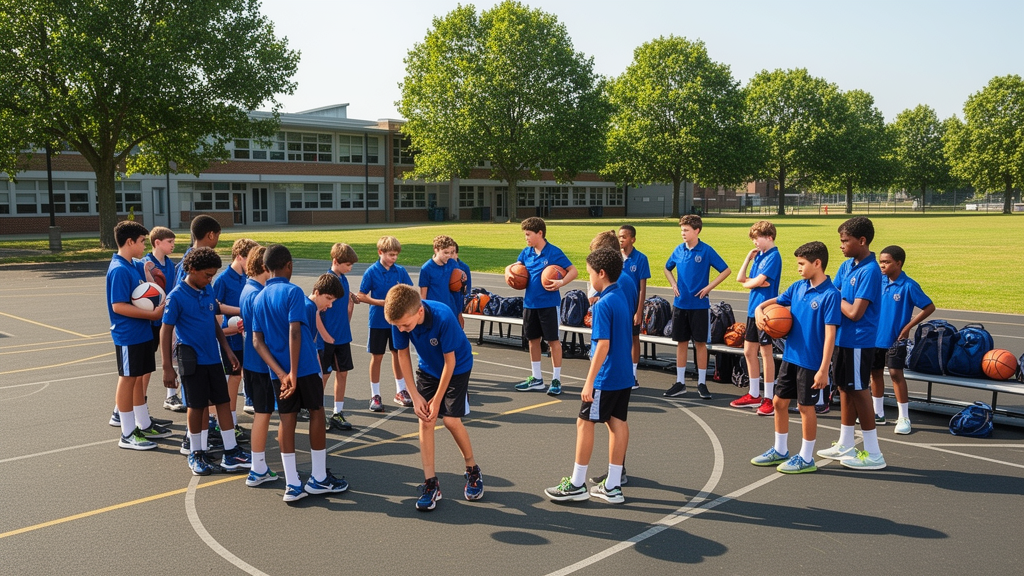
Sports team participation accounts for part of students’ physical activity association

Sports team participation accounts for part of students’ physical activity association

65
SHARES
587
VIEWS
Share on FacebookShare on Twitter
ADVERTISEMENT

A nationally representative survey of 8,981 undergraduates in Taiwan found that 28.6% met the country’s criterion for regular physical activity in 2023. Students with higher perceived physical literacy were more likely to meet that criterion and to participate in sports teams. Statistical modeling indicated that sports team participation accounted for part of the association between physical literacy and regular activity, with a standardized indirect association of 0.25 (95% confidence interval, 0.22–0.30). Because the study was observational, its results do not show that physical literacy or joining a sports team caused students to be more active.

The analysis used the Student Sports Participation Survey, administered by Taiwan’s Sports Administration under the Ministry of Education. Researchers examined the 2023 survey and compared it with 2020 data collected during the COVID-19 pandemic. Perceived physical literacy was measured with the ministry’s standardized self-report scale, adapted from a validated instrument. The measured concept included students’ motivation, confidence, and health-related understanding of physical activity. Sports team participation and regular physical activity were assessed with standardized survey items, and structural equation modeling was used to estimate direct and indirect associations among the three variables.

For the study’s primary measure, regular physical activity required at least three sessions each week, with each session lasting 30 minutes or more at an intensity that induced sweating and breathlessness. The researchers also conducted a sensitivity analysis using a World Health Organization-aligned threshold of at least 150 minutes per week. The findings remained robust under that alternative definition. Tests of configural, metric, and scalar measurement invariance supported the comparability of the study measures across the 2020 and 2023 periods, strengthening the basis for comparing the associations between survey years.

The indirect association between perceived physical literacy and regular physical activity through sports team participation was weaker in 2020 than in 2023. The study’s authors suggest that the contribution of structured participation may depend on the availability of opportunities to participate, including during a period when organized sport was likely more limited. That interpretation remains tentative because the survey did not measure relevant contextual variables. As a result, the findings cannot attribute the difference between years specifically to pandemic restrictions or establish how the surrounding environment changed these relationships. The comparison instead identifies a year-to-year difference in the strength of a modeled association within one national setting.

Taken together, the results support a connection among perceived physical literacy, sports team participation, and regular physical activity among Taiwanese university students. Higher physical literacy was associated with greater activity, and team membership statistically accounted for part of that relationship in the structural model. The study does not establish the direction of causation, and its observational design cannot determine whether students with more physical literacy joined teams more often, whether team participation encouraged activity, or whether other factors influenced both. The authors propose that universities could pair physical-literacy development with low-barrier opportunities for structured participation, but that policy direction would require evidence beyond the associations demonstrated in this survey.

Subject of Research: Associations among physical literacy, sports team participation, and physical activity in Taiwanese university students

Article Title: Perceived physical literacy, sports team participation, and regular physical activity among university students: a national survey study

Article References: Huang, C.-C., Cheng, Z.-Y., Wang, H.-Y., Yang, Y.-J., Lin, L.-H., Chung, F.-I., & Hsu, C.-T. (2026). Perceived physical literacy, sports team participation, and regular physical activity among university students: a national survey study. BMC Public Health. https://doi.org/10.1186/s12889-026-28535-2

Image Credits: AI Generated

DOI: 10.1186/s12889-026-28535-2

Keywords: physical literacy, physical activity, university students, sports teams, Taiwan, national survey, structural equation modeling, young adults, public health, COVID-19 comparison, Perceived, physical

Cite Scienmag News

Ophelia Keating. (October 26, 2026). Sports team participation accounts for part of students’ physical activity association. Scienmag. https://scienmag.com/sports-team-participation-accounts-for-part-of-students-physical-activity-association/


Ophelia Keating. "Sports team participation accounts for part of students’ physical activity association." Scienmag, 26 October 2026, https://scienmag.com/sports-team-participation-accounts-for-part-of-students-physical-activity-association/. Accessed 26 October 2026.

Ophelia Keating. "Sports team participation accounts for part of students’ physical activity association." Scienmag. October 26, 2026. https://scienmag.com/sports-team-participation-accounts-for-part-of-students-physical-activity-association/

Tags: association between physical literacy and exerciseCOVID-19 comparisonCOVID-19 impact on student physical activityhealth understanding and student exercise habitsimpact of sports teams on student fitnessinfluence of sports teams on student health behaviorsmeasurement of physical literacy in university studentsmotivation and confidence in physical activitynational surveyPerceivedphysicalPhysical activityphysical literacyPhysical literacy and sports team participationPublic healthrole of sports participation in promoting physical activitysports teamsstructural equation modelingstructural equation modeling in sports researchstudent physical activity in Taiwansurvey-based study on student sports involvementTaiwanuniversity studentsyoung adults
Share26Tweet16
Previous Post

Rubber Tree Genome Links Wood Traits to 33 Genetic Associations

Next Post

Interprofessional conflict linked to communication, hierarchy and resources in Indian hospitals

Related Posts

Interprofessional conflict linked to communication, hierarchy and resources in Indian hospitals
Medicine

Interprofessional conflict linked to communication, hierarchy and resources in Indian hospitals

October 26, 2026
Global project to analyze 94,000 brain scans across eight disorders
Medicine

Global project to analyze 94,000 brain scans across eight disorders

October 26, 2026
Review maps interconnected drivers of Lassa fever in Nigeria
Medicine

Review maps interconnected drivers of Lassa fever in Nigeria

October 26, 2026
Retrospective study links CRKP pneumonia with higher mortality and microbial co-detections
Medicine

Retrospective study links CRKP pneumonia with higher mortality and microbial co-detections

October 26, 2026
School climate associated with later distress among Chinese adolescents
Medicine

School climate associated with later distress among Chinese adolescents

October 26, 2026
Clinical review addresses recurrent infections with long-term catheters
Medicine

Clinical review addresses recurrent infections with long-term catheters

October 26, 2026
Next Post
Interprofessional conflict linked to communication, hierarchy and resources in Indian hospitals

Interprofessional conflict linked to communication, hierarchy and resources in Indian hospitals

  • Mothers who receive childcare support from maternal grandparents show more optimized

    Mothers who receive childcare support from maternal grandparents show more parental warmth, finds NTU Singapore study

    27656 shares
    Share 11059 Tweet 6912
  • University of Seville Breaks 120-Year-Old Mystery, Revises a Key Einstein Concept

    1061 shares
    Share 424 Tweet 265
  • Bee body mass, pathogens and local climate influence heat tolerance

    682 shares
    Share 273 Tweet 171
  • Researchers record first-ever images and data of a shark experiencing a boat strike

    546 shares
    Share 218 Tweet 137
  • Groundbreaking Clinical Trial Reveals Lubiprostone Enhances Kidney Function

    531 shares
    Share 212 Tweet 133
Science

Embark on a thrilling journey of discovery with Scienmag.com—your ultimate source for cutting-edge breakthroughs. Immerse yourself in a world where curiosity knows no limits and tomorrow’s possibilities become today’s reality!

RECENT NEWS

  • Path analysis links health, socioeconomic conditions and happiness in Iranian cohort
  • Interprofessional conflict linked to communication, hierarchy and resources in Indian hospitals
  • Sports team participation accounts for part of students’ physical activity association
  • Rubber Tree Genome Links Wood Traits to 33 Genetic Associations

Categories

  • Agriculture
  • Anthropology
  • Archaeology
  • Athmospheric
  • Biology
  • Biotechnology
  • Blog
  • Bussines
  • Cancer
  • Chemistry
  • Climate
  • Earth Science
  • Editorial Policy
  • Marine
  • Mathematics
  • Medicine
  • Pediatry
  • Policy
  • Psychology & Psychiatry
  • Science Education
  • Science News
  • Social Science
  • Space
  • Technology and Engineering

Subscribe to Blog via Email

Enter your email address to subscribe to this blog and receive notifications of new posts by email.

Join 5,151 other subscribers

© 2025 Scienmag - Science Magazine

Welcome Back!

Login to your account below

Forgotten Password?

Retrieve your password

Please enter your username or email address to reset your password.

Log In
No Result
View All Result
  • HOME
  • SCIENCE NEWS
  • CONTACT US

© 2025 Scienmag - Science Magazine

Discover more from Science

Subscribe now to keep reading and get access to the full archive.

Continue reading