

Monday, October 26, 2026
Science
No Result
View All Result
  • Login
  • HOME
  • SCIENCE NEWS
  • CONTACT US
  • HOME
  • SCIENCE NEWS
  • CONTACT US
No Result
View All Result
Scienmag
No Result
View All Result
Home Science News Psychology & Psychiatry

Path analysis links health, socioeconomic conditions and happiness in Iranian cohort

October 26, 2026
in Psychology & Psychiatry
Glenn Wilkins
By Glenn Wilkins Scienmag Editorial Profile - Clinical Psychology
Reading Time: 3 mins read
0
Path analysis links health, socioeconomic conditions and happiness in Iranian cohort

Path analysis links health, socioeconomic conditions and happiness in Iranian cohort

65
SHARES
587
VIEWS
Share on FacebookShare on Twitter
ADVERTISEMENT

A cross-sectional analysis of 707 adults in Iran found that happiness was linked not only to quality of life and general health, but also to a network of socioeconomic, demographic and behavioral factors that included chronic disease and high-density lipoprotein cholesterol. The study used data from the Shahrekord component of the PERSIAN Cohort Study in southwestern Iran. Participants were 35 to 70 years old, with a mean age of 53.25 ± 9.03 years, and 52.8% were women. Their mean happiness score was 43.92 ± 12.50 on the assessment used in the cohort.

The researchers modeled several possible routes connecting these variables simultaneously. Demographic characteristics, socioeconomic circumstances, clinical conditions and behavioral risk factors were treated as predictors of general health and quality of life. Those two measures were then modeled as mediators of happiness. Path analysis was conducted in Stata to estimate direct relationships, indirect relationships through the proposed mediators, and total effects combining both routes. Because the study was cross-sectional, its statistical paths show associations within the analyzed model rather than establishing that one variable caused another or that changes in a factor would produce a corresponding change in happiness.

In the fitted model, higher socioeconomic status, employment and marriage were positively associated with happiness. Female sex and poorer general health had negative direct associations with the happiness score. The model’s broader set of important significant determinants included quality of life, general health status, socioeconomic status, male sex and total high-density lipoprotein cholesterol. The investigators also examined pathways involving common non-communicable diseases and their related risk factors. The findings therefore portray happiness as a construct embedded in a broader biopsychosocial pattern rather than as an outcome associated with health in isolation.

The final path model fit the observed data well. Its comparative fit index was 0.98, while the standardized root mean square residual was 0.017 and the root mean square error of approximation was 0.031. These model-fit statistics indicate that the proposed structure was consistent with the relationships in the dataset. The path analysis also separated direct associations from indirect effects passing through general health and quality of life, allowing the researchers to calculate total effects as the combination of the two. The study did not report longitudinal follow-up, experimental manipulation or evidence that the modeled causal sequence could be reversed.

Taken together, the results support the authors’ view that happiness and health are connected through intertwined clinical, social and behavioral conditions. Quality of life and general health emerged as central features of the network, while socioeconomic position, work and marital status were also associated with happiness scores. The authors suggest that stress reduction, physical activity, chronic disease management and quality-of-life improvement may be relevant domains for future health-promotion efforts, and they argue that measuring happiness could complement existing approaches to non-communicable disease prevention. Those implications remain proposals for intervention and prevention research rather than tested outcomes of this study. The principal evidence is observational and population-specific, so the clearest conclusion is that the fitted model identified meaningful associations among happiness, health, chronic conditions, socioeconomic circumstances and health-related behaviors in the Shahrekord cohort.

Subject of Research: Statistical associations among happiness, health, chronic diseases and socioeconomic factors in an Iranian adult cohort

Article Title: Relationship between common non-communicable diseases (NCDs), risk factors and happiness in Shahrekord PERSIAN Cohort Study: a path analysis model in Iran

Article References: Maarefi, J., Ahmadi, A., Kheiri, S., & Zarean, E. (2026). Relationship between common non-communicable diseases (NCDs), risk factors and happiness in Shahrekord PERSIAN Cohort Study: a path analysis model in Iran. BMC Psychology. https://doi.org/10.1186/s40359-026-05523-0

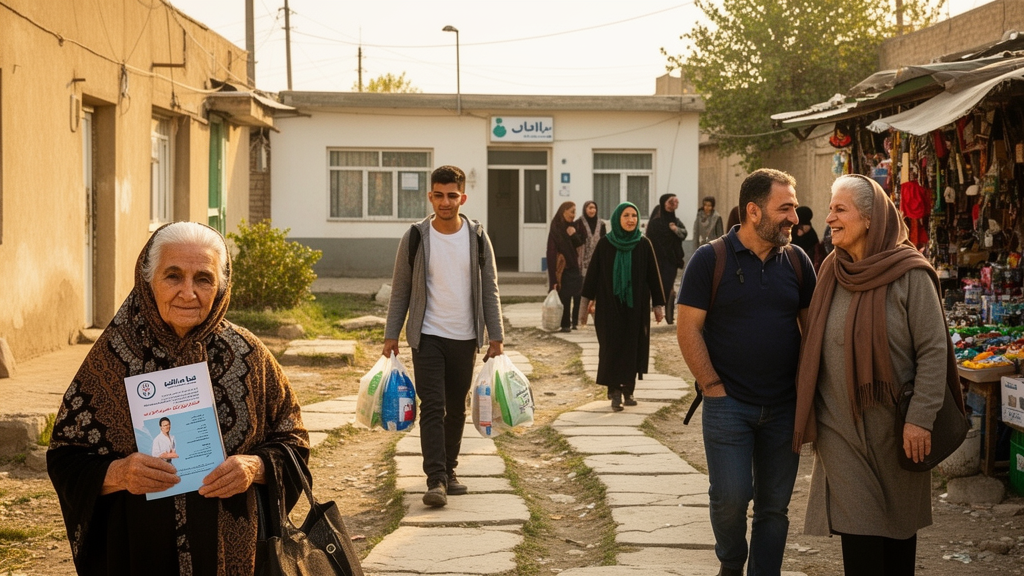
Image Credits: AI Generated

DOI: 10.1186/s40359-026-05523-0

Keywords: happiness, quality of life, path analysis, noncommunicable diseases, PERSIAN Cohort Study, Shahrekord cohort, socioeconomic status, general health, cholesterol, cross-sectional study, Relationship, between

Cite Scienmag News

Glenn Wilkins. (October 26, 2026). Path analysis links health, socioeconomic conditions and happiness in Iranian cohort. Scienmag. https://scienmag.com/path-analysis-links-health-socioeconomic-conditions-and-happiness-in-iranian-cohort/


Glenn Wilkins. "Path analysis links health, socioeconomic conditions and happiness in Iranian cohort." Scienmag, 26 October 2026, https://scienmag.com/path-analysis-links-health-socioeconomic-conditions-and-happiness-in-iranian-cohort/. Accessed 26 October 2026.

Glenn Wilkins. "Path analysis links health, socioeconomic conditions and happiness in Iranian cohort." Scienmag. October 26, 2026. https://scienmag.com/path-analysis-links-health-socioeconomic-conditions-and-happiness-in-iranian-cohort/

Tags: betweencholesterolchronic disease and HDL cholesterol impact on happinesscross-sectional studycross-sectional study on happiness and health in Irandemographic and behavioral predictors of happiness in Irangeneral healthhappinesshappiness determinants in Iranian adultsIranian cohort health and socioeconomic factorsmediating role of health and quality of life in happinessnoncommunicable diseasespath analysispath analysis of quality of life and happinessPERSIAN Cohort StudyQuality of LifeRelationshipShahrekord cohortShahrekord PERSIAN Cohort Study on happinesssocioeconomic influences on health and well-being in Iransocioeconomic statussocioeconomic status and marriage effects on happiness in Iranian populationstatistical modeling of happiness
Share26Tweet16
Previous Post

Interprofessional conflict linked to communication, hierarchy and resources in Indian hospitals

Next Post

Women’s Pulse Pressure Rises Earlier Than Men’s, Framingham Analysis Finds

Related Posts

Survey links anxiety to recent suicidal ideation among Bangladeshi ever-married women
Psychology & Psychiatry

Survey links anxiety to recent suicidal ideation among Bangladeshi ever-married women

October 26, 2026
Case report raises speculative link between short-form video use and rectal foreign-body insertion
Psychology & Psychiatry

Case report raises speculative link between short-form video use and rectal foreign-body insertion

October 26, 2026
Psychological capital helps students manage foreign language anxiety
Psychology & Psychiatry

Psychological capital helps students manage foreign language anxiety

October 26, 2026
Chinese BASC-3-C shows initial reliability and validity in children aged 6–11
Psychology & Psychiatry

Chinese BASC-3-C shows initial reliability and validity in children aged 6–11

October 26, 2026
A qualitative exploration of psychological adaptation and posttraumatic growth after termination of pregnancy for fetal anomalies in subsequent pregnancy and childbirth
Psychology & Psychiatry

A qualitative exploration of psychological adaptation and posttraumatic growth after termination of pregnancy for fetal anomalies in subsequent pregnancy and childbirth

October 26, 2026
Climate-crisis psychology shows similar network structure in Argentina and Spain
Psychology & Psychiatry

Climate-crisis psychology shows similar network structure in Argentina and Spain

October 26, 2026
Next Post
Women’s Pulse Pressure Rises Earlier Than Men’s, Framingham Analysis Finds

Women’s Pulse Pressure Rises Earlier Than Men’s, Framingham Analysis Finds

  • Mothers who receive childcare support from maternal grandparents show more optimized

    Mothers who receive childcare support from maternal grandparents show more parental warmth, finds NTU Singapore study

    27656 shares
    Share 11059 Tweet 6912
  • University of Seville Breaks 120-Year-Old Mystery, Revises a Key Einstein Concept

    1061 shares
    Share 424 Tweet 265
  • Bee body mass, pathogens and local climate influence heat tolerance

    682 shares
    Share 273 Tweet 171
  • Researchers record first-ever images and data of a shark experiencing a boat strike

    546 shares
    Share 218 Tweet 137
  • Groundbreaking Clinical Trial Reveals Lubiprostone Enhances Kidney Function

    531 shares
    Share 212 Tweet 133
Science

Embark on a thrilling journey of discovery with Scienmag.com—your ultimate source for cutting-edge breakthroughs. Immerse yourself in a world where curiosity knows no limits and tomorrow’s possibilities become today’s reality!

RECENT NEWS

  • Women’s Pulse Pressure Rises Earlier Than Men’s, Framingham Analysis Finds
  • Path analysis links health, socioeconomic conditions and happiness in Iranian cohort
  • Interprofessional conflict linked to communication, hierarchy and resources in Indian hospitals
  • Sports team participation accounts for part of students’ physical activity association

Categories

  • Agriculture
  • Anthropology
  • Archaeology
  • Athmospheric
  • Biology
  • Biotechnology
  • Blog
  • Bussines
  • Cancer
  • Chemistry
  • Climate
  • Earth Science
  • Editorial Policy
  • Marine
  • Mathematics
  • Medicine
  • Pediatry
  • Policy
  • Psychology & Psychiatry
  • Science Education
  • Science News
  • Social Science
  • Space
  • Technology and Engineering

Subscribe to Blog via Email

Enter your email address to subscribe to this blog and receive notifications of new posts by email.

Join 5,151 other subscribers

© 2025 Scienmag - Science Magazine

Welcome Back!

Login to your account below

Forgotten Password?

Retrieve your password

Please enter your username or email address to reset your password.

Log In
No Result
View All Result
  • HOME
  • SCIENCE NEWS
  • CONTACT US

© 2025 Scienmag - Science Magazine

Discover more from Science

Subscribe now to keep reading and get access to the full archive.

Continue reading