

Monday, October 26, 2026
Science
No Result
View All Result
  • Login
  • HOME
  • SCIENCE NEWS
  • CONTACT US
  • HOME
  • SCIENCE NEWS
  • CONTACT US
No Result
View All Result
Scienmag
No Result
View All Result
Home Science News Medicine

Retrospective study links CRKP pneumonia with higher mortality and microbial co-detections

October 26, 2026
in Medicine
Morgan Morrow
By Morgan Morrow Scienmag Editorial Profile - Bacteriology
Reading Time: 3 mins read
0
Retrospective study links CRKP pneumonia with higher mortality and microbial co-detections

Retrospective study links CRKP pneumonia with higher mortality and microbial co-detections

65
SHARES
587
VIEWS
Share on FacebookShare on Twitter
ADVERTISEMENT

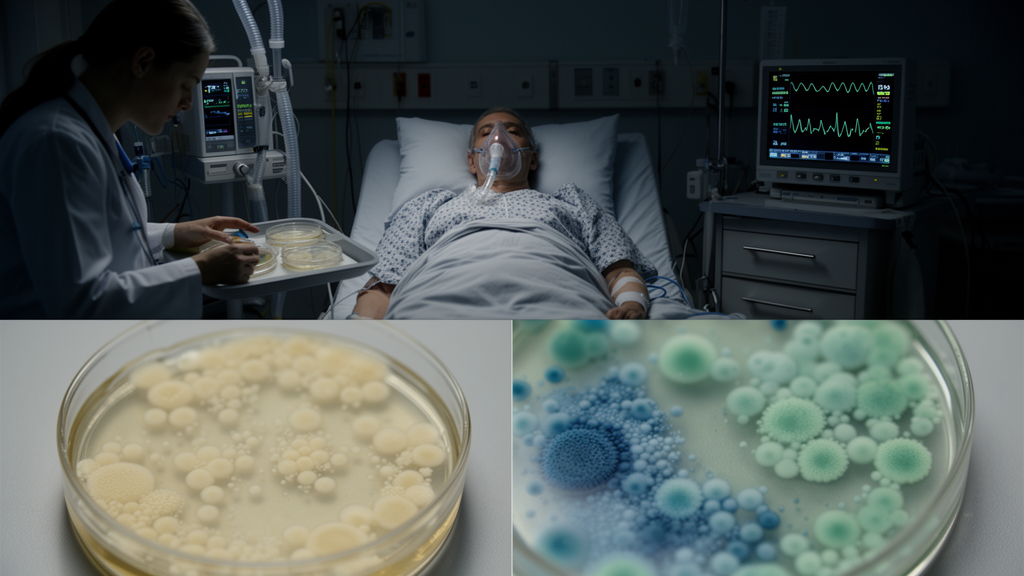
A retrospective study of 158 patients with Klebsiella pneumoniae pulmonary infection found that the 81 patients with carbapenem-resistant K. pneumoniae (CRKP) had more microbial co-detections, greater use of mechanical ventilation, longer intensive-care stays and higher in-hospital mortality than the 77 patients with carbapenem-susceptible K. pneumoniae (CSKP). The study also evaluated metagenomic next-generation sequencing (mNGS) for detecting carbapenem-resistance genes and identified two laboratory markers associated with 28-day mortality among patients with CRKP. Researchers compared clinical data, laboratory findings and pathogen profiles in the two groups.

Their baseline characteristics were similar, but dyspnea was reported more often in the CRKP group, affecting 53.1% of patients compared with 35.1% of those with CSKP ( P = 0.034). CRKP patients also had a higher white blood cell count ( P = 0.035). The clearest differences involved acute resource use and outcomes: mechanical ventilation was significantly more frequent with CRKP ( P < 0.001), intensive-care stays were longer ( P = 0.001), and in-hospital mortality was 27.2% in the CRKP group versus 6.5% in the CSKP group ( P = 0.001).

These are retrospective group associations and do not show that carbapenem resistance itself caused the differences. The investigators used mNGS to characterize accompanying microorganisms and examine resistance genes in the clinical samples. Co-detection of additional microorganisms was significantly more common in patients with CRKP than in those with CSKP, occurring in 43.2% and 24.7% of the groups, respectively ( P = 0.022).

The difference was especially associated with Acinetobacter baumannii . For detecting carbapenem resistance, the mNGS results had an overall accuracy of 93.06% and a sensitivity of 87.65% relative to culture-based antimicrobial susceptibility testing. The bla KPC gene was the predominant resistance gene detected, with 72 cases.

The authors characterized mNGS as a complementary diagnostic strategy that can add resistance-gene information to conventional culture and susceptibility testing. To examine 28-day mortality within the CRKP cohort, the researchers used least absolute shrinkage and selection operator regression, followed by multivariable logistic regression, to identify independent statistical predictors. Fibrinogen was associated with lower odds of death, with an odds ratio of 0.45 ( P = 0.019).

Interleukin-6 was associated with higher odds, with an odds ratio of 1.08 for each 100-unit increase ( P = 0.036). These analyses position fibrinogen and IL-6 as accessible laboratory indicators that may help stratify short-term mortality risk in CRKP pulmonary infection, but the retrospective design does not establish causation or determine how well the markers perform in other populations. Taken together, the results portray CRKP pulmonary infection as being associated with a heavier acute-care burden than infection by susceptible strains.

The resistance-gene findings also show that mNGS detected a high proportion of carbapenem-resistance cases in this study, with bla KPC predominating. The study is limited by its retrospective design and its population of 158 patients, 81 of whom had CRKP, so the reported associations should be interpreted as observations within the analyzed cohort rather than universal effects of the organism or resistance phenotype.

Subject of Research: Clinical, microbiological and prognostic features of carbapenem-resistant Klebsiella pneumoniae pulmonary infection

Article Title: Clinical features, microbial co-detection profiles, and 28-day mortality of carbapenem-resistant Klebsiella pneumoniae pneumonia: a retrospective study with mNGS-based resistance gene detection

Article References: Liang, Y., Fu, X., Xu, H., Cui, L., Xing, Z., Ren, J., Xiao, H., Lv, P., & Hu, S. (2026). Clinical features, microbial co-detection profiles, and 28-day mortality of carbapenem-resistant Klebsiella pneumoniae pneumonia: a retrospective study with mNGS-based resistance gene detection. BMC Infectious Diseases. https://doi.org/10.1186/s12879-026-14327-x

Image Credits: AI Generated

DOI: 10.1186/s12879-026-14327-x

Keywords: CRKP, Klebsiella pneumoniae, pneumonia, metagenomic sequencing, carbapenem resistance, microbial co-detection, 28-day mortality, fibrinogen, interleukin-6, antimicrobial susceptibility, Clinical, features

Cite Scienmag News

Morgan Morrow. (October 26, 2026). Retrospective study links CRKP pneumonia with higher mortality and microbial co-detections. Scienmag. https://scienmag.com/retrospective-study-links-crkp-pneumonia-with-higher-mortality-and-microbial-co-detections/


Morgan Morrow. "Retrospective study links CRKP pneumonia with higher mortality and microbial co-detections." Scienmag, 26 October 2026, https://scienmag.com/retrospective-study-links-crkp-pneumonia-with-higher-mortality-and-microbial-co-detections/. Accessed 26 October 2026.

Morgan Morrow. "Retrospective study links CRKP pneumonia with higher mortality and microbial co-detections." Scienmag. October 26, 2026. https://scienmag.com/retrospective-study-links-crkp-pneumonia-with-higher-mortality-and-microbial-co-detections/

Tags: 28-day mortalityantimicrobial resistance detection methodsantimicrobial susceptibilitycarbapenem resistancecarbapenem-resistant K. pneumoniae (CRKP)clinicalclinical features of CRKP pneumoniaCRKPCRKP and in-hospital mortalityfeaturesfibrinogenimpact of CRKP on clinical outcomesinterleukin-6Klebsiella pneumoniaeKlebsiella pneumoniae pulmonary infectionmetagenomic next-generation sequencing (mNGS) in infectious diseasemetagenomic sequencingmicrobial co-detectionmicrobial co-detections in pneumoniamicrobiome profiling in respiratory infectionspneumoniapredictors of mortality in pneumonia patientsresource utilization in resistant bacterial infectionsretrospective study of bacterial pneumonia outcomes
Share26Tweet16
Previous Post

Blood DNA biomarkers track progression during prostate cancer radioligand therapy

Next Post

Survey links anxiety to recent suicidal ideation among Bangladeshi ever-married women

Related Posts

School climate associated with later distress among Chinese adolescents
Medicine

School climate associated with later distress among Chinese adolescents

October 26, 2026
Clinical review addresses recurrent infections with long-term catheters
Medicine

Clinical review addresses recurrent infections with long-term catheters

October 26, 2026
Long COVID, lower quality of life in Chinese IBD patients: cross-sectional study
Medicine

Long COVID, lower quality of life in Chinese IBD patients: cross-sectional study

October 26, 2026
Observational cohort links baloxavir to faster influenza A fever resolution in children
Medicine

Observational cohort links baloxavir to faster influenza A fever resolution in children

October 26, 2026
CDC selects UCSF-led center to improve dementia care nationwide
Medicine

CDC selects UCSF-led center to improve dementia care nationwide

October 26, 2026
Behavioural risk profiles associated with non-communicable diseases in Tlokweng, South-East District, Botswana
Medicine

Behavioural risk profiles associated with non-communicable diseases in Tlokweng, South-East District, Botswana

October 26, 2026
Next Post
Survey links anxiety to recent suicidal ideation among Bangladeshi ever-married women

Survey links anxiety to recent suicidal ideation among Bangladeshi ever-married women

  • Mothers who receive childcare support from maternal grandparents show more optimized

    Mothers who receive childcare support from maternal grandparents show more parental warmth, finds NTU Singapore study

    27656 shares
    Share 11059 Tweet 6912
  • University of Seville Breaks 120-Year-Old Mystery, Revises a Key Einstein Concept

    1061 shares
    Share 424 Tweet 265
  • Bee body mass, pathogens and local climate influence heat tolerance

    682 shares
    Share 273 Tweet 171
  • Researchers record first-ever images and data of a shark experiencing a boat strike

    546 shares
    Share 218 Tweet 137
  • Groundbreaking Clinical Trial Reveals Lubiprostone Enhances Kidney Function

    531 shares
    Share 212 Tweet 133
Science

Embark on a thrilling journey of discovery with Scienmag.com—your ultimate source for cutting-edge breakthroughs. Immerse yourself in a world where curiosity knows no limits and tomorrow’s possibilities become today’s reality!

RECENT NEWS

  • Survey links anxiety to recent suicidal ideation among Bangladeshi ever-married women
  • Retrospective study links CRKP pneumonia with higher mortality and microbial co-detections
  • Blood DNA biomarkers track progression during prostate cancer radioligand therapy
  • B cells organize tumor-killing T cells in mouse breast cancer study

Categories

  • Agriculture
  • Anthropology
  • Archaeology
  • Athmospheric
  • Biology
  • Biotechnology
  • Blog
  • Bussines
  • Cancer
  • Chemistry
  • Climate
  • Earth Science
  • Editorial Policy
  • Marine
  • Mathematics
  • Medicine
  • Pediatry
  • Policy
  • Psychology & Psychiatry
  • Science Education
  • Science News
  • Social Science
  • Space
  • Technology and Engineering

Subscribe to Blog via Email

Enter your email address to subscribe to this blog and receive notifications of new posts by email.

Join 5,151 other subscribers

© 2025 Scienmag - Science Magazine

Welcome Back!

Login to your account below

Forgotten Password?

Retrieve your password

Please enter your username or email address to reset your password.

Log In
No Result
View All Result
  • HOME
  • SCIENCE NEWS
  • CONTACT US

© 2025 Scienmag - Science Magazine

Discover more from Science

Subscribe now to keep reading and get access to the full archive.

Continue reading