


A peer-reviewed mouse study has shown that engineered, nonpathogenic Escherichia coli can carry a Salmonella-targeting bacteriophage into the gut, where the virus multiplied as the pathogen arrived and protected the animals from oral infection. The Virginia Tech team called the bacteria-phage combination a “lytic phage-producing lysogen,” or “lyto-lysogen.” Published in Nature Microbiology, the experiment provides laboratory proof of concept for a preventive strategy based on deploying an antibacterial virus before Salmonella becomes established. It does not show that the approach is a safe or effective treatment for people, nor does it demonstrate protection against bacterial infections already underway.
The strategy addresses a central obstacle in intestinal phage therapy: phages and bacteria commonly coexist for long periods in the gut, making it difficult to achieve the high phage-to-bacteria ratio needed to control an intestinal infection. Hsu explained that the difficulty becomes greater after infection begins because bacteria may be inaccessible to freely circulating phages, having already moved into the mucosa or cells of the body. A strategy that waits until disease is established must therefore overcome both problems of access and amplification. The investigators instead engineered a living bacterial carrier to establish a supply of Salmonella-specific phages before exposure, allowing the viruses to meet the incoming pathogen at an early stage.
To construct this system, the researchers modified a harmless strain of E. coli so that it carried a phage capable of infecting Salmonella. Genetic changes allowed the phage to be maintained and produced in the non-Salmonella host. When released into the gut, the phage could infect Salmonella and enter the lytic cycle, in which replicating viruses rupture their bacterial hosts. Lysis released additional phages, which could continue the cycle and rapidly increase the number of viruses targeting Salmonella. The engineered E. coli therefore acted as a local production platform for an antibacterial virus, while the lytic infection of Salmonella supplied a mechanism for phage amplification.
Salmonella normally can detect phage DNA produced by non-Salmonella bacteria and prevent it from replicating. The team addressed this barrier by adding a Salmonella gene to the E. coli genome. Lead author and Virginia Tech postdoctoral fellow Rogerio A. Bataglioli said this genetic addition caused Salmonella to perceive the phage DNA from the engineered E. coli as less foreign. The modification supported the intended cascade: E. coli produced the antipathogen phage, the phage infected Salmonella, it propagated and lysed the bacterial cells, and the phages produced by infected Salmonella continued replicating. This self-amplifying interaction was the central feature of the preventive design.
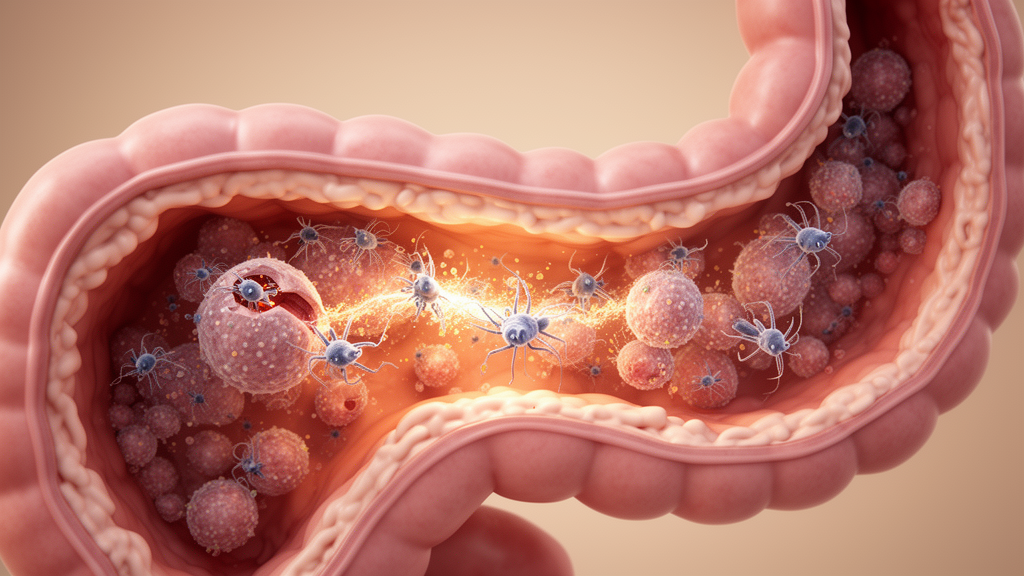
The protective effect occurred before the animals developed an established infection. The engineered bacteria generated a high density of Salmonella-specific phages in the gut, creating what Hsu described as a protective lining of antipathogen phages. Oral Salmonella encountered that phage-rich environment after passing through the stomach and, according to Hsu, at its weakest point. The phages then infected the incoming bacteria, replicated through the lytic cycle and lysed their hosts, allowing the virus population to expand as the targeted bacteria were destroyed. Because the study tested this sequence before Salmonella could establish a persistent population, it demonstrated prophylaxis in the mouse model rather than clearance of an advanced infection.
Salmonella was selected because of its substantial global disease burden, its ability to cause severe illness in groups including older adults, children and people with HIV, the prevalence of antibiotic resistance, and its designation as a high-priority pathogen by the US Centers for Disease Control and Prevention. Those features motivated the researchers to target it, but their proposed platform is not inherently restricted to a single organism. Bataglioli said the team is starting with Salmonella and could explore adapting the system by placing other phages in the engineered carrier to target different bacterial pathogens. Hsu similarly described the work as a framework in which other phages could be introduced to target other bacteria, a prospect that has not yet been demonstrated experimentally in the reported study.
Phages are viruses that infect bacteria and do not infect humans or animals, making them biologically distinct from the viral pathogens targeted by conventional antiviral medicines. Their use against bacterial infections nevertheless faces the central intestinal problem of long-term coexistence between phages and bacteria. A high ratio of phages to bacteria can be difficult to establish in the gut, and bacteria that enter host mucosa or cells may no longer be readily accessible to phages. The engineered host-bacteria system was designed around these limitations. It supplied a Salmonella-specific virus in advance, used a living bacterium to maintain phage production and exploited lysis to amplify the virus precisely when the target pathogen was encountered.
The reported result supports the conceptual feasibility of using an engineered gut bacterium as a preventive carrier for a phage payload. The nonpathogenic E. coli supplied the production platform, the Salmonella gene reduced the likelihood that Salmonella would block replication of phage DNA from the carrier, and the lytic cycle converted infection of the target bacteria into release of additional phages. In this mouse experiment, that combination generated a phage-rich environment before oral Salmonella exposure and protected the animals from infection. The evidence therefore connects the engineered delivery system, phage amplification and prevention of infection within the tested mouse model; it does not establish the approach’s safety or effectiveness in humans.
The investigators presented phage therapy as an additional potential weapon against bacterial disease rather than a replacement for antibiotics. Bataglioli said that, eventually, the approach might be used against other diseases if it is adapted to additional phages and bacterial targets. That statement describes a future direction, not a tested clinical outcome. The experiment was confined to engineered E. coli, a Salmonella-specific phage and oral Salmonella challenge in mice. It did not show protection against other pathogens, did not test the strategy in people and did not establish whether the same preventive effect would occur outside the laboratory conditions reported. The supported conclusion is correspondingly narrow: in mice, an engineered gut bacterium produced Salmonella-specific phages that amplified upon encountering the pathogen and protected against oral infection.
Subject of Research: Preventive bacteriophage delivery by engineered gut bacteria against Salmonella in mice
Article Title: First-of-its-kind preventative phage therapy provides promising results
Article References: First-of-its-kind preventative phage therapy provides promising results. Original publication (Bibliographic details unavailable.)
Image Credits: AI Generated
DOI: Not provided
Keywords: bacteriophages, Salmonella, phage therapy, engineered E. coli, gut microbiome, lytic cycle, mouse study, antibiotic resistance, infectious disease, viral science, First-of-its-kind, preventative
Cite Scienmag News
Kristina Jarvis. (October 26, 2026). Engineered gut bacteria produce phages that prevent Salmonella infection in mice. Scienmag. https://scienmag.com/engineered-gut-bacteria-produce-phages-that-prevent-salmonella-infection-in-mice/
Kristina Jarvis. "Engineered gut bacteria produce phages that prevent Salmonella infection in mice." Scienmag, 26 October 2026, https://scienmag.com/engineered-gut-bacteria-produce-phages-that-prevent-salmonella-infection-in-mice/. Accessed 26 October 2026.
Kristina Jarvis. "Engineered gut bacteria produce phages that prevent Salmonella infection in mice." Scienmag. October 26, 2026. https://scienmag.com/engineered-gut-bacteria-produce-phages-that-prevent-salmonella-infection-in-mice/


