

Monday, October 26, 2026
Science
No Result
View All Result
  • Login
  • HOME
  • SCIENCE NEWS
  • CONTACT US
  • HOME
  • SCIENCE NEWS
  • CONTACT US
No Result
View All Result
Scienmag
No Result
View All Result
Home Science News Chemistry

Research report: New doping method could boost the performance of organic semiconductors

October 26, 2026
in Chemistry
Bethany Barker
By Bethany Barker Scienmag Editorial Profile - Catalysis
Reading Time: 2 mins read
0
Research report: New doping method could boost the performance of organic semiconductors

Research report: New doping method could boost the performance of organic semiconductors

65
SHARES
587
VIEWS
Share on FacebookShare on Twitter
ADVERTISEMENT

A peer-reviewed study in Nature Materials reports that a chemical doping method generated up to 100 times more mobile electrical charges in the organic semiconductor P3HT than conventional doping. The strategy, called degradation-assisted doping, or DAD, relies on tris(pentafluorophenyl)borane (BCF), a Lewis acid that breaks down after transferring an electron to P3HT. Its decomposition removes the original dopant from the reaction while allowing additional electrons to be transferred.

Experiments on the P3HT-BCF system also found higher conductivity with BCF than with other commonly used dopants. Organic semiconductors are carbon-based materials that conduct electricity and may be used to make flexible, lightweight and potentially low-cost electronic devices. Their conductivity can be increased through doping, a process that adds mobile electrical charges to the material.

Conventional chemical dopants eventually reach a limit in the number of charges they can supply, restricting the achievable charge concentration and conductivity. The new method was investigated by researchers at Concordia University, the Institut national de la recherche scientifique (INRS) and York University. To examine how degradation-assisted doping works, the team combined laboratory experiments with computer simulations.

The researchers studied P3HT, the organic semiconductor, and BCF, the chemical dopant. They used nuclear magnetic resonance, optical spectroscopy, electron paramagnetic resonance and calorimetry to follow the system after BCF transferred an electron to P3HT. Computational modelling was also used to investigate the chemical reactions involved.

Together, these approaches showed that BCF breaks down after accepting an electron, with its reaction products leaving the process and permitting further electron transfer to occur. In the reported P3HT system, degradation-assisted doping produced mobile-charge concentrations up to 100 times greater than those obtained through conventional doping. BCF also yielded higher conductivity than other commonly tested dopants.

The findings therefore demonstrate a substantial increase in charge concentration and conductivity in the studied materials combination. The experiments do not establish how broadly the mechanism will work across other semiconductors, dopants or device structures, nor do they show the performance of completed commercial components. The study was jointly led by Melissa Berteau-Rainville of INRS and Ingo Salzmann, an associate professor in Concordia University’s Departments of Physics and Chemistry and Biochemistry.

Berteau-Rainville conducted her doctoral research under the co-supervision of Salzmann and Emanuele Orgiu, a professor at INRS. The work also involved Thomas Baumgartner, Christopher Caputo and Taylor Cosby at York University, along with additional researchers at INRS. The authors describe the results as establishing degradation-assisted doping as a strategy for improving organic-semiconductor performance, with possible relevance to flexible electronics, optoelectronic devices and thermoelectric technologies.

Those applications remain prospective: the reported evidence concerns a semiconductor-dopant system rather than finished devices. The paper, “Degradation-assisted doping of organic semiconductors enabled by Lewis acids,” was published in Nature Materials on 14 August 2026. The authors declared no competing interests.

Subject of Research: Degradation-assisted doping of the P3HT organic semiconductor using BCF

Article Title: New doping method could boost the performance of organic semiconductors

Article References: New doping method could boost the performance of organic semiconductors. Original publication (Bibliographic details unavailable.)

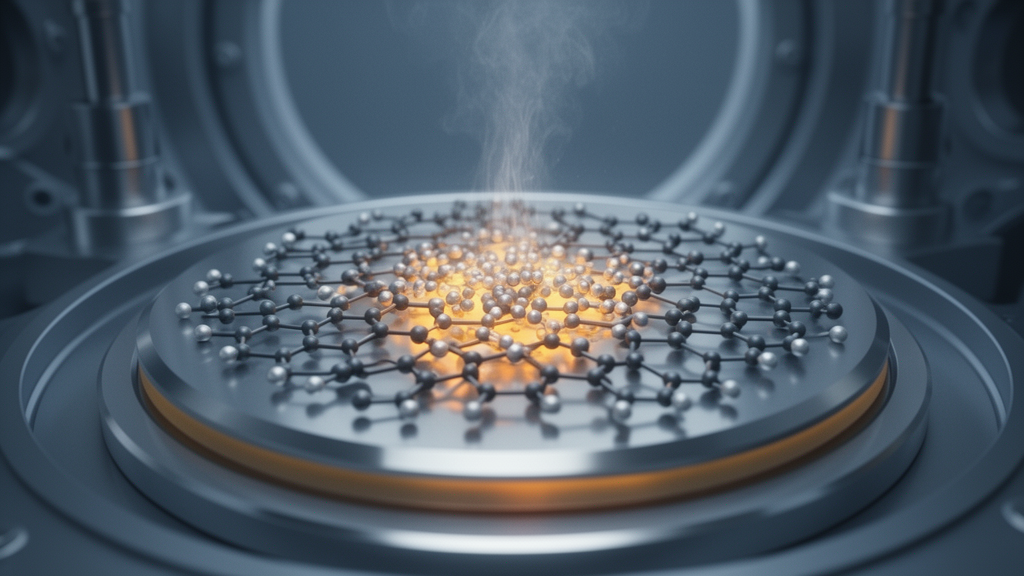
Image Credits: AI Generated

DOI: Not provided

Keywords: organic semiconductors, degradation-assisted doping, P3HT, BCF, Lewis acids, mobile charges, electrical conductivity, flexible electronics, optoelectronics, thermoelectric materials, doping, method

Cite Scienmag News

Bethany Barker. (October 26, 2026). Research report: New doping method could boost the performance of organic semiconductors. Scienmag. https://scienmag.com/research-report-new-doping-method-could-boost-the-performance-of-organic-semiconductors/


Bethany Barker. "Research report: New doping method could boost the performance of organic semiconductors." Scienmag, 26 October 2026, https://scienmag.com/research-report-new-doping-method-could-boost-the-performance-of-organic-semiconductors/. Accessed 26 October 2026.

Bethany Barker. "Research report: New doping method could boost the performance of organic semiconductors." Scienmag. October 26, 2026. https://scienmag.com/research-report-new-doping-method-could-boost-the-performance-of-organic-semiconductors/

Tags: advancements in organic semiconductor performanceBCFBCF Lewis acid dopantchemical doping methodscomputer simulations in doping researchdegradation-assisted dopingdopingelectrical conductivityenhancement of charge mobility in organicsflexible electronic device materialsflexible electronicsLewis acidslimitations of conventional doping techniqueslow-cost organic electronic device fabricationmethodmobile chargesOptoelectronicsorganic semiconductor dopingorganic semiconductorsP3HTP3HT electrical conductivityspectroscopic analysis of doped semiconductorsthermoelectric materials
Share26Tweet16
Previous Post

Cohesin reorganizes stressed DNA replication sites to protect genome stability

Next Post

Empathy at the core: a qualitative study of patient experience in an urban and rural emergency department setting

Related Posts

SUNY advances barrier-layer control for photonic integrated circuits
Chemistry

SUNY advances barrier-layer control for photonic integrated circuits

October 26, 2026
KIT Photonics Teams Named Finalists for Germany’s Future Prize
Chemistry

KIT Photonics Teams Named Finalists for Germany’s Future Prize

October 26, 2026
Würzburg VR laser lab wins German Physical Society teaching prize
Chemistry

Würzburg VR laser lab wins German Physical Society teaching prize

October 26, 2026
Asynchronous quantum conferencing reaches 59.6 dB system loss
Chemistry

Asynchronous quantum conferencing reaches 59.6 dB system loss

October 26, 2026
SwRI Ready to Support DOE Chemical Technology Scale-Up Program
Chemistry

SwRI Ready to Support DOE Chemical Technology Scale-Up Program

October 26, 2026
Prototype photonic chip trains optical neural network without backpropagation
Chemistry

Prototype photonic chip trains optical neural network without backpropagation

October 26, 2026
Next Post
Empathy at the core: a qualitative study of patient experience in an urban and rural emergency department setting

Empathy at the core: a qualitative study of patient experience in an urban and rural emergency department setting

  • Mothers who receive childcare support from maternal grandparents show more optimized

    Mothers who receive childcare support from maternal grandparents show more parental warmth, finds NTU Singapore study

    27656 shares
    Share 11059 Tweet 6912
  • University of Seville Breaks 120-Year-Old Mystery, Revises a Key Einstein Concept

    1061 shares
    Share 424 Tweet 265
  • Bee body mass, pathogens and local climate influence heat tolerance

    682 shares
    Share 273 Tweet 171
  • Researchers record first-ever images and data of a shark experiencing a boat strike

    546 shares
    Share 218 Tweet 137
  • Groundbreaking Clinical Trial Reveals Lubiprostone Enhances Kidney Function

    531 shares
    Share 212 Tweet 133
Science

Embark on a thrilling journey of discovery with Scienmag.com—your ultimate source for cutting-edge breakthroughs. Immerse yourself in a world where curiosity knows no limits and tomorrow’s possibilities become today’s reality!

RECENT NEWS

  • AI Unifies Cell Types Across 700 Million Years
  • Closing gaps in evidence-based care for Acute Myocardial Infarction in northern Tanzania: insights from a prospective study
  • SUNY advances barrier-layer control for photonic integrated circuits
  • Meta-analysis finds counterintuitive mental-health links in rural youth

Categories

  • Agriculture
  • Anthropology
  • Archaeology
  • Athmospheric
  • Biology
  • Biotechnology
  • Blog
  • Bussines
  • Cancer
  • Chemistry
  • Climate
  • Earth Science
  • Editorial Policy
  • Marine
  • Mathematics
  • Medicine
  • Pediatry
  • Policy
  • Psychology & Psychiatry
  • Science Education
  • Science News
  • Social Science
  • Space
  • Technology and Engineering

Subscribe to Blog via Email

Enter your email address to subscribe to this blog and receive notifications of new posts by email.

Join 5,151 other subscribers

© 2025 Scienmag - Science Magazine

Welcome Back!

Login to your account below

Forgotten Password?

Retrieve your password

Please enter your username or email address to reset your password.

Log In
No Result
View All Result
  • HOME
  • SCIENCE NEWS
  • CONTACT US

© 2025 Scienmag - Science Magazine

Discover more from Science

Subscribe now to keep reading and get access to the full archive.

Continue reading