

Monday, October 26, 2026
Science
No Result
View All Result
  • Login
  • HOME
  • SCIENCE NEWS
  • CONTACT US
  • HOME
  • SCIENCE NEWS
  • CONTACT US
No Result
View All Result
Scienmag
No Result
View All Result
Home Science News Medicine

Swiss adolescent play patterns linked to eating, sleep and activity

October 26, 2026
in Medicine
Ophelia Keating
By Ophelia Keating Scienmag Editorial Profile - Health Services Research
Reading Time: 3 mins read
0
Swiss adolescent play patterns linked to eating, sleep and activity

Swiss adolescent play patterns linked to eating, sleep and activity

65
SHARES
587
VIEWS
Share on FacebookShare on Twitter
ADVERTISEMENT

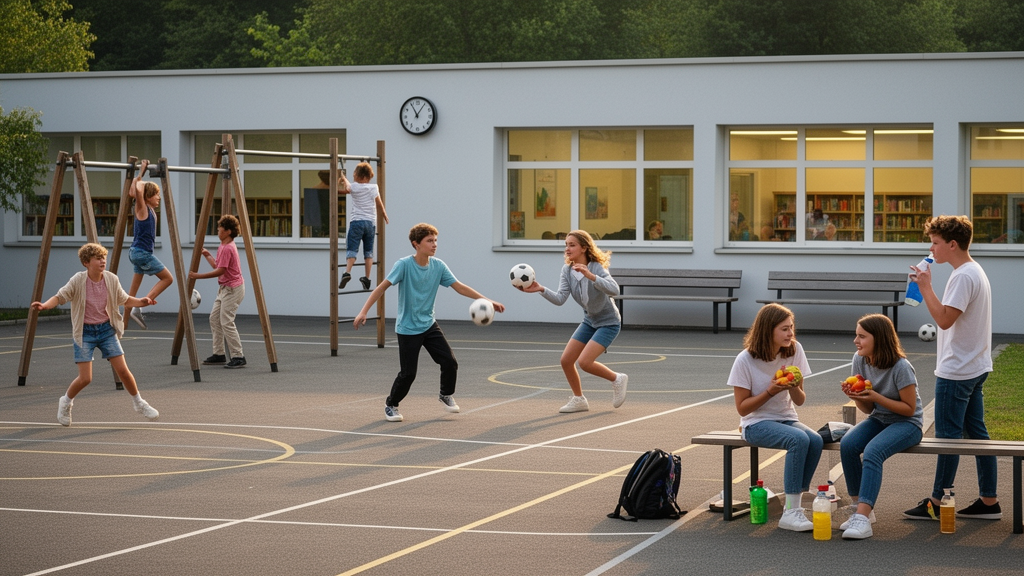
A questionnaire study of 640 Swiss adolescents aged 10–15 found that the timing and setting of play were associated with eating habits, sleep and physical activity in different ways. Digital play was associated with worse healthy eating habits and poorer sleep quality and quantity than analogue play, while evening or nighttime play was associated with worse eating and sleep regardless of play modality. Outdoor play was associated with higher physical activity, and neither the amount of play nor its interaction with play modality was significantly associated with the three lifestyle behaviours examined.

Researchers collected self-administered online questionnaire data from adolescents at school in autumn 2025. They examined healthy eating habits, sleep quality and quantity, and physical activity simultaneously. Play was characterized by its amount, timing and spatial context, as well as whether it was digital or analogue. The researchers used multivariate structural equation modelling, which estimates relationships among multiple observed variables at once and allows the analysis to assess direct and conditional associations between play characteristics and lifestyle behaviours.

Relative to analogue play, digital play was associated with worse healthy eating habits, with an estimate of β = −0.15 and p = 0.001. It was also associated with poorer sleep quality and quantity, with β = −0.11 and p = 0.027. No statistically significant association was detected between digital play and physical activity: the estimate was β = −0.02, with p = 0.700. These results report associations observed in the surveyed adolescents; they do not establish that changing the type of play would cause improvements in eating, sleep or physical activity.

Play timing showed a different pattern from play modality. Evening and nighttime play was associated with worse healthy eating habits, with β = −0.20 and p = 0.001, and with poorer sleep quality and quantity, with β = −0.17 and p = 0.004. These relationships were reported independently of play modality, meaning that the timing associations were not confined to digital play. By contrast, the amount of play and the interaction between play amount and play modality were not significantly associated with the lifestyle behaviours included in the analysis. The results therefore did not show a consistent association between more play and better or worse eating, sleep or physical activity.

Spatial context was associated with physical activity. Outdoor play was linked to higher levels of physical activity, with β = 0.14 and p = 0.008, independently of whether the play was digital or analogue. The researchers also found positive associations among eating habits, sleep and physical activity, except for the relationship between sleep and physical activity. Females reported worse lifestyle behaviours overall, while older adolescents reported worse eating habits. Because the study was observational and relied on a questionnaire at one point in time, it cannot determine whether play patterns influence lifestyle behaviours, whether existing routines shape opportunities for play, or whether other factors affect both. Its findings support examining when, where and how adolescents play when interpreting relationships with everyday behaviours, without demonstrating a causal effect or prescribing a particular change in play routines.

Subject of Research: Associations between play modality, timing and setting and lifestyle behaviours among Swiss adolescents aged 10–15.

Article Title: Exploring the associations between play and lifestyle behaviours in adolescents in Switzerland

Article References: Pedroni, G., & Camerini, A.-L. (2026). Exploring the associations between play and lifestyle behaviours in adolescents in Switzerland. BMC Public Health. https://doi.org/10.1186/s12889-026-29762-3

Image Credits: AI Generated

DOI: 10.1186/s12889-026-29762-3

Keywords: adolescent health, digital play, analogue play, sleep quality, healthy eating, physical activity, outdoor play, Swiss adolescents, questionnaire study, structural equation modelling, Exploring, associations

Cite Scienmag News

Ophelia Keating. (October 26, 2026). Swiss adolescent play patterns linked to eating, sleep and activity. Scienmag. https://scienmag.com/swiss-adolescent-play-patterns-linked-to-eating-sleep-and-activity/

Ophelia Keating. "Swiss adolescent play patterns linked to eating, sleep and activity." Scienmag, 26 October 2026, https://scienmag.com/swiss-adolescent-play-patterns-linked-to-eating-sleep-and-activity/. Accessed 26 October 2026.

Ophelia Keating. "Swiss adolescent play patterns linked to eating, sleep and activity." Scienmag. October 26, 2026. https://scienmag.com/swiss-adolescent-play-patterns-linked-to-eating-sleep-and-activity/


Tags: Adolescent digital play habits and their impact on eatingadolescent healthanalogue playassociationsdigital playeffects of evening play on adolescent sleep and eating habitsExploringhealthy eatinginfluence of digital versus analogue play on adolescent healthonline questionnaire research on adolescent health behaviorsoutdoor playoutdoor play effects on adolescent healthPhysical activityplay environment and adolescent well-beingquestionnaire studyself-reported adolescent lifestyle studysleepsleep qualitystructural equation modeling in adolescent health studiesstructural equation modellingSwiss adolescentsSwiss youth sleep and activity patternstiming of play and lifestyle behaviors
Share26Tweet16
Previous Post

Machine learning trims AI proficiency survey without independent validation

Next Post

Prototype photonic chip trains optical neural network without backpropagation

Related Posts

2024 Burundi cross-sectional survey: low effective refractive coverage in adults 50+
Medicine

2024 Burundi cross-sectional survey: low effective refractive coverage in adults 50+

October 26, 2026
Tshwane managers identify continuous support for quality-of-care regulations
Medicine

Tshwane managers identify continuous support for quality-of-care regulations

October 26, 2026
Single-centre analysis finds hybrid operating room break-even, conditional capital recovery
Medicine

Single-centre analysis finds hybrid operating room break-even, conditional capital recovery

October 26, 2026
Student-Led Clinic Shows Functional Gains in Disadvantaged Community
Medicine

Student-Led Clinic Shows Functional Gains in Disadvantaged Community

October 26, 2026
Research report: Living environmental quality and incident cardiometabolic multimorbidity: a prospective cohort study in China
Medicine

Research report: Living environmental quality and incident cardiometabolic multimorbidity: a prospective cohort study in China

October 26, 2026
Australian survey finds broad acceptability of lifestyle medicine for brain health
Medicine

Australian survey finds broad acceptability of lifestyle medicine for brain health

October 26, 2026
Next Post
Prototype photonic chip trains optical neural network without backpropagation

Prototype photonic chip trains optical neural network without backpropagation

  • Mothers who receive childcare support from maternal grandparents show more optimized

    Mothers who receive childcare support from maternal grandparents show more parental warmth, finds NTU Singapore study

    27656 shares
    Share 11059 Tweet 6912
  • University of Seville Breaks 120-Year-Old Mystery, Revises a Key Einstein Concept

    1061 shares
    Share 424 Tweet 265
  • Bee body mass, pathogens and local climate influence heat tolerance

    682 shares
    Share 273 Tweet 171
  • Researchers record first-ever images and data of a shark experiencing a boat strike

    546 shares
    Share 218 Tweet 137
  • Groundbreaking Clinical Trial Reveals Lubiprostone Enhances Kidney Function

    531 shares
    Share 212 Tweet 133
Science

Embark on a thrilling journey of discovery with Scienmag.com—your ultimate source for cutting-edge breakthroughs. Immerse yourself in a world where curiosity knows no limits and tomorrow’s possibilities become today’s reality!

RECENT NEWS

  • Excess cysteine releases iron, overwhelming mitochondria and killing cells
  • 2024 Burundi cross-sectional survey: low effective refractive coverage in adults 50+
  • Wild indri lemurs widen mouths as song pitch rises
  • SwRI Ready to Support DOE Chemical Technology Scale-Up Program

Categories

  • Agriculture
  • Anthropology
  • Archaeology
  • Athmospheric
  • Biology
  • Biotechnology
  • Blog
  • Bussines
  • Cancer
  • Chemistry
  • Climate
  • Earth Science
  • Editorial Policy
  • Marine
  • Mathematics
  • Medicine
  • Pediatry
  • Policy
  • Psychology & Psychiatry
  • Science Education
  • Science News
  • Social Science
  • Space
  • Technology and Engineering

Subscribe to Blog via Email

Enter your email address to subscribe to this blog and receive notifications of new posts by email.

Join 5,151 other subscribers

© 2025 Scienmag - Science Magazine

Welcome Back!

Login to your account below

Forgotten Password?

Retrieve your password

Please enter your username or email address to reset your password.

Log In
No Result
View All Result
  • HOME
  • SCIENCE NEWS
  • CONTACT US

© 2025 Scienmag - Science Magazine

Discover more from Science

Subscribe now to keep reading and get access to the full archive.

Continue reading