

Monday, October 26, 2026
Science
No Result
View All Result
  • Login
  • HOME
  • SCIENCE NEWS
  • CONTACT US
  • HOME
  • SCIENCE NEWS
  • CONTACT US
No Result
View All Result
Scienmag
No Result
View All Result
Home Science News Cancer

Review Reframes MAD Genes as a Coordinated Genome Stability Axis in Cancer

October 26, 2026
in Cancer
Juliet Wilcox
By Juliet Wilcox Scienmag Editorial Profile - Human Genetics
Reading Time: 3 mins read
0
Review Reframes MAD Genes as a Coordinated Genome Stability Axis in Cancer

Review Reframes MAD Genes as a Coordinated Genome Stability Axis in Cancer

65
SHARES
587
VIEWS
Share on FacebookShare on Twitter
ADVERTISEMENT

A review published in Molecular Cancer argues that the MAD gene family, long studied as separate players in cell division and DNA repair, should be redefined as a single coordinated system for safeguarding the genome. The authors, led by Chainsee Saini and Rajeev Nema, propose that MAD1L1, MAD2L1 and MAD2L2 together form an integrated surveillance axis whose shared structural architecture could expose new therapeutic opportunities in cancers driven by chromosomal instability.

Genomic integrity depends on the accurate replication and segregation of chromosomes during the cell cycle. When this process falters, cells accumulate chromosomal instability, or CIN, a hallmark that fuels tumor evolution and therapeutic resistance. MAD1L1 and MAD2L1 were traditionally classified as components of the spindle assembly checkpoint, the mechanism that halts cell division until chromosomes are correctly attached, while MAD2L2 was known mainly for its role in DNA repair. The review contends that this division of labor is incomplete: the three proteins act as interconnected regulators rather than isolated specialists.

Central to this reframing is the HORMA domain, a conserved structural motif shared across the MAD family. According to the authors, this common framework enables coordinated conformational signaling, meaning the proteins undergo characteristic shape changes that propagate regulatory information between mitosis and the DNA damage response.

The review highlights the family’s conformational plasticity and its protein-protein interaction interfaces as features that have been underexplored therapeutically. Because these structural properties and interaction networks differ from those of most conventional drug targets, the authors argue that they represent unexplored opportunities for designing agents that disrupt cancer-specific protein interactions.

A key insight of the review is that different patterns of MAD-family dysregulation produce mechanistically distinct states of chromosomal instability in cancer. Rather than a single generic form of CIN, tumors may carry separable instability states depending on which checkpoint or repair functions are impaired.

This distinction underpins the authors’ proposal that MAD-family-based stratification could allow clinicians to differentiate checkpoint-dependent tumors from repair-dependent ones. In their framework, such classification would open a path toward precision targeting based on which arm of the surveillance system a given cancer relies upon.

The review also emphasizes that direct inhibition of MAD proteins may not be the only route to therapy. Indirect targeting of MAD-associated pathways, the authors suggest, can reveal actionable vulnerabilities in CIN-driven cancers, including approaches aimed at overcoming therapeutic resistance in tumors with high chromosomal instability.

As a review article, the work synthesizes existing literature rather than presenting new experimental data, and its proposals for stratification and targeted therapy remain conceptual frameworks to be tested. Even so, the reframing carries weight for the field: by consolidating spindle checkpoint biology and DNA repair under one HORMA-domain umbrella, it argues that understanding the structural features and interaction networks of MAD-family proteins may ultimately identify cancer-specific weaknesses, particularly in tumors characterized by high chromosomal instability, where the surveillance axis is most heavily taxed.

Subject of Research: The role of MAD genes in genome surveillance, chromosomal instability and targeted cancer therapy

Article Title: MAD genes from spindle checkpoints to targeted cancer therapies

Article References: Saini, C., Vats, P., Baweja, B., Jangir, K., Patidar, P., Kumar, N., Soni, R., Kumar, A., & Nema, R. (2026). MAD genes from spindle checkpoints to targeted cancer therapies. Molecular Cancer. https://doi.org/10.1186/s12943-026-02814-3

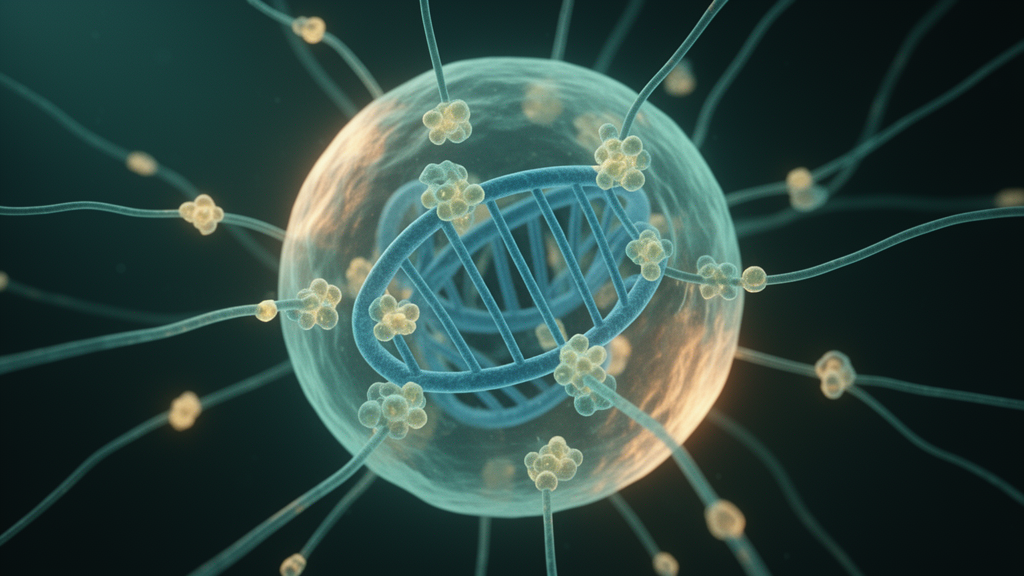
Image Credits: AI Generated

DOI: 10.1186/s12943-026-02814-3

Keywords: MAD genes, MAD1L1, MAD2L1, MAD2L2, HORMA domain, spindle assembly checkpoint, chromosomal instability, DNA repair, genome stability, cancer therapy, therapeutic resistance, Molecular Cancer

Cite Scienmag News

Juliet Wilcox. (October 26, 2026). Review Reframes MAD Genes as a Coordinated Genome Stability Axis in Cancer. Scienmag. https://scienmag.com/review-reframes-mad-genes-as-a-coordinated-genome-stability-axis-in-cancer/

Juliet Wilcox. "Review Reframes MAD Genes as a Coordinated Genome Stability Axis in Cancer." Scienmag, 26 October 2026, https://scienmag.com/review-reframes-mad-genes-as-a-coordinated-genome-stability-axis-in-cancer/. Accessed 26 October 2026.

Juliet Wilcox. "Review Reframes MAD Genes as a Coordinated Genome Stability Axis in Cancer." Scienmag. October 26, 2026. https://scienmag.com/review-reframes-mad-genes-as-a-coordinated-genome-stability-axis-in-cancer/


Tags: Cancer Therapycell cycle regulation and genome integritychromosomal instabilitychromosomal instability in tumorscoordinated genome safeguarding systemDNA repairgenome stabilitygenome stability in cancerHORMA domainHORMA domain in genome surveillanceMAD gene familyMAD genesMAD1L1MAD1L1 and MAD2L1 functionMAD2L1MAD2L2MAD2L2 role in DNA repairMolecular Cancerredefinition of MAD gene functionsspindle assembly checkpointtherapeutic resistancetherapeutic targets in chromosomal instabilitytumor evolution and therapy resistance
Share26Tweet16
Previous Post

Heart Scar Location and Size Track Distinct Left Atrial Faults in Dilated Cardiomyopathy

Next Post

Industrial microplastics blanket sediments of Swedish coastal archipelago

Related Posts

Single-cell tumour phylogenetics
Cancer

Single-cell tumour phylogenetics

October 26, 2026
Beta-1 blocker use linked to higher mortality in immune checkpoint inhibitor patients
Cancer

Beta-1 blocker use linked to higher mortality in immune checkpoint inhibitor patients

October 26, 2026
PTN-Secreting Glioblastoma Subclone Rebuilds the Immune Niche to Seed Distant Recurrence
Cancer

PTN-Secreting Glioblastoma Subclone Rebuilds the Immune Niche to Seed Distant Recurrence

October 26, 2026
Pericyte Snai1 Drives Pathological Retinal Angiogenesis Through Extracellular Matrix Remodelling
Cancer

Pericyte Snai1 Drives Pathological Retinal Angiogenesis Through Extracellular Matrix Remodelling

October 26, 2026
Gene Mutations Flag Poor Survival in Advanced Myeloproliferative Neoplasms
Cancer

Gene Mutations Flag Poor Survival in Advanced Myeloproliferative Neoplasms

October 26, 2026
NRAS mutation renders ovarian cancer cells vulnerable to MEK inhibitor trametinib
Cancer

NRAS mutation renders ovarian cancer cells vulnerable to MEK inhibitor trametinib

October 26, 2026
Next Post
Industrial microplastics blanket sediments of Swedish coastal archipelago

Industrial microplastics blanket sediments of Swedish coastal archipelago

  • Mothers who receive childcare support from maternal grandparents show more optimized

    Mothers who receive childcare support from maternal grandparents show more parental warmth, finds NTU Singapore study

    27656 shares
    Share 11059 Tweet 6912
  • University of Seville Breaks 120-Year-Old Mystery, Revises a Key Einstein Concept

    1061 shares
    Share 424 Tweet 265
  • Bee body mass, pathogens and local climate influence heat tolerance

    682 shares
    Share 273 Tweet 171
  • Researchers record first-ever images and data of a shark experiencing a boat strike

    546 shares
    Share 218 Tweet 137
  • Groundbreaking Clinical Trial Reveals Lubiprostone Enhances Kidney Function

    531 shares
    Share 212 Tweet 133
Science

Embark on a thrilling journey of discovery with Scienmag.com—your ultimate source for cutting-edge breakthroughs. Immerse yourself in a world where curiosity knows no limits and tomorrow’s possibilities become today’s reality!

RECENT NEWS

  • Industrial microplastics blanket sediments of Swedish coastal archipelago
  • Review Reframes MAD Genes as a Coordinated Genome Stability Axis in Cancer
  • Heart Scar Location and Size Track Distinct Left Atrial Faults in Dilated Cardiomyopathy
  • Plum Fruit Isolate Shows Strong Biocontrol Potential Against Brown-Spot Disease

Categories

  • Agriculture
  • Anthropology
  • Archaeology
  • Athmospheric
  • Biology
  • Biotechnology
  • Blog
  • Bussines
  • Cancer
  • Chemistry
  • Climate
  • Earth Science
  • Editorial Policy
  • Marine
  • Mathematics
  • Medicine
  • Pediatry
  • Policy
  • Psychology & Psychiatry
  • Science Education
  • Science News
  • Social Science
  • Space
  • Technology and Engineering

Subscribe to Blog via Email

Enter your email address to subscribe to this blog and receive notifications of new posts by email.

Join 5,151 other subscribers

© 2025 Scienmag - Science Magazine

Welcome Back!

Login to your account below

Forgotten Password?

Retrieve your password

Please enter your username or email address to reset your password.

Log In
No Result
View All Result
  • HOME
  • SCIENCE NEWS
  • CONTACT US

© 2025 Scienmag - Science Magazine

Discover more from Science

Subscribe now to keep reading and get access to the full archive.

Continue reading