

Monday, October 26, 2026
Science
No Result
View All Result
  • Login
  • HOME
  • SCIENCE NEWS
  • CONTACT US
  • HOME
  • SCIENCE NEWS
  • CONTACT US
No Result
View All Result
Scienmag
No Result
View All Result
Home Science News Technology and Engineering

Research report: External-catalyst-free transcarbamoylation in hydroxyurethane-modified epoxy vitrimer: enabling ultra-tough, rapidly welding, and self-healing carbon fiber/epoxy composites

October 26, 2026
in Technology and Engineering
Bethany Barker
By Bethany Barker Scienmag Editorial Profile - Catalysis
Reading Time: 2 mins read
0
Research report: External-catalyst-free transcarbamoylation in hydroxyurethane-modified epoxy vitrimer: enabling ultra-tough, rapidly welding, and self-healing carbon fiber/epoxy composites

Research report: External-catalyst-free transcarbamoylation in hydroxyurethane-modified epoxy vitrimer: enabling ultra-tough, rapidly welding, and self-healing carbon fiber/epoxy composites

65
SHARES
587
VIEWS
Share on FacebookShare on Twitter
ADVERTISEMENT

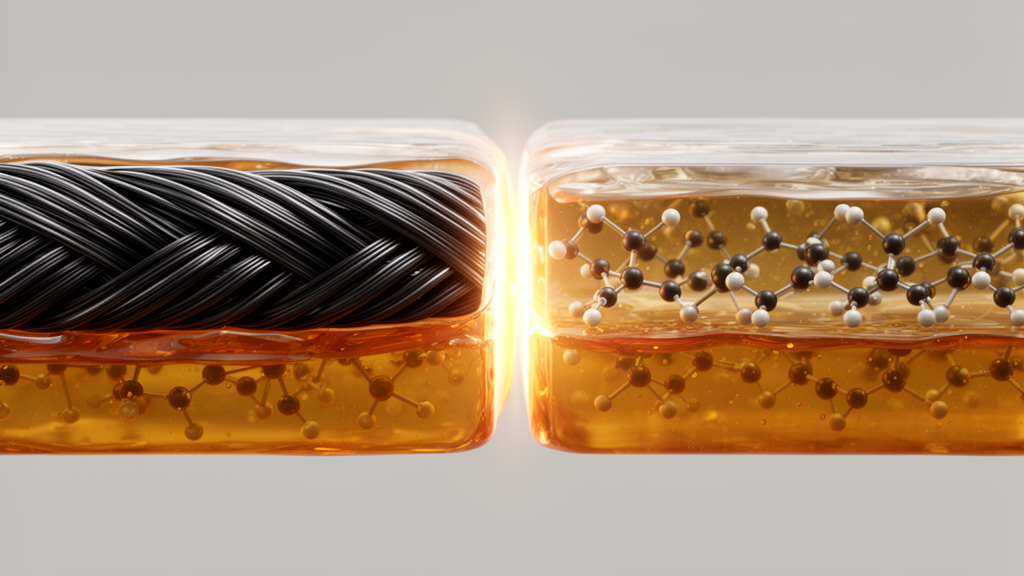
A laboratory polymer study has found that a catalyst-free hydroxyurethane-modified epoxy vitrimer can combine high mechanical strength with scratch healing, thermal repair and repeated reprocessing. The researchers created a fully aliphatic hybrid network that undergoes thermally activated transcarbamoylation, allowing covalent bonds to rearrange without an external catalyst. In the cured matrix, tensile strength reached 75 MPa, flexural strength 112 MPa, fracture toughness 3.6 MPa m 1/2 and fracture energy 2.9 kJ/m 2 .

Microscopic analysis showed complete closure of scratches after heating, providing visual evidence of self-healing in the tested samples. The material was synthesized by reacting isophorone diamine with 1,4-butanediol bis(glycidyl ether carbonate) to produce amine-terminated hydroxyurethane prepolymers. Those prepolymers served as curing agents for a matrix based on trifunctional trimethylolpropane triglycidyl ether.

Its defining feature is the network’s capacity for bond exchange: at elevated temperatures, transcarbamoylation permits the cross-linked structure to rearrange while retaining its covalent framework. Stress-relaxation analysis gave a relaxation time of 28 seconds at 200 °C, indicating rapid network rearrangement under that measurement condition. Reprocessing tests demonstrated that ground and hot-pressed specimens could recover much of their original performance.

The material retained 91% of its original tensile strength, 87% of its flexural strength and 85% of its fracture toughness after this treatment. Carbon-fiber composites made with the matrix initially reached a tensile strength of 607 MPa, flexural strength of 691 MPa and interlaminar shear strength of 53 MPa. According to the study, the reinforced composites also retained mechanical integrity through three thermal-repair and recycling cycles, supporting their potential for use in structures intended for multiple service lives.

These results are based on laboratory specimens and do not establish performance in a full-scale structural application. Repair and reprocessing in the reported experiments depended on heating, including a stress-relaxation test conducted at 200 °C, while the supplied findings do not quantify long-term aging, impact damage, moisture exposure or performance under sustained service loads. The measured combination of mechanical performance, complete scratch closure, rapid stress relaxation and partial property recovery after reprocessing suggests that catalyst-free transcarbamoylation could support more durable composite designs, although broader application-level validation remains necessary.

Subject of Research: Catalyst-free hydroxyurethane–epoxy vitrimers for tough, self-healing and recyclable carbon-fiber composites

Article Title: External-catalyst-free transcarbamoylation in hydroxyurethane-modified epoxy vitrimer: enabling ultra-tough, rapidly welding, and self-healing carbon fiber/epoxy composites

Article References: Pouladvand, A. R., Beheshty, M. H., & Yeganeh, H. (2026). External-catalyst-free transcarbamoylation in hydroxyurethane-modified epoxy vitrimer: enabling ultra-tough, rapidly welding, and self-healing carbon fiber/epoxy composites. Journal of Materials Science. https://doi.org/10.1007/s10853-026-13868-5

Image Credits: AI Generated

DOI: 10.1007/s10853-026-13868-5

Keywords: vitrimers, epoxy composites, carbon fiber, self-healing polymers, transcarbamoylation, dynamic covalent chemistry, thermal repair, recycling, fracture toughness, hydroxyurethane, External-catalyst-free, hydroxyurethane-modified

Cite Scienmag News

Bethany Barker. (October 26, 2026). Research report: External-catalyst-free transcarbamoylation in hydroxyurethane-modified epoxy vitrimer: enabling ultra-tough, rapidly welding, and self-healing carbon fiber/epoxy composites. Scienmag. https://scienmag.com/research-report-external-catalyst-free-transcarbamoylation-in-hydroxyurethane-modified-epoxy-vitrimer-enabling-ultra-tough-rapidly-welding-and-self-healing-carbon-fiber-epoxy-composites/


Bethany Barker. "Research report: External-catalyst-free transcarbamoylation in hydroxyurethane-modified epoxy vitrimer: enabling ultra-tough, rapidly welding, and self-healing carbon fiber/epoxy composites." Scienmag, 26 October 2026, https://scienmag.com/research-report-external-catalyst-free-transcarbamoylation-in-hydroxyurethane-modified-epoxy-vitrimer-enabling-ultra-tough-rapidly-welding-and-self-healing-carbon-fiber-epoxy-composites/. Accessed 26 October 2026.

Bethany Barker. "Research report: External-catalyst-free transcarbamoylation in hydroxyurethane-modified epoxy vitrimer: enabling ultra-tough, rapidly welding, and self-healing carbon fiber/epoxy composites." Scienmag. October 26, 2026. https://scienmag.com/research-report-external-catalyst-free-transcarbamoylation-in-hydroxyurethane-modified-epoxy-vitrimer-enabling-ultra-tough-rapidly-welding-and-self-healing-carbon-fiber-epoxy-composites/

Tags: carbon fiberdynamic covalent chemistryepoxy compositesExternal-catalyst-freefracture toughnesshydroxyurethanehydroxyurethane-modifiedrecyclingself-healing polymersthermal repairtranscarbamoylationvitrimers
Share26Tweet16
Previous Post

Military Police Trainees Underestimate Body Size in Small Brazilian Study

Next Post

Marine-Derived Compound PE/2 Reshapes Liver-to-Fat Cell Communication in Cell Study

Related Posts

Lab study links XPS charge neutralization to shifts on a graphite anode
Technology and Engineering

Lab study links XPS charge neutralization to shifts on a graphite anode

October 26, 2026
Smartphone AI app guides strawberry nitrogen fertigation from leaf photos alone
Technology and Engineering

Smartphone AI app guides strawberry nitrogen fertigation from leaf photos alone

October 26, 2026
Research report: Bayesian optimization-driven exploration of process–structure–property relationship for polyethylene composite films
Technology and Engineering

Research report: Bayesian optimization-driven exploration of process–structure–property relationship for polyethylene composite films

October 26, 2026
High-speed impactor tests mirror passenger airbag door opening only in early phase
Technology and Engineering

High-speed impactor tests mirror passenger airbag door opening only in early phase

October 26, 2026
TC4 titanium oxidation shifts toward Al-rich scale at 700 °C
Technology and Engineering

TC4 titanium oxidation shifts toward Al-rich scale at 700 °C

October 26, 2026
Ground Waste Plastic Replaces River Sand in Concrete, With Measured Strength Trade-Offs
Technology and Engineering

Ground Waste Plastic Replaces River Sand in Concrete, With Measured Strength Trade-Offs

October 26, 2026
Next Post
Marine-Derived Compound PE/2 Reshapes Liver-to-Fat Cell Communication in Cell Study

Marine-Derived Compound PE/2 Reshapes Liver-to-Fat Cell Communication in Cell Study

  • Mothers who receive childcare support from maternal grandparents show more optimized

    Mothers who receive childcare support from maternal grandparents show more parental warmth, finds NTU Singapore study

    27656 shares
    Share 11059 Tweet 6912
  • University of Seville Breaks 120-Year-Old Mystery, Revises a Key Einstein Concept

    1061 shares
    Share 424 Tweet 265
  • Bee body mass, pathogens and local climate influence heat tolerance

    682 shares
    Share 273 Tweet 171
  • Researchers record first-ever images and data of a shark experiencing a boat strike

    546 shares
    Share 218 Tweet 137
  • Groundbreaking Clinical Trial Reveals Lubiprostone Enhances Kidney Function

    531 shares
    Share 212 Tweet 133
Science

Embark on a thrilling journey of discovery with Scienmag.com—your ultimate source for cutting-edge breakthroughs. Immerse yourself in a world where curiosity knows no limits and tomorrow’s possibilities become today’s reality!

RECENT NEWS

  • PLOS ONE retracts Syzygium antiparkinsonian study over data integrity concerns
  • Marine-Derived Compound PE/2 Reshapes Liver-to-Fat Cell Communication in Cell Study
  • Research report: External-catalyst-free transcarbamoylation in hydroxyurethane-modified epoxy vitrimer: enabling ultra-tough, rapidly welding, and self-healing carbon fiber/epoxy composites
  • Military Police Trainees Underestimate Body Size in Small Brazilian Study

Categories

  • Agriculture
  • Anthropology
  • Archaeology
  • Athmospheric
  • Biology
  • Biotechnology
  • Blog
  • Bussines
  • Cancer
  • Chemistry
  • Climate
  • Earth Science
  • Editorial Policy
  • Marine
  • Mathematics
  • Medicine
  • Pediatry
  • Policy
  • Psychology & Psychiatry
  • Science Education
  • Science News
  • Social Science
  • Space
  • Technology and Engineering

Subscribe to Blog via Email

Enter your email address to subscribe to this blog and receive notifications of new posts by email.

Join 5,151 other subscribers

© 2025 Scienmag - Science Magazine

Welcome Back!

Login to your account below

Forgotten Password?

Retrieve your password

Please enter your username or email address to reset your password.

Log In
No Result
View All Result
  • HOME
  • SCIENCE NEWS
  • CONTACT US

© 2025 Scienmag - Science Magazine

Discover more from Science

Subscribe now to keep reading and get access to the full archive.

Continue reading