


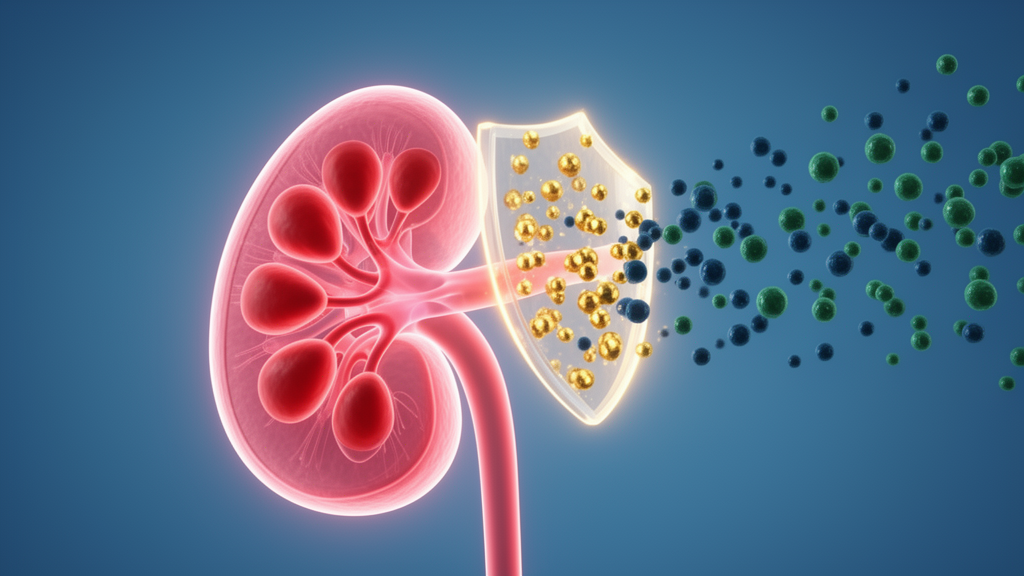
Paraquat, one of the most toxic herbicides in widespread agricultural use, causes kidney damage through oxidative stress and progressive scarring that can advance toward chronic kidney disease. A new study in Molecular Biology Reports suggests that disulfiram, a drug long approved for treating alcohol dependence, may blunt this damage in an animal model. In rats exposed to paraquat, co-treatment with disulfiram reduced tissue injury, lowered collagen deposition, restored antioxidant enzyme activity, and shifted the expression of two key fibrosis-related genes, Smad3 and Smad7, back toward normal levels.
The research team, led by Mahtab Esmaeili and colleagues, randomly assigned thirty-five male Wistar rats to seven groups: a control group, a vehicle group, a disulfiram-only group receiving 20 mg/kg, a paraquat group receiving 1.5 mg/kg, and three groups co-treated with paraquat plus disulfiram at 5, 10, or 20 mg/kg. The design tested whether the drug, given alongside the herbicide rather than beforehand, could protect renal tissue. Kidney injury was assessed through histopathological staining with hematoxylin and eosin, PAS, and Masson’s trichrome, alongside measurements of serum biomarkers including blood urea nitrogen, creatinine, and uric acid.
Paraquat exposure produced the expected cascade of damage. Under the microscope, the kidneys showed marked histopathological injury, and the fraction of tissue staining positive for alpha-smooth muscle actin, a marker of activated myofibroblasts, rose substantially. Masson’s trichrome staining revealed increased collagen deposition, the hallmark of fibrosis. Functionally, the animals’ serum biomarkers indicated impaired renal filtration. Biochemically, the herbicide drove lipid peroxidation upward, measured by malondialdehyde levels, while the antioxidant enzymes catalase and glutathione peroxidase lost activity.
The molecular readouts pointed toward the transforming growth factor beta signaling pathway, a central driver of organ scarring. In paraquat-exposed rats, expression of Smad3, a gene that promotes fibrotic signaling, increased, while Smad7, an inhibitory counterweight in the same pathway, decreased. This pattern is consistent with the pathway being pushed toward fibrogenic activation, although the study measured gene expression by qRT-PCR rather than protein levels.
Disulfiram co-treatment, particularly at the 10 mg/kg dose, ameliorated these changes across the board. Treated animals showed reduced tissue injury on histopathology, a decreased alpha-SMA-positive area percentage, and less collagen deposition. Antioxidant enzyme activity was restored, lipid peroxidation declined, and renal function improved on the serum biomarkers. Gene expression of Smad3 and Smad7 shifted back toward the levels seen in paraquat-exposed animals, indicating that the drug’s effects were accompanied by changes in this fibrotic signaling axis. The authors identified 10 mg/kg as the optimal dose among those tested.
Disulfiram is an interesting candidate for repurposing because it is already clinically approved, which can shorten the path toward therapeutic development compared with entirely new molecules. The drug has emerging antioxidant and antifibrotic properties described in the literature, and the present findings align with that profile. Drug repurposing is an attractive strategy for conditions like paraquat poisoning, where no established antidote fully prevents the oxidative and fibrotic damage that follows exposure.
The authors are careful to frame the results as supporting disulfiram’s potential rather than establishing it as a ready therapy. The study was conducted in rats, at a specific paraquat dose, with co-treatment rather than pretreatment, and the molecular analysis was limited to gene expression. The team notes that further studies evaluating protein-level changes and activation of the TGF-beta/Smad signaling pathway are warranted to clarify the underlying molecular mechanisms.
Even so, the convergence of histological, functional, biochemical, and molecular evidence in a single model gives the findings weight. The study links disulfiram’s nephroprotective effects to reduced oxidative stress and a measurable shift in the Smad3 and Smad7 balance, offering a concrete mechanistic thread for follow-up work. Whether the same protection extends to protein-level pathway activation, to other dosing schedules, and ultimately to human paraquat exposure remains to be demonstrated.
Subject of Research: Disulfiram co-treatment attenuated paraquat-induced renal injury and fibrosis in rats, accompanied by restored antioxidant enzyme activity and shifts in Smad3 and Smad7 gene expression, with 10 mg/kg identified as the optimal dose.
Article Title: Disulfiram attenuates paraquat-induced renal injury and fibrosis accompanied by changes in Smad3 and Smad7 gene expression
Article References: Esmaeili, M., Daraei, A., Najafzadehvarzi, H., Khafri, S., Esmaeili, Z., Beheshti, Y., & Babazadeh, Z. (2026). Disulfiram attenuates paraquat-induced renal injury and fibrosis accompanied by changes in Smad3 and Smad7 gene expression. Molecular Biology Reports, 53(1), Article 1826. https://doi.org/10.1007/s11033-026-13055-4
Image Credits: AI Generated
DOI: 10.1007/s11033-026-13055-4
Keywords: toxicology, nephrology, drug repurposing, fibrosis, oxidative stress, paraquat, disulfiram, TGF-beta signaling, animal study, attenuates, paraquat-induced, renal
Cite Scienmag News
Juliet Wilcox. (October 25, 2026). Disulfiram Shows Kidney-Protective Effects Against Paraquat Poisoning in Rat Study. Scienmag. https://scienmag.com/disulfiram-shows-kidney-protective-effects-against-paraquat-poisoning-in-rat-study/
Juliet Wilcox. "Disulfiram Shows Kidney-Protective Effects Against Paraquat Poisoning in Rat Study." Scienmag, 25 October 2026, https://scienmag.com/disulfiram-shows-kidney-protective-effects-against-paraquat-poisoning-in-rat-study/. Accessed 25 October 2026.
Juliet Wilcox. "Disulfiram Shows Kidney-Protective Effects Against Paraquat Poisoning in Rat Study." Scienmag. October 25, 2026. https://scienmag.com/disulfiram-shows-kidney-protective-effects-against-paraquat-poisoning-in-rat-study/


