

Sunday, October 25, 2026
Science
No Result
View All Result
  • Login
  • HOME
  • SCIENCE NEWS
  • CONTACT US
  • HOME
  • SCIENCE NEWS
  • CONTACT US
No Result
View All Result
Scienmag
No Result
View All Result
Home Science News Technology and Engineering

The effect of interlayer thickness of niobium on the microstructure and mechanical properties of the interface in multimaterial additive manufacturing components made of NiTi-Ti6Al4V

October 25, 2026
in Technology and Engineering
Denise Maddox
By Denise Maddox Scienmag Editorial Profile - Mechanical Engineering
Reading Time: 3 mins read
0
The effect of interlayer thickness of niobium on the microstructure and mechanical properties of the interface in multimaterial additive manufacturing components made of NiTi-Ti6Al4V

The effect of interlayer thickness of niobium on the microstructure and mechanical properties of the interface in multimaterial additive manufacturing components made of NiTi-Ti6Al4V

65
SHARES
587
VIEWS
Share on FacebookShare on Twitter
ADVERTISEMENT

A niobium interlayer approximately 50 micrometres thick produced a crack-free interface in multimaterial laser powder bed fusion components combining NiTi with Ti6Al4V under the study’s optimized processing conditions of 400 watts and a scan speed of 800 millimetres per second. In the comparison with a roughly 150-micrometre, three-layer interlayer, the thinner design formed a graded Ti₂Nb/β-Ti(Nb)/α-Ti transition zone and a continuous high-hardness band with a peak of 465.0 HV. It also achieved a compression shear strength of 90 MPa and showed quasi-cleavage fracture, while only minor micropores were observed.

The study examined interfacial cracking as a limitation on the application of multimaterial laser powder bed fusion for NiTi/Ti6Al4V composite components. Researchers introduced niobium between the two alloys and directly compared two interlayer designs: one deposited layer, approximately 50 micrometres thick, and three deposited layers, approximately 150 micrometres thick. The one-layer interlayer created a graded transition across the interface rather than the coarse brittle regions observed in the thicker design. The researchers reported that this structure suppressed brittle Ti₂Ni precipitation and accompanied a continuous high-hardness band, providing a quantitative indication that the thinner interlayer supported more consistent interfacial conditions under the tested conditions.

The thicker interlayer produced a markedly different microstructure. Its central region contained severe unmelted niobium particles and coarse brittle bands, together with a pronounced hardness gradient spanning 170.0–243.8 HV. These features were accompanied by pervasive cracking and mechanically unreliable performance. By comparison, the single-layer specimen reached a maximum hardness of 465.0 HV, well above the highest value reported for the central region of the three-layer interlayer. The contrast indicates that increasing the amount of niobium did not improve the interface in this comparison: the approximately 150-micrometre design retained unmelted material, developed coarse brittle bands and cracked extensively, whereas the approximately 50-micrometre design yielded the reported crack-free interface and higher measured mechanical performance.

The results apply to the study’s comparison of two niobium-interlayer thicknesses in multimaterial laser powder bed fusion components made from NiTi and Ti6Al4V, with the principal results obtained at 400 watts and 800 millimetres per second. The supplied findings do not establish how the interfaces would perform under other machines, scan parameters, geometries or interlayer compositions, and they do not provide evidence about long-term service behavior. Within the reported experimental scope, however, the single approximately 50-micrometre niobium layer was identified as the critical tested thickness for reliable metallurgical bonding. Its graded Ti₂Nb/β-Ti(Nb)/α-Ti transition zone, limited Ti₂Ni precipitation, continuous high-hardness band and 90 MPa compression shear strength distinguished it from the three-layer design, whose unmelted particles, brittle bands, hardness gradient and pervasive cracking were associated with unreliable mechanical performance.

Subject of Research: Niobium interlayer thickness and interface performance in laser powder bed fusion of NiTi–Ti6Al4V

Article Title: The effect of interlayer thickness of niobium on the microstructure and mechanical properties of the interface in multimaterial additive manufacturing components made of NiTi-Ti6Al4V

Article References: Ge, H., Li, X., Niu, Z., Xu, J., Zhou, S., Shi, J., Gao, X., Liu, F., & Chen, H. (2026). The effect of interlayer thickness of niobium on the microstructure and mechanical properties of the interface in multimaterial additive manufacturing components made of NiTi-Ti6Al4V. Journal of Materials Science, 61(41), 32023-32040. https://doi.org/10.1007/s10853-026-13653-4

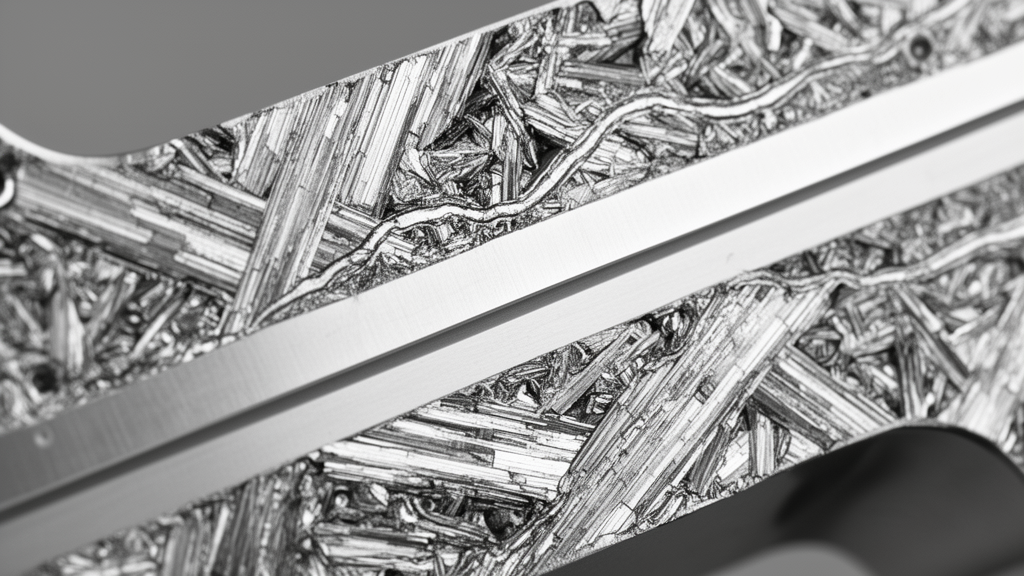
Image Credits: AI Generated

DOI: 10.1007/s10853-026-13653-4

Keywords: niobium interlayer, laser powder bed fusion, multimaterial manufacturing, NiTi, Ti6Al4V, interfacial microstructure, interface cracking, metallurgical bonding, hardness, compression shear strength, effect, interlayer

Cite Scienmag News

Denise Maddox. (October 25, 2026). The effect of interlayer thickness of niobium on the microstructure and mechanical properties of the interface in multimaterial additive manufacturing components made of NiTi-Ti6Al4V. Scienmag. https://scienmag.com/the-effect-of-interlayer-thickness-of-niobium-on-the-microstructure-and-mechanical-properties-of-the-interface-in-multimaterial-additive-manufacturing-components-made-of-niti-ti6al4v/


Denise Maddox. "The effect of interlayer thickness of niobium on the microstructure and mechanical properties of the interface in multimaterial additive manufacturing components made of NiTi-Ti6Al4V." Scienmag, 25 October 2026, https://scienmag.com/the-effect-of-interlayer-thickness-of-niobium-on-the-microstructure-and-mechanical-properties-of-the-interface-in-multimaterial-additive-manufacturing-components-made-of-niti-ti6al4v/. Accessed 25 October 2026.

Denise Maddox. "The effect of interlayer thickness of niobium on the microstructure and mechanical properties of the interface in multimaterial additive manufacturing components made of NiTi-Ti6Al4V." Scienmag. October 25, 2026. https://scienmag.com/the-effect-of-interlayer-thickness-of-niobium-on-the-microstructure-and-mechanical-properties-of-the-interface-in-multimaterial-additive-manufacturing-components-made-of-niti-ti6al4v/

Tags: compression shear strengthcrack-free multimaterial laser fusionEffecteffect of interlayer thickness on mechanical propertiesgraded Ti₂Nb/β-Ti transition zonehardnesshigh-hardness band in multimaterial componentsinfluenceinterface crackinginterfacial cracking in NiTi/Ti6Al4V compositesinterfacial microstructureinterlayerlaser powder bed fusionmetallurgical bondingmicrostructural differences between thin and thick interlayersmultimaterial laser powder bed fusionmultimaterial manufacturingniobium interlayerNiobium interlayer thickness in additive manufacturingNiTiNiTi-Ti6Al4V interface microstructurequasi-cleavage fracture in additive manufacturingTi6Al4V
Share26Tweet16
Previous Post

Traditional Medicinal Liquor Eases Rheumatoid Arthritis in Rats, With Isoimperatorin Flagged as Key Active Compound

Next Post

Steeper Joint Sets Make Rockbursts Rarer but Far More Violent, Granite Tests Show

Related Posts

Steeper Joint Sets Make Rockbursts Rarer but Far More Violent, Granite Tests Show
Technology and Engineering

Steeper Joint Sets Make Rockbursts Rarer but Far More Violent, Granite Tests Show

October 25, 2026
Copper-Doped Bioactive Glass Ointment Speeds Wound Healing in Metabolic Syndrome
Technology and Engineering

Copper-Doped Bioactive Glass Ointment Speeds Wound Healing in Metabolic Syndrome

October 25, 2026
Beyond model opacity: AI discoveries need scientific maturity, researchers argue
Technology and Engineering

Beyond model opacity: AI discoveries need scientific maturity, researchers argue

October 25, 2026
Forty years on, human-centered AI faces off against the machine
Technology and Engineering

Forty years on, human-centered AI faces off against the machine

October 25, 2026
Pupil timing differs in 24-person glossiness and attractiveness experiment
Technology and Engineering

Pupil timing differs in 24-person glossiness and attractiveness experiment

October 25, 2026
Machine-learning simulations reveal how sodium batteries form their protective interface
Technology and Engineering

Machine-learning simulations reveal how sodium batteries form their protective interface

October 25, 2026
Next Post
Steeper Joint Sets Make Rockbursts Rarer but Far More Violent, Granite Tests Show

Steeper Joint Sets Make Rockbursts Rarer but Far More Violent, Granite Tests Show

  • Mothers who receive childcare support from maternal grandparents show more optimized

    Mothers who receive childcare support from maternal grandparents show more parental warmth, finds NTU Singapore study

    27656 shares
    Share 11059 Tweet 6912
  • University of Seville Breaks 120-Year-Old Mystery, Revises a Key Einstein Concept

    1061 shares
    Share 424 Tweet 265
  • Bee body mass, pathogens and local climate influence heat tolerance

    682 shares
    Share 273 Tweet 171
  • Researchers record first-ever images and data of a shark experiencing a boat strike

    546 shares
    Share 218 Tweet 137
  • Groundbreaking Clinical Trial Reveals Lubiprostone Enhances Kidney Function

    531 shares
    Share 212 Tweet 133
Science

Embark on a thrilling journey of discovery with Scienmag.com—your ultimate source for cutting-edge breakthroughs. Immerse yourself in a world where curiosity knows no limits and tomorrow’s possibilities become today’s reality!

RECENT NEWS

  • Three-year Dhaka study tracks hepatitis C genotypes and viral load
  • Steeper Joint Sets Make Rockbursts Rarer but Far More Violent, Granite Tests Show
  • The effect of interlayer thickness of niobium on the microstructure and mechanical properties of the interface in multimaterial additive manufacturing components made of NiTi-Ti6Al4V
  • Traditional Medicinal Liquor Eases Rheumatoid Arthritis in Rats, With Isoimperatorin Flagged as Key Active Compound

Categories

  • Agriculture
  • Anthropology
  • Archaeology
  • Athmospheric
  • Biology
  • Biotechnology
  • Blog
  • Bussines
  • Cancer
  • Chemistry
  • Climate
  • Earth Science
  • Editorial Policy
  • Marine
  • Mathematics
  • Medicine
  • Pediatry
  • Policy
  • Psychology & Psychiatry
  • Science Education
  • Science News
  • Social Science
  • Space
  • Technology and Engineering

Subscribe to Blog via Email

Enter your email address to subscribe to this blog and receive notifications of new posts by email.

Join 5,151 other subscribers

© 2025 Scienmag - Science Magazine

Welcome Back!

Login to your account below

Forgotten Password?

Retrieve your password

Please enter your username or email address to reset your password.

Log In
No Result
View All Result
  • HOME
  • SCIENCE NEWS
  • CONTACT US

© 2025 Scienmag - Science Magazine

Discover more from Science

Subscribe now to keep reading and get access to the full archive.

Continue reading