


Voids and grain structure jointly weaken nanocrystalline steel in simulations
Simulations of 180 nanocrystalline Fe80Cr16Ni4 structures show voids cut hydrostatic strength by up to 34.8 percent, with grain-boundary voids and ...
Simulations of 180 nanocrystalline Fe80Cr16Ni4 structures show voids cut hydrostatic strength by up to 34.8 percent, with grain-boundary voids and ...

A review of 76 studies finds that only six validation approaches for laser powder bed fusion machines are both relevant ...

A hybrid LPBF-LDED study of SS304 stainless steel found a fine as-deposited LPBF microstructure with superior corrosion resistance, while lack-of-fusion ...
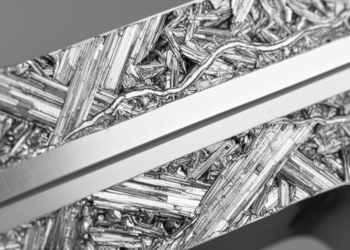
A roughly 50-micrometre niobium interlayer formed a crack-free NiTi–Ti6Al4V interface under optimized test conditions, outperforming a three-layer design containing unmelted ...
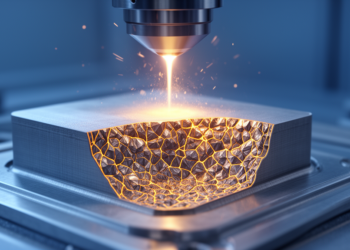
A single annealing step transforms 3D-printed 316L stainless steel, raising twin boundary fractions above 55 percent and boosting elongation by ...

A new review in Frontiers in Materials details how 3D-printing technologies are unlocking the extraordinary potential of high-entropy alloys, from ...
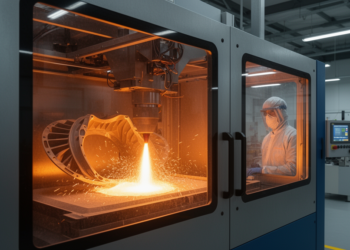
A new Frontiers in Materials research collection reveals how machine learning, melt pool physics, auxetic metamaterials, and nanometer-scale polishing are ...
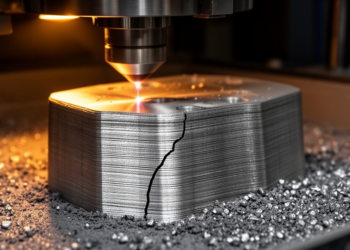
Maraging stainless steels have quietly become one of the most important material stories of the additive manufacturing era. These iron-based ...

A sweeping new review finds that 3D-printed nuclear reactor components offer remarkable design freedom but face unresolved questions about thermal ...
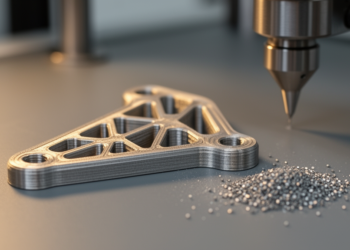
Adding 1.5 weight percent iron to 3D-printed Ti5553 titanium alloy nearly halves its columnar grain width and boosts strength to ...


Embark on a thrilling journey of discovery with Scienmag.com—your ultimate source for cutting-edge breakthroughs. Immerse yourself in a world where curiosity knows no limits and tomorrow’s possibilities become today’s reality!