

Sunday, October 25, 2026
Science
No Result
View All Result
  • Login
  • HOME
  • SCIENCE NEWS
  • CONTACT US
  • HOME
  • SCIENCE NEWS
  • CONTACT US
No Result
View All Result
Scienmag
No Result
View All Result
Home Science News Technology and Engineering

Pupil timing differs in 24-person glossiness and attractiveness experiment

October 25, 2026
in Technology and Engineering
Denise Maddox
By Denise Maddox Scienmag Editorial Profile - Mechanical Engineering
Reading Time: 3 mins read
0
Pupil timing differs in 24-person glossiness and attractiveness experiment

Pupil timing differs in 24-person glossiness and attractiveness experiment

65
SHARES
587
VIEWS
Share on FacebookShare on Twitter
ADVERTISEMENT

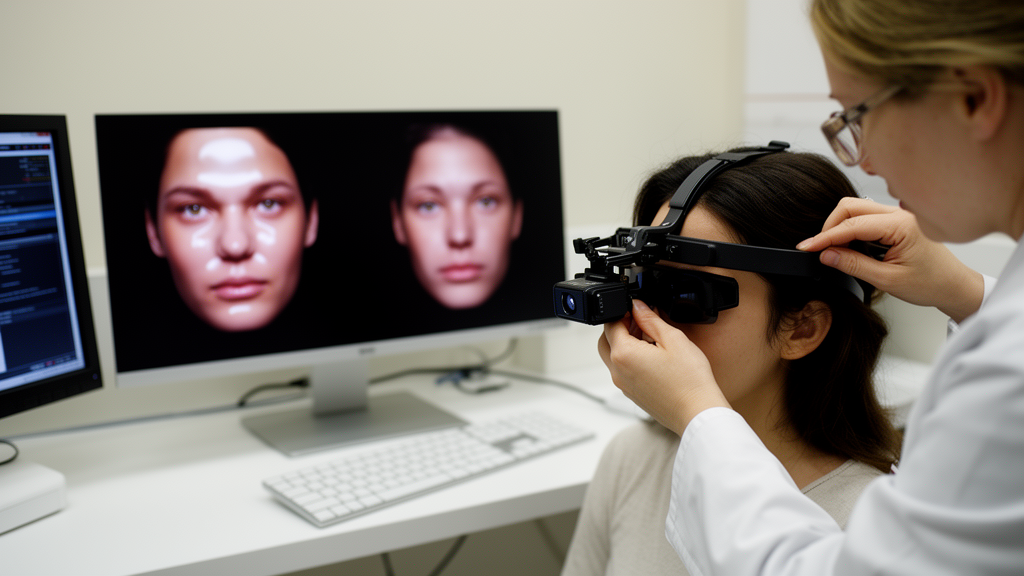
The same everyday-object images elicited different temporal patterns of pupil constriction and dilation depending on whether 24 participants judged their glossiness or their attractiveness, according to an experimental study from Toyohashi University of Technology. Higher glossiness ratings were associated with stronger pupil constriction in an early response window centered at approximately one second after stimulus onset. By contrast, higher attractiveness ratings tended to be associated with greater pupil dilation at later points. The findings indicate that measured pupillary responses can reflect the evaluation being performed as well as the visual characteristics of the objects themselves.

Associate Professor Hideki Tamura and colleagues from the university’s Vision and Action Laboratory, Visual Perception and Cognition Laboratory, and Cognitive Neurotechnology Unit conducted the experiment. The researchers examined two forms of evaluation: perceived glossiness, a visually grounded judgment about a surface property, and perceived attractiveness, a more affective impression. The same 60 images of everyday objects were used in both tasks. Participants rated every image separately on seven-point scales for how glossy and how attractive it appeared, allowing the researchers to compare the timing of pupillary responses while holding the visual stimuli constant.

Each image was presented for three seconds while the researchers recorded changes in pupil diameter. Because pupil size is highly sensitive to luminance, the team assessed image statistics, including mean luminance and variance, and controlled these characteristics across the stimulus set. In both judgment tasks, the pupil initially constricted after an image appeared and then gradually recovered. The relationship between the subjective ratings and the pupillary response nevertheless followed different temporal courses. Greater perceived glossiness was associated with greater constriction around one second after stimulus onset, whereas greater perceived attractiveness tended to be associated with more dilation later in the response. These observations represent measured associations between ratings and pupil behavior, not evidence that one type of evaluation directly caused a particular change in pupil size.

To characterize these differences, the researchers used temporal principal component analysis and generalized additive models. The analyses showed that the relationship between participants’ ratings and their pupillary responses varied systematically according to both the judgment task and the time since stimulus onset. The early constriction associated with glossiness ratings therefore differed from the later dilation pattern associated with attractiveness ratings. The results support the narrower conclusion that the temporal characteristics of pupillary responses may differ when observers evaluate the same objects in terms of a surface property versus an affective impression.

The experiment was limited to 24 participants, a set of 60 everyday-object images, and two forms of evaluation, so it does not establish a general mapping between pupil responses and all perceptual or affective judgments. Tamura said the results suggest that pupillary responses are influenced not only by the visual characteristics of objects but also by what observers are evaluating about those objects. Future research will examine whether evaluations of other material and surface properties, including transparency, roughness, and softness, are likewise reflected in distinguishable temporal patterns of pupillary response.

Subject of Research: Task-dependent pupillary responses during judgments of object glossiness and attractiveness

Article Title: Pupils respond not only to “what we see” but also to “how we evaluate it”

Article References: Pupils respond not only to “what we see” but also to “how we evaluate it”. Original publication (Bibliographic details unavailable.)

Image Credits: AI Generated

DOI: Not provided

Keywords: pupillary response, pupil dilation, pupil constriction, gloss perception, attractiveness judgment, visual perception, affective evaluation, temporal dynamics, eye tracking, object imagery, Pupils, respond

Cite Scienmag News

Denise Maddox. (October 25, 2026). Pupil timing differs in 24-person glossiness and attractiveness experiment. Scienmag. https://scienmag.com/pupil-timing-differs-in-24-person-glossiness-and-attractiveness-experiment/

Denise Maddox. "Pupil timing differs in 24-person glossiness and attractiveness experiment." Scienmag, 25 October 2026, https://scienmag.com/pupil-timing-differs-in-24-person-glossiness-and-attractiveness-experiment/. Accessed 25 October 2026.

Denise Maddox. "Pupil timing differs in 24-person glossiness and attractiveness experiment." Scienmag. October 25, 2026. https://scienmag.com/pupil-timing-differs-in-24-person-glossiness-and-attractiveness-experiment/


Tags: affective evaluationaffective evaluation of attractiveness through pupil dynamicsattractiveness judgmentcognitive processing during visual object evaluationexperimental study on pupil responses to visual stimulieye trackinggloss perceptioninfluence of object surface properties on pupil sizemeasurement of pupil responses in perception experimentsobject imagerypupil constrictionpupil dilationpupillary responsepupillary response to glossiness and attractiveness judgmentsPupilsrespondrole of pupil constriction and dilation in aesthetic judgmentstemporal dynamicstemporal patterns of pupil constriction and dilationtiming differences in pupillary responses for different evaluative tasksvisual perceptionvisual perception and emotional response in pupil behaviorvisual perception of surface glossiness
Share26Tweet16
Previous Post

Rats Emit Distinct 40 kHz Ultrasonic Calls While Eating Chocolate

Next Post

Lego role-playing game earns strong student ratings in software engineering classroom

Related Posts

Machine-learning simulations reveal how sodium batteries form their protective interface
Technology and Engineering

Machine-learning simulations reveal how sodium batteries form their protective interface

October 25, 2026
High-risk antibiotic resistance genes found in E. coli from Taihu Lake watershed waters
Technology and Engineering

High-risk antibiotic resistance genes found in E. coli from Taihu Lake watershed waters

October 25, 2026
Diamond-shaped metakaolin concrete joints boost prefabricated beam strength in lab tests
Technology and Engineering

Diamond-shaped metakaolin concrete joints boost prefabricated beam strength in lab tests

October 25, 2026
Research report: Iron-doped nickel zincate nanostructures for high-performance supercapacitors and enhanced photocatalytic wastewater remediation
Technology and Engineering

Research report: Iron-doped nickel zincate nanostructures for high-performance supercapacitors and enhanced photocatalytic wastewater remediation

October 25, 2026
Semantic Typing of Security Data Boosts AI Intrusion Detection by Up to 23 Points
Technology and Engineering

Semantic Typing of Security Data Boosts AI Intrusion Detection by Up to 23 Points

October 25, 2026
Peruvian canopy traits linked to bird vulnerability, study finds
Technology and Engineering

Peruvian canopy traits linked to bird vulnerability, study finds

October 25, 2026
Next Post
Lego role-playing game earns strong student ratings in software engineering classroom

Lego role-playing game earns strong student ratings in software engineering classroom

  • Mothers who receive childcare support from maternal grandparents show more optimized

    Mothers who receive childcare support from maternal grandparents show more parental warmth, finds NTU Singapore study

    27656 shares
    Share 11059 Tweet 6912
  • University of Seville Breaks 120-Year-Old Mystery, Revises a Key Einstein Concept

    1061 shares
    Share 424 Tweet 265
  • Bee body mass, pathogens and local climate influence heat tolerance

    682 shares
    Share 273 Tweet 171
  • Researchers record first-ever images and data of a shark experiencing a boat strike

    546 shares
    Share 218 Tweet 137
  • Groundbreaking Clinical Trial Reveals Lubiprostone Enhances Kidney Function

    531 shares
    Share 212 Tweet 133
Science

Embark on a thrilling journey of discovery with Scienmag.com—your ultimate source for cutting-edge breakthroughs. Immerse yourself in a world where curiosity knows no limits and tomorrow’s possibilities become today’s reality!

RECENT NEWS

  • Lego role-playing game earns strong student ratings in software engineering classroom
  • Pupil timing differs in 24-person glossiness and attractiveness experiment
  • Rats Emit Distinct 40 kHz Ultrasonic Calls While Eating Chocolate
  • Resilience training for leaders shows promise but strains under polycrisis pressure

Categories

  • Agriculture
  • Anthropology
  • Archaeology
  • Athmospheric
  • Biology
  • Biotechnology
  • Blog
  • Bussines
  • Cancer
  • Chemistry
  • Climate
  • Earth Science
  • Editorial Policy
  • Marine
  • Mathematics
  • Medicine
  • Pediatry
  • Policy
  • Psychology & Psychiatry
  • Science Education
  • Science News
  • Social Science
  • Space
  • Technology and Engineering

Subscribe to Blog via Email

Enter your email address to subscribe to this blog and receive notifications of new posts by email.

Join 5,151 other subscribers

© 2025 Scienmag - Science Magazine

Welcome Back!

Login to your account below

Forgotten Password?

Retrieve your password

Please enter your username or email address to reset your password.

Log In
No Result
View All Result
  • HOME
  • SCIENCE NEWS
  • CONTACT US

© 2025 Scienmag - Science Magazine

Discover more from Science

Subscribe now to keep reading and get access to the full archive.

Continue reading