


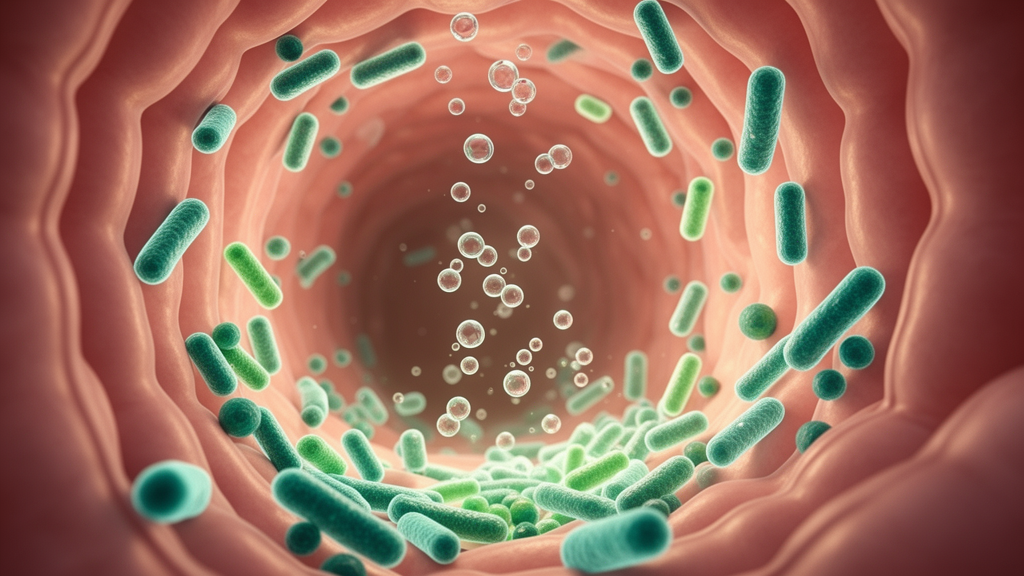
A randomized, double-blind, placebo-controlled trial led by researchers at Hiroshima University has found that hydrogen supplementation did not significantly improve sleep quality compared with a placebo when participants were analyzed as a single group. Yet the study, published in Scientific Reports on July 27, 2026, uncovered a striking pattern beneath that null result: among volunteers who received hydrogen-rich jelly, those who reported the greatest improvements in sleep quality carried markedly lower levels of hydrogen-producing bacteria in their guts than those who reported little or no benefit. The finding suggests that the microbial residents of the digestive tract may help determine who responds to exogenous hydrogen and who does not, and it adds a new variable to a field that has largely treated supplement recipients as microbiologically interchangeable.
Molecular hydrogen has attracted growing scientific interest over the past two decades because of biological activities confirmed in both animal and clinical studies: it acts as an antioxidant, reduces inflammation, and inhibits apoptosis, the process of programmed cell death. Sleep disturbances, meanwhile, are linked to oxidative stress, the cellular damage caused by the accumulation of peroxides and free radicals generated during normal biological processes. Experiments in mice have shown that hydrogen supplementation improves memory consolidation during sleep, and studies in humans with long-COVID or obesity have reported improved sleep quality after hydrogen intake. Taken together, these observations made hydrogen an appealing candidate for a sleep intervention, but its effects on sleep quality had not been sufficiently evaluated in randomized clinical trials, and the hydrogen that humans naturally produce through gut microbial fermentation has rarely been considered in studies of exogenous hydrogen.
“Molecular hydrogen has attracted attention for its potential antioxidant and anti-inflammatory properties, but its effects on sleep quality have not been sufficiently evaluated in randomized clinical trials,” said Fumiko Higashikawa, associate professor (special designation) at Hiroshima University Hospital and first and corresponding author of the study. “In addition, humans naturally produce hydrogen through gut microbial fermentation, yet the capacity for hydrogen production varies greatly among individuals. This variation has rarely been considered in studies of exogenous hydrogen. [Our] study aims to clarify not only whether hydrogen is beneficial for sleep, but also whether the gut microbiome may help explain individual differences in response to hydrogen.”
The trial was conducted between January and May 2024 and ran for eight weeks. Forty-four participants, 16 male and 28 female, completed the study, and they were divided equally into a hydrogen-supplementation group and a placebo group. Each participant consumed three sealed packets of hydrogen-containing jelly daily, or identical jelly containing air in the placebo arm, with doses taken at intervals longer than two hours. The total daily dose of hydrogen, or air in the placebo group, was 0.9 milligrams. Adherence was tracked closely: jelly consumption, health status, medication use and supplement intake were recorded daily, while food and beverage consumption was recorded for the three days preceding each clinic visit. Sleep quality was assessed weekly through four surveys, and fecal samples were collected before and after the intervention to profile each participant’s gut microbiome.
When the researchers compared the two groups as a whole, the result was clear: there was no statistically significant difference in sleep improvement between the hydrogen group and the placebo group. But the exploratory analyses told a more nuanced story. Participants with lower levels of gut hydrogen-producing bacteria showed greater improvements in sleep quality and mental stress after hydrogen intake. “The most important message of this paper is that the effects of hydrogen-rich jelly may not be uniform across all individuals, and that differences in gut hydrogen-producing bacteria may influence individual responses,” Higashikawa said. “These findings provide a new perspective for future hydrogen research: individual differences in the gut microbiome should be considered when evaluating the effects of hydrogen.”
One of the most remarkable observations of the study was the sheer scale of variation in hydrogen-producing microbes among the volunteers. The researchers used the combined relative abundance of four major hydrogen-producing genera as a proxy for each participant’s hydrogen-producing potential, and this measure ranged from 0.1 percent to 57.5 percent across the cohort. In other words, two healthy adults could differ enormously in the baseline capacity of their gut microbes to generate hydrogen gas through fermentation. Before the intervention even began, principal coordinate analysis of the gut microbiome in the hydrogen group revealed distinct clustering between individuals later classified as improved or not improved, based on whether their mean change in sleep quality on a Visual Analog Scale exceeded the median improvement.
The microbiome profiles that distinguished responders from non-responders appeared to be tied to the abundance of hydrogen-producing bacteria, including taxa such as Bacteroides. To explain the pattern, Higashikawa offered a metaphor. “Hydrogen may be like a whisper in a room,” she said. “In a quiet room, even a small whisper can be heard clearly. Similarly, in people with low baseline hydrogen production in the gut, exogenous hydrogen may be more noticeable and may have a greater effect. In contrast, in people whose gut microbiome already produces a large amount of hydrogen, additional hydrogen may be like a whisper in a noisy room: it may be harder to detect or feel its effect.”
The study’s design carries both strengths and limitations that shape how the findings should be interpreted. As a randomized, double-blind, placebo-controlled, parallel trial, it meets the methodological standard for testing whether an intervention works, and the daily adherence logs and pre- and post-intervention microbiome profiling add rigor. However, the sample of 44 completers is small, the participants were healthy volunteers rather than people with diagnosed sleep disorders, and sleep quality was measured by subjective surveys rather than objective measures such as polysomnography or actigraphy. The microbiome findings are explicitly exploratory, meaning they generate hypotheses about individual variability rather than establishing a confirmed causal mechanism. The authors themselves emphasize that tests must be conducted in larger and more diverse populations using objective sleep measures before any firm conclusions can be drawn.
Even with those caveats, the researchers see the work as an important first step toward a more personalized approach to hydrogen-based interventions, in which an individual’s gut environment might help identify who is more likely to benefit. The next step, they say, is to investigate the relationship between breath hydrogen concentration and the gut microbiome, in order to clarify the mechanisms underlying individual responsiveness to hydrogen. “Beyond sleep, we aim to apply this microbiome-informed approach to other health targets for which hydrogen may have potential benefits, and to evaluate its effectiveness more broadly,” Higashikawa concluded. “Our ultimate goal is to contribute to a society in which supplement choices and dietary strategies can be optimized based on individual gut microbiome characteristics.”
The study, co-authored by Fumiko Higashikawa and Keishi Kanno of Hiroshima University Hospital, was funded by Shinryo Corporation, which also provided the jellies used in the trial, a relationship disclosed by the authors. For now, the practical takeaway is a measured one: hydrogen supplementation did not outperform placebo for sleep in this healthy cohort, but the wide natural variation in gut hydrogen production, spanning abundance values from 0.1 to 57.5 percent, hints that future trials may need to account for participants’ microbial profiles rather than treating everyone as microbiologically equivalent. If larger studies confirm the association, microbiome-informed supplement design could move a step closer, with the gut’s own hydrogen-producing microbes serving as one factor in how any extra hydrogen a person consumes is experienced.
Subject of Research: Gut microbiome variability and individual responses to hydrogen supplementation for sleep quality in a randomized placebo-controlled trial
Article Title: Gut microbiome may help explain why sleep improvement varies after hydrogen supplementation
Article References: Gut microbiome may help explain why sleep improvement varies after hydrogen supplementation. Original publication (Bibliographic details unavailable.)
Image Credits: AI Generated
DOI: Not provided
Keywords: hydrogen supplementation, gut microbiome, sleep quality, randomized controlled trial, hydrogen-producing bacteria, Bacteroides, oxidative stress, placebo-controlled, personalized nutrition, Hiroshima University, Scientific Reports, microbiome profiling
Cite Scienmag News
Morgan Morrow. (October 25, 2026). Gut bacteria may explain why hydrogen supplements help some sleepers more than others. Scienmag. https://scienmag.com/gut-bacteria-may-explain-why-hydrogen-supplements-help-some-sleepers-more-than-others/
Morgan Morrow. "Gut bacteria may explain why hydrogen supplements help some sleepers more than others." Scienmag, 25 October 2026, https://scienmag.com/gut-bacteria-may-explain-why-hydrogen-supplements-help-some-sleepers-more-than-others/. Accessed 25 October 2026.
Morgan Morrow. "Gut bacteria may explain why hydrogen supplements help some sleepers more than others." Scienmag. October 25, 2026. https://scienmag.com/gut-bacteria-may-explain-why-hydrogen-supplements-help-some-sleepers-more-than-others/


