


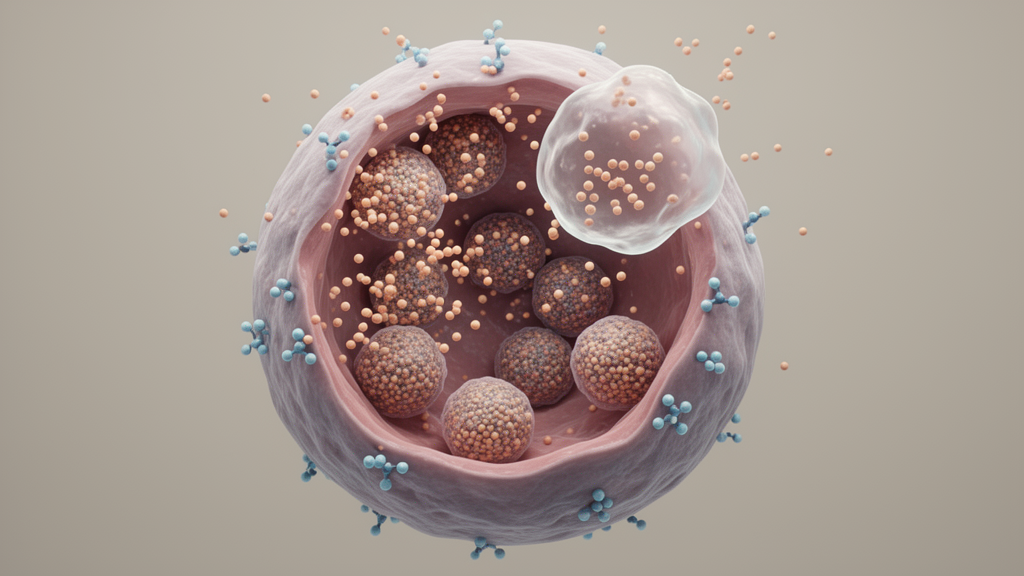
Low-molecular-weight components of porcine placental extract inhibited degranulation in rat basophilic leukemia RBL-2H3 cells by blocking calcium influx from outside the cells, according to a laboratory study. The researchers used the cell line as a mast-cell model and found that short-term exposure to the extract reduced degranulation in a dose-dependent manner. The mechanism was associated with preventing extracellular Ca²⁺ entry rather than suppressing the release of Ca²⁺ from intracellular stores.
Because the experiments involved a rat-derived cell line, the findings do not establish that the extract has antiallergic effects in people. The study examined how placental extract affects the cellular events associated with mast-cell activation. Mast cells secrete inflammatory mediators, including histamine, leukotrienes and prostaglandins, and therefore have an important role in allergic diseases.
Placental extract contains peptides, amino acids, nucleic acids, vitamins and minerals and is used in skin care and as a health food. It has also been considered in the treatment of various diseases, but the molecular mechanisms underlying its reported inhibitory effects on mast-cell activation were unclear. The investigators focused on degranulation, calcium handling and signaling in antigen-stimulated RBL-2H3 cells.
The treatment prevented the increase in intracellular calcium that depended on calcium entering from the extracellular environment. It did not inhibit Ca²⁺ release from intracellular Ca²⁺ stores. These measurements support a mechanism in which the extract suppresses calcium entry and, in parallel with that effect, reduces the degranulation response.
The evidence comes from cultured cells and does not show whether the same mechanism operates in human mast cells or in an intact organism. Analysis of intracellular signaling produced a second measured difference. In antigen-stimulated RBL-2H3 cells, porcine placental extract did not affect phosphorylation of Syk, which the study describes as an upstream signaling component.
It did inhibit phosphorylation of ERK1/2, which modulates cytokine production. The experiment therefore associated treatment with reduced ERK1/2 phosphorylation while Syk phosphorylation remained unchanged. The reported results do not specify whether ERK1/2 inhibition caused, resulted from or occurred independently of the blocked calcium influx, and the cell experiment alone does not establish any effect on cytokine production.
Fractionation further indicated that the inhibitory material had an approximate molecular weight of 200–400 daltons. This placed the active components in a low-molecular-weight fraction of the porcine placental extract, although the supplied research abstract does not identify their chemical composition. The authors state that the results may contribute to the development of novel antiallergic drugs, but that prospect remains preclinical: the reported work was conducted in RBL-2H3 cells, and no human, animal or clinical efficacy outcomes were presented.
Subject of Research: Mechanisms of placental-extract inhibition of mast-cell degranulation in a rat cell model.
Article Title: Low-molecular-weight components of placental extract inhibit degranulation by blocking Ca2+ influx in rat basophilic leukemia cells
Article References: Fujii, Y., Hashimoto, S., Komatsu, Y., Suzuki, R., & Hirashima, N. (2026). Low-molecular-weight components of placental extract inhibit degranulation by blocking Ca2+ influx in rat basophilic leukemia cells. Molecular Biology Reports, 53(1), Article 1493. https://doi.org/10.1007/s11033-026-12647-4
Image Credits: AI Generated
DOI: 10.1007/s11033-026-12647-4
Keywords: placental extract, mast-cell model, RBL-2H3 cells, degranulation, calcium influx, ERK1/2, Syk, cellular signaling, porcine extract, allergic inflammation, Low-molecular-weight, components
Cite Scienmag News
Drew Townsend. (October 24, 2026). Placental extract limits calcium-driven degranulation in rat cell model. Scienmag. https://scienmag.com/placental-extract-limits-calcium-driven-degranulation-in-rat-cell-model/
Drew Townsend. "Placental extract limits calcium-driven degranulation in rat cell model." Scienmag, 24 October 2026, https://scienmag.com/placental-extract-limits-calcium-driven-degranulation-in-rat-cell-model/. Accessed 24 October 2026.
Drew Townsend. "Placental extract limits calcium-driven degranulation in rat cell model." Scienmag. October 24, 2026. https://scienmag.com/placental-extract-limits-calcium-driven-degranulation-in-rat-cell-model/


