


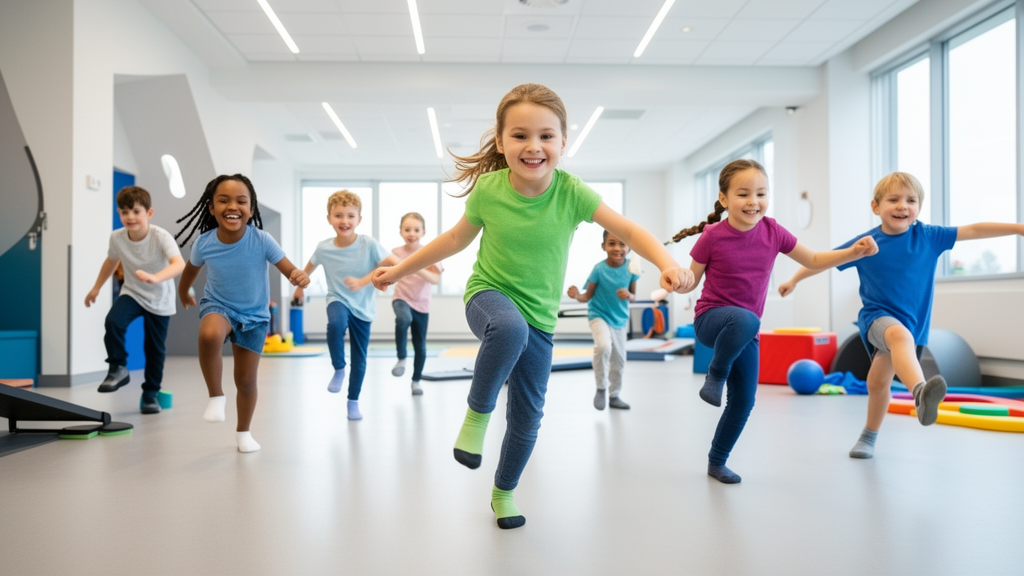
Only three of 22 published intervention studies targeting children and adolescents with special educational needs actually grounded their work in a recognized physical literacy framework, according to a new scoping review published in Frontiers in Sports and Active Living. The finding, drawn from a systematic mapping of literature published between 2012 and 2025, suggests that a concept celebrated for its holistic, whole-person philosophy is being reduced in practice to little more than motor skill testing when applied to some of the young people who need it most.
Physical literacy, first conceptualized by Margaret Whitehead, describes the motivation, confidence, physical competence, and knowledge and understanding that together sustain lifelong physical activity. Its philosophical roots lie in monism, existentialism, and phenomenology: movement is experienced as a whole, and education must address the whole person rather than only the physical body. Crucially, the concept is universal by design, applying to all learners, including those with disabilities. Yet the review, conducted by Océane Cochon Drouet, Christophe Schnitzler, and Lisa Lefèvre at the Haute École Pédagogique du Canton de Vaud in Switzerland, documents a striking gap between that philosophy and the empirical reality of research on children with special educational needs.
The team searched four electronic databases, ERIC, PubMed/MEDLINE, SPORTDiscus, and Taylor and Francis, following the Arksey and O’Malley scoping review framework updated by Peters and colleagues, and reported the process according to PRISMA-ScR guidelines. Twenty-two empirical studies met the eligibility criteria, which covered children and adolescents aged 6 to 18 with conditions including autism spectrum disorder, intellectual disability, developmental coordination disorder, dyspraxia, learning disorders, and physical disabilities. Chronic medical conditions without an educational need were excluded. Most of the included studies appeared after 2018, with nine published between 2024 and 2025, reflecting a recent acceleration of interest in the field.
The conceptual picture that emerged was fragmented. Only three studies explicitly conceptualized physical literacy, meeting criteria such as naming the construct in their objectives, measuring it with a validated multidimensional tool like the Canadian Assessment of Physical Literacy, or citing a formal theoretical framework. Six more addressed multiple dimensions implicitly without using the terminology. The remaining 13 studies targeted isolated motor, fitness, or behavioral outcomes with no reference to physical literacy at all. When dimensions were assessed, the physical dimension dominated, appearing in 19 of 22 studies, while the affective dimension of enjoyment, motivation, and confidence appeared in 14, the cognitive dimension in only eight, and the social dimension in just five. No study outside the three explicit ones addressed all four dimensions simultaneously.
The review also uncovered a structural disconnect between inclusive education policy and the settings in which research is actually conducted. Only four of the 22 studies took place in genuinely inclusive environments where children with special educational needs interacted directly with typically developing peers under structured conditions. Eight were conducted in segregated or specialized settings, and another eight provided too little information to classify. Because inclusive education is the legislative and ethical norm across the countries represented in the corpus, the authors argue that practitioners in mainstream schools currently have almost no empirically grounded guidance for developing physical literacy in heterogeneous classes.
Despite these limitations, the interventions themselves produced instructive signals. Sixteen of the 22 studies reported positive directional effects on at least one dimension. In a six-month randomized controlled trial, Shen and colleagues found large improvements in fundamental motor skills among Chinese adolescents with intellectual disabilities, with an effect size of η² = 0.330 on the Test of Gross Motor Development total score, alongside gains in limb strength and cardiorespiratory fitness. A one-week intensive bike camp enabled all 15 participating children with severe autism to acquire bicycle skills, with 60 percent achieving independent two-wheel riding. By contrast, the largest study in the corpus, a cluster randomized trial of 238 Australian children with intellectual disability across 20 schools, found no significant effects on fundamental movement skills, a null result the authors link to its low-intensity teacher professional learning model rather than direct motor instruction.
That contrast points to one of the review’s most consequential technical observations: it is not the existence of a school-based program that drives motor gains, but the intensity and directness of the physical instruction it delivers. In the null cluster trial, teacher completion rates were the only significant predictor of student outcomes. Observational data from South Korea reinforced the point, showing that lesson content and classroom location significantly moderated the relationship between teacher behavior and student physical activity. Teacher preparation, the review concludes, was consistently associated with whether interventions reached their intended outcomes, more so than program content itself.
The affective and social data add further nuance. Programs that explicitly targeted motivation and confidence reported large effects, including a d of 3.96 for motivation and confidence in an Iranian program for children with autism that combined fundamental skills play with visual communication supports. Peer-mediated strategies produced the most consistent positive outcomes across program types, improving physical and affective engagement simultaneously, and in the one study that measured peer partners directly, typically developing participants showed comparable fitness gains. Yet longitudinal data revealed a worrying pattern: across three years of data from 328 Norwegian adolescents, those with disabilities experienced significantly lower psychological need satisfaction in physical education and organized sport than their peers, but the gap disappeared in self-organized physical activity, suggesting the deficit lies in how these environments are designed rather than in the students themselves.
Technology, meanwhile, emerged as an amplifier of existing conditions rather than a substitute for them. Wearable trackers achieved unusually high compliance among adolescents with autism, attributed to preferences for routine and visual feedback, but only within a structured school environment with teacher support. Supervised virtual reality exergaming at school produced high attendance and engagement, while home-based exercise without coaching failed to engage participants. The authors caution that a policy agenda treating digital tools as a primary solution to structural inclusion problems may be misplaced.
The review carries clear limitations. No formal quality appraisal was conducted, consistent with scoping methodology but limiting how findings can be weighted by rigor. The search strategy anchored in widely indexed terms may have underrepresented studies on cognitive and social dimensions, publication bias cannot be excluded, and the small samples and predominantly quasi-experimental designs of the included studies mean effect estimates should be interpreted with caution. Even so, the authors conclude that the field systematically risks underestimating what children with special educational needs can achieve, because the dominant assessment tools are not designed to capture motivation, confidence, and movement knowledge. They call for larger, longitudinal, multi-level studies in genuinely inclusive school settings, evaluated with validated physical literacy instruments designed for and with these populations, and grounded in sustained teacher development rather than program innovation alone.
Subject of Research: Physical literacy interventions for children and adolescents with special educational needs
Article Title: Promoting physical literacy in children and adolescents with special educational needs: a scoping review of school-based and community-based interventions, characteristics, and outcomes
Article References: Cochon Drouet, O., Schnitzler, C., & Lefèvre, L. (2026). Promoting physical literacy in children and adolescents with special educational needs: a scoping review of school-based and community-based interventions, characteristics, and outcomes. Frontiers in Sports and Active Living, 8, Article 1900203. https://doi.org/10.3389/fspor.2026.1900203
Image Credits: AI Generated
DOI: 10.3389/fspor.2026.1900203
Keywords: physical literacy, special educational needs, inclusive education, physical education, scoping review, autism spectrum disorder, intellectual disability, motor skills, school-based intervention, teacher professional development, peer interaction, physical activity
Cite Scienmag News
Courtney Benton. (October 24, 2026). Physical Literacy Research on Children With Special Needs Stuck in Segregated Settings, Review Finds. Scienmag. https://scienmag.com/physical-literacy-research-on-children-with-special-needs-stuck-in-segregated-settings-review-finds/
Courtney Benton. "Physical Literacy Research on Children With Special Needs Stuck in Segregated Settings, Review Finds." Scienmag, 24 October 2026, https://scienmag.com/physical-literacy-research-on-children-with-special-needs-stuck-in-segregated-settings-review-finds/. Accessed 24 October 2026.
Courtney Benton. "Physical Literacy Research on Children With Special Needs Stuck in Segregated Settings, Review Finds." Scienmag. October 24, 2026. https://scienmag.com/physical-literacy-research-on-children-with-special-needs-stuck-in-segregated-settings-review-finds/


