


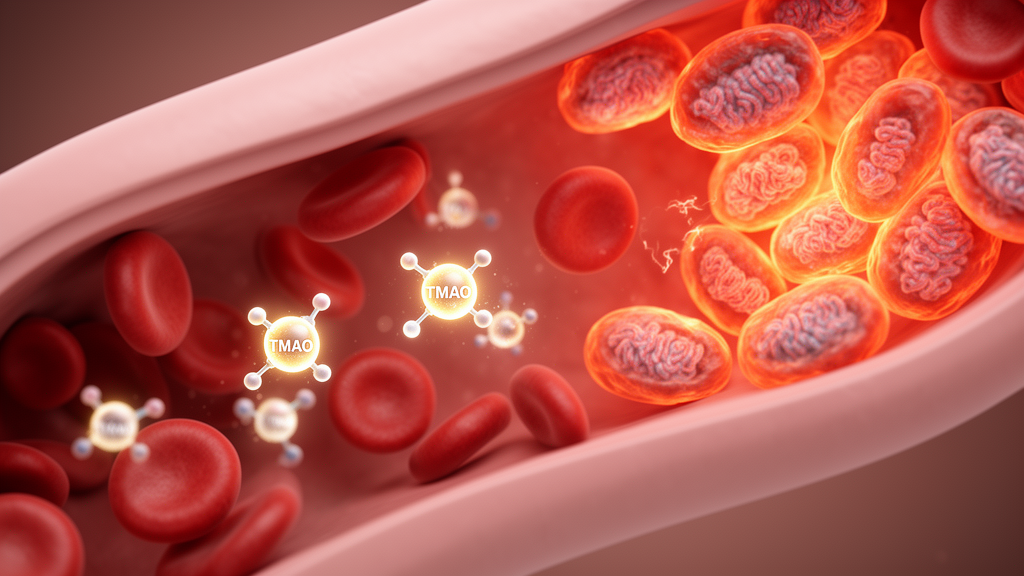
As deadly heat waves become one of the defining public health threats of a warming world, researchers are racing to understand why heat stroke kills so many of the people it strikes. A new narrative review published in Frontiers in Physiology argues that a gut microbiota-derived metabolite called trimethylamine N-oxide, or TMAO, may be a hidden molecular link between heat-induced gut damage and the multi-organ failure that makes heat stroke so lethal. Heat stroke is defined by a core body temperature of at least 40 degrees Celsius accompanied by central nervous system dysfunction and multi-organ failure, with mortality rates ranging from 20 to 70 percent. The review, led by emergency medicine and pharmacy researchers affiliated with Southern Medical University and the PLA General Hospital of Southern Theater Command in Guangzhou, China, synthesizes evidence that TMAO, long implicated in cardiovascular and kidney disease, could aggravate the inflammatory storm, vascular injury, and thrombosis seen in severe heat illness.
TMAO is produced through a two-step, meta-organismal pathway that begins in the colon. Dietary precursors such as choline, phosphatidylcholine, L-carnitine, and betaine, abundant in red meat, egg yolks, seafood, and organ meats, are metabolized by gut bacterial TMA lyases, notably the CutC/D enzyme system, to generate trimethylamine, or TMA. TMA is then absorbed through the portal circulation and oxidized in the liver by flavin-containing monooxygenase 3, or FMO3, into odorless TMAO, which circulates systemically and is excreted primarily by the kidneys. Circulating TMAO levels are shaped by diet, gut microbiota composition, hepatic FMO3 activity, renal function, age, and sex. Omnivores carry two- to five-fold higher abundance of TMA-producing Clostridiales species than vegetarians or vegans, translating into significantly elevated fasting and postprandial TMAO, while chronic kidney disease can push plasma concentrations 20- to 40-fold above normal by impairing renal clearance.
The review frames heat stroke as a systemic inflammatory and hemodynamic disorder rather than a purely thermoregulatory collapse, and it places the intestine at the center of the pathology. Rapid elevation of core body temperature triggers splanchnic vasoconstriction and intestinal ischemia-reperfusion injury, downregulating tight junction proteins such as zonula occludens-1, occludin, and claudin, and severely compromising the intestinal barrier. This barrier breakdown, sometimes called the gastrointestinal paradigm of heat stroke, precipitates gut dysbiosis in which TMA-producing bacterial taxa may expand while beneficial commensals such as Bifidobacterium and Lactobacillus decline, potentially elevating TMA and TMAO generation. Simultaneously, heat stress promotes translocation of lipopolysaccharide and other bacterial products into the systemic circulation, establishing a leaky gut state that complements TMAO’s pro-inflammatory effects and creates a feed-forward loop of permeability, inflammation, and metabolite translocation.
Crucially, TMAO itself appears to damage the very barrier that contains it. In intestinal epithelial cells, TMAO dose-dependently downregulates occludin and claudin-1 expression, increases paracellular permeability to 4-kilodalton FITC-dextran, and synergistically enhances bacterial protease-mediated cleavage of occludin. It also activates the TLR4/MyD88/NF-kappaB pathway in colonic epithelium and primes NLRP3 inflammasome activation by suppressing ATG16L1-dependent autophagy, further sustaining intestinal inflammation and barrier dysfunction. This self-reinforcing cycle could hypothetically keep TMAO elevated even after the initial thermal insult resolves, potentially contributing to the prolonged multi-organ dysfunction observed in severe heat stroke cases, although the review’s authors stress that whether TMAO translocates in excess across a heat-damaged barrier has not been directly demonstrated and remains hypothetical.
Once in the circulation, TMAO is proposed to ignite the inflammatory cascade central to heat stroke pathology through multiple converging pathways. In vascular endothelial cells, TMAO stimulates reactive oxygen species production, causing thioredoxin-interacting protein, or TXNIP, to dissociate from thioredoxin and bind NLRP3, triggering inflammasome assembly, caspase-1 activation, and maturation of the pro-inflammatory cytokines IL-1beta and IL-18. A second route involves suppression of the mitochondrial deacetylase SIRT3, which leads to hyperacetylation and inactivation of manganese superoxide dismutase 2, or SOD2, causing mitochondrial ROS accumulation and NLRP3 activation. A third pathway operates through lysosomal damage: TMAO increases the activity of cathepsin B, which activates NLRP3 through lysosomal injury. Recent work adds a fourth mechanism involving endoplasmic reticulum stress, with TMAO upregulating PERK, IRE1alpha, and ATF6 in human aortic endothelial cells and inducing trained immunity through combined ER stress, mitochondrial ROS, and metabolic reprogramming toward glycolysis.
TMAO also strikes the vascular endothelium, the continuous monolayer that regulates vascular tone and prevents thrombosis. It dose-dependently reduces ZO-1 expression in endothelial cells, increasing monolayer permeability, and directly inhibits endothelial nitric oxide synthase, reducing NO production and impairing vasodilation at concentrations of 10 to 50 micromolar achievable in pathological states. In isolated rat femoral arteries, TMAO specifically suppresses endothelium-derived hyperpolarizing factor-type relaxation, suggesting it targets multiple vasodilatory pathways simultaneously. Perhaps most strikingly, TMAO induces pyroptosis, a pro-inflammatory form of programmed cell death, in vascular endothelial cells through the ALDH2/ROS/NLRP3/gasdermin D pathway, characterized by GSDMD N-terminal pore formation and plasma membrane perforation. In heat stroke, elevated circulating TMAO is proposed to synergize with direct thermal endothelial injury, potentially exacerbating barrier dysfunction, microvascular leakage, tissue edema, and multi-organ dysfunction, though this proposed synergy awaits direct testing in heat-stroke models.
The coagulation system represents another critical target. Disseminated intravascular coagulation is among the most lethal complications of heat stroke, and TMAO plays a significant role in coagulation derangement. Large-scale clinical studies involving more than 4,000 participants have shown that plasma TMAO levels independently predict three-year thrombotic event risk, and mechanistically, TMAO enhances stimulus-dependent calcium release from platelet intracellular stores through phospholipase C and IP3 signaling, increasing platelet responsiveness to ADP, thrombin, collagen, and arachidonic acid even under submaximal stimulation. TMAO also upregulates tissue factor expression in human aortic endothelial cells through NF-kappaB activation, providing a direct mechanistic connection to the extrinsic coagulation pathway that drives arterial thrombus formation. Experimental studies further indicate that elevated TMAO attenuates the antiplatelet efficacy of clopidogrel, inducing clopidogrel resistance. In heat stroke, heat-activated coagulation cascades are proposed to synergize with TMAO-induced platelet hyperreactivity, potentially accelerating progression from microvascular thrombosis to consumptive coagulopathy and DIC.
Mitochondria and the brain complete the suspected injury map. TMAO suppresses SIRT3 and downregulates SOD2 in endothelial progenitor cells, triggering mitochondrial apoptosis and impaired vascular repair, while also impairing pyruvate and fatty acid oxidation in cardiac mitochondria and reducing ATP-generating capacity. Mitochondrial DNA released from injured mitochondria can engage innate immune sensing via the cGAS-STING pathway, a link recently demonstrated in osteoblastic cells, providing a plausible route by which TMAO-induced mitochondrial injury could amplify systemic inflammation. Through the gut-brain axis, TMAO produced after dysbiosis and barrier disruption crosses the compromised blood-brain barrier, where it is proposed to activate microglial NLRP3 inflammasomes and promote neuroinflammation. Rodent models show sustained microglial activation and hippocampal-dependent cognitive deficits weeks after TMAO exposure, raising concerns about long-term neurological sequelae in heat stroke survivors. Elevated circulating TMAO is also associated with increased ischemic stroke risk and worse neurological outcomes, potentially through enhanced platelet-neutrophil aggregate formation in cerebral microvessels and blood-brain barrier disruption.
The review’s authors are careful to flag the limits of this emerging picture. The majority of the mechanistic evidence derives from disease models other than heat stroke, including atherosclerosis, chronic kidney disease, obesity, aging, preeclampsia, and ischemic stroke, and none of the listed pathways has yet been demonstrated directly in heat-stroke models. Several proposed mechanisms should be regarded as hypotheses awaiting heat-stroke-specific validation. A central unresolved question is whether elevated TMAO is a driver of heat-stroke pathology or, at least in part, a consequence of it, since acute kidney injury common in severe heat stroke can impair renal clearance and raise circulating TMAO independently of increased microbial production. The temporal dimension also matters: heat stroke evolves over hours, whereas several TMAO-associated processes, including endothelial senescence, vascular remodeling, and atherosclerosis, have been studied after weeks to years of exposure. Exertional and classic heat stroke may differ substantially in TMAO kinetics and clinical meaning and should be analyzed separately in future studies.
There is also a concentration-dependent duality to consider. At physiological concentrations, TMAO functions as an ancient chemical chaperone, stabilizing protein folding and counteracting denaturation induced by urea, high temperature, and high pressure, as first discovered in marine elasmobranchs. In dogfish erythrocytes, TMAO suppressed heat shock protein 70 induction under heat stress while independently protecting cells from thermal injury, and molecular dynamics simulations show it stabilizes native protein conformations by modulating backbone conformational entropy. However, the concentrations reported for NLRP3 activation in endothelial cells, 30 to 300 micromolar, and for platelet hyperreactivity, around 100 micromolar, exceed typical human plasma levels of roughly 1 to 5 micromolar in healthy adults, and direct measurements of TMAO kinetics in heat-stroke patients or animal models are currently lacking. The dual-role concept is therefore retained as an unresolved, context-dependent hypothesis.
On the therapeutic front, the review evaluates strategies targeting TMAO metabolism while emphasizing that none has been validated for heat stroke treatment. Gut microbiota modulation with probiotics such as Lactobacillus plantarum ZDY04, prebiotics, and fecal microbiota transplantation could reduce TMA-producing bacterial abundance, while heat acclimatization preconditioning may preserve intestinal barrier integrity and modulate gut microbiota structure as a non-pharmacological preventive approach. TMA lyase inhibitors, including the choline analog 3,3-dimethyl-1-butanol, iodomethylcholine, and fluoromethylcholine, suppress TMA generation and platelet hyperreactivity in animal studies. The isoflavone puerarin effectively lowered Prevotella copri levels and plasma TMAO concentrations in patients with carotid artery plaques. Downstream, the NLRP3-specific inhibitor MCC950, which binds the Walker B region within the NLRP3 NACHT domain to block ATPase activity, ROS scavengers such as N-acetylcysteine, and SIRT3 agonists including resveratrol and nicotinamide riboside could interrupt the TMAO-driven inflammatory cascade. FMO3 inhibition reduces circulating TMAO but carries risks of off-target drug metabolism and unopposed TMA accumulation. Slow-onset strategies are conceptually suited to prevention in at-risk populations, whereas fast-acting NLRP3 blockade would be the more plausible acute adjunct if ever validated, since immediate cooling and organ support remain the only established life-saving interventions.
For now, the pathogenic cascade proposed by the reviewers, from heat stress through gut barrier disruption, dysbiosis, TMAO overproduction, NLRP3 inflammasome activation, endothelial dysfunction, platelet hyperreactivity, and mitochondrial failure to multi-organ injury, constitutes a plausible and potentially self-amplifying pathological network, but one whose individual links rest largely on indirect evidence. Key challenges remain, including the fact that no specific molecular receptor for TMAO in eukaryotic cells has been identified, that dynamic TMAO concentration changes across disease stages require clinical validation, and that the efficacy and safety of TMAO-targeting strategies in heat stroke models need systematic evaluation. Future research should focus on elucidating the concentration-dependent functional switch of TMAO in heat stroke, exploring the regulatory effects of heat acclimatization on TMAO levels, and developing gut microbiota-based prevention strategies. TMAO may hold promise as a candidate diagnostic biomarker and therapeutic target in this increasingly prevalent climate-sensitive disease, but clinical validation studies in heat-stroke patients are prerequisites before either application can be considered for translation.
Subject of Research: Molecular mechanisms of trimethylamine N-oxide in heat stroke pathophysiology
Article Title: Trimethylamine N-oxide (TMAO) in heat stroke: molecular mechanisms from gut dysbiosis to multi-organ injury
Article References: Wu, Q., Lin, G., Ou, Y., Ji, B., Pan, Z., & Shao, Y. (2026). Trimethylamine N-oxide (TMAO) in heat stroke: molecular mechanisms from gut dysbiosis to multi-organ injury. Frontiers in Physiology, 17, Article 1983362. https://doi.org/10.3389/fphys.2026.1983362
Image Credits: AI Generated
DOI: 10.3389/fphys.2026.1983362
Keywords: TMAO, heat stroke, gut microbiota, NLRP3 inflammasome, endothelial dysfunction, thrombosis, mitochondrial dysfunction, gut-brain axis, FMO3, TMA lyase inhibition, multi-organ failure, climate change
Cite Scienmag News
Cassandra Pierce. (October 24, 2026). Gut metabolite TMAO emerges as suspected molecular driver of heat stroke organ failure. Scienmag. https://scienmag.com/gut-metabolite-tmao-emerges-as-suspected-molecular-driver-of-heat-stroke-organ-failure/
Cassandra Pierce. "Gut metabolite TMAO emerges as suspected molecular driver of heat stroke organ failure." Scienmag, 24 October 2026, https://scienmag.com/gut-metabolite-tmao-emerges-as-suspected-molecular-driver-of-heat-stroke-organ-failure/. Accessed 24 October 2026.
Cassandra Pierce. "Gut metabolite TMAO emerges as suspected molecular driver of heat stroke organ failure." Scienmag. October 24, 2026. https://scienmag.com/gut-metabolite-tmao-emerges-as-suspected-molecular-driver-of-heat-stroke-organ-failure/


