

Friday, October 23, 2026
Science
No Result
View All Result
  • Login
  • HOME
  • SCIENCE NEWS
  • CONTACT US
  • HOME
  • SCIENCE NEWS
  • CONTACT US
No Result
View All Result
Scienmag
No Result
View All Result
Home Science News Earth Science

Tibetan Plateau uplift drove half of simulated rise in Pacific cyclone frequency

October 23, 2026
in Earth Science
Violet Maxwell
By Violet Maxwell Scienmag Editorial Profile - Natural Hazards
Reading Time: 2 mins read
0
Tibetan Plateau uplift drove half of simulated rise in Pacific cyclone frequency

Tibetan Plateau uplift drove half of simulated rise in Pacific cyclone frequency

65
SHARES
587
VIEWS
Share on FacebookShare on Twitter
ADVERTISEMENT

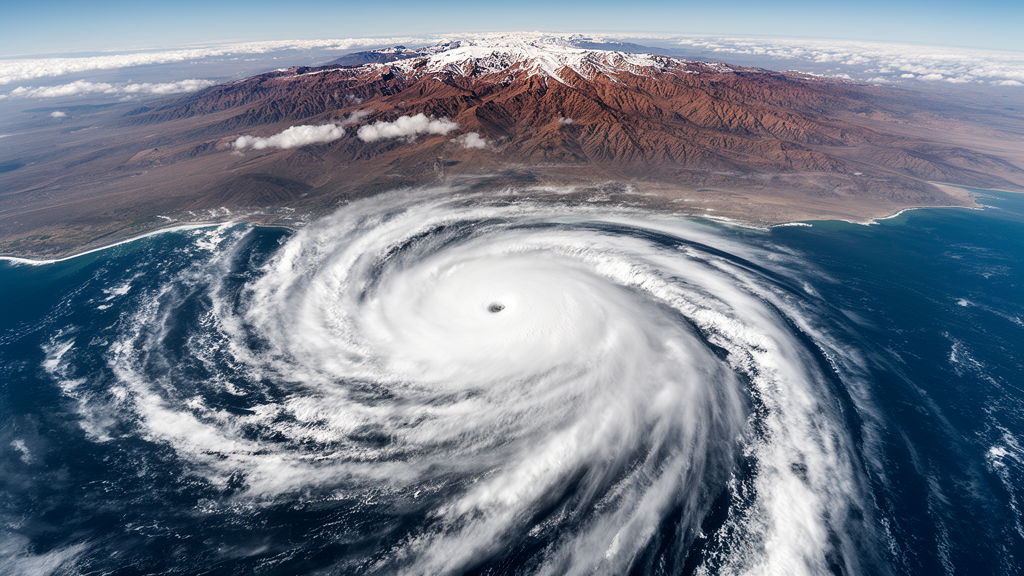
Nearly one-third of the world's tropical cyclones form over the western North Pacific, threatening Southeast and East Asia. A modeling study published in Nature Communications finds that the rise of the Tibetan Plateau was a key driver in shaping how often these storms formed across the Cenozoic era, accounting for nearly half of the simulated increase in cyclone frequency between the early Eocene and the present day. The climate modeling research, led by Tingyu Zhang and Tianjun Zhou, reports that Tibetan Plateau uplift, from early Eocene elevations to modern heights, explains close to 50 percent of the simulated rise in tropical cyclone frequency over the western North Pacific.

The simulations held the present-day land-sea configuration and sea surface temperatures prescribed and fixed, isolating the effect of the plateau's growing elevation. The researchers traced the mechanism to large-scale atmospheric dynamics. As the plateau rose, it generated an eastward-propagating Rossby wave train, a train of planetary-scale waves in the atmosphere.

This wave train strengthened the western North Pacific subtropical high, a semi-permanent high-pressure system, which in turn intensified the monsoon trough that stretches across the basin. The simulations showed an amplified supply of moisture feeding into the monsoon trough, together with reinforced upward motion of air. The study reports that these two changes collectively favor the genesis and intensification of tropical cyclones.

Tropical cyclone genesis over the western North Pacific shifted substantially during the Cenozoic, the era spanning roughly the last 66 million years, but the mechanisms behind those shifts had remained unclear. The new results indicate that the topographic evolution of High Mountain Asia played a pivotal role in that long-term history, as represented in the model. The study is a model-based reconstruction, so its conclusions depend on simulated climate states rather than direct storm observations, which do not exist for the deep past.

Because the authors prescribed modern sea surface temperatures and geography to separate the plateau's contribution, other Cenozoic factors, such as changing ocean temperatures, were not part of the uplift signal they quantified. Nevertheless, the work underscores how the growth of the world's highest plateau left a measurable imprint, in simulations, on one of the planet's most active tropical cyclone basins, tying the geological history of Asia's mountains to the storm hazards that affect coastal communities across East and Southeast Asia.

Subject of Research: Cenozoic Tibetan Plateau uplift and western North Pacific tropical cyclone frequency in model simulations

Article Title: Tibetan Plateau uplift increased western North Pacific tropical cyclone frequency

Article References: Zhang, T., Zhou, T., He, L., Guo, Z., Ren, Z., & Jiang, J. (2026). Tibetan Plateau uplift increased western North Pacific tropical cyclone frequency. Nature Communications. https://doi.org/10.1038/s41467-026-78480-2

Image Credits: AI Generated

DOI: 10.1038/s41467-026-78480-2

Keywords: Tibetan Plateau, tropical cyclones, western North Pacific, Cenozoic, paleoclimate, monsoon trough, subtropical high, Rossby wave, climate modeling, High Mountain Asia, Tibetan, Plateau

Cite Scienmag News

Violet Maxwell. (October 23, 2026). Tibetan Plateau uplift drove half of simulated rise in Pacific cyclone frequency. Scienmag. https://scienmag.com/tibetan-plateau-uplift-drove-half-of-simulated-rise-in-pacific-cyclone-frequency/


Violet Maxwell. "Tibetan Plateau uplift drove half of simulated rise in Pacific cyclone frequency." Scienmag, 23 October 2026, https://scienmag.com/tibetan-plateau-uplift-drove-half-of-simulated-rise-in-pacific-cyclone-frequency/. Accessed 23 October 2026.

Violet Maxwell. "Tibetan Plateau uplift drove half of simulated rise in Pacific cyclone frequency." Scienmag. October 23, 2026. https://scienmag.com/tibetan-plateau-uplift-drove-half-of-simulated-rise-in-pacific-cyclone-frequency/

Tags: atmospheric Rossby wave trainCenozoicCenozoic era climate changeclimate modelingclimate modeling studyEast Asian monsoon dynamicsHigh Mountain Asiaimpact of geological uplift on climatemonsoon troughmonsoon trough intensificationPacific cyclone frequency increasepaleoclimateplanetary-scale atmospheric wavesPlateauRossby wavesea surface temperature effectssubtropical highTibetanTibetan PlateauTibetan Plateau uplifttropical cyclone formation mechanismstropical cyclonestropical cyclones western North Pacificwestern North Pacific
Share26Tweet16
Previous Post

Movement Enhances Complex Pattern Learning, Study Finds

Next Post

Camel Milk Preservation Works Only When Processing Matches the Matrix

Related Posts

Cover Crops Improve Soil But Not Grape Yield
Earth Science

Cover Crops Improve Soil But Not Grape Yield

October 23, 2026
Landslide Impact on Saturated Basin Sediments Can Trigger Its Own Long Runout
Climate

Landslide Impact on Saturated Basin Sediments Can Trigger Its Own Long Runout

October 23, 2026
First Hydrogeological Map Reveals Hidden Aquifers of Northern Afghanistan
Earth Science

First Hydrogeological Map Reveals Hidden Aquifers of Northern Afghanistan

October 23, 2026
Kilometer-Scale Climate Model Matches Station-Based Products for Simulating Chile’s Water Cycle
Earth Science

Kilometer-Scale Climate Model Matches Station-Based Products for Simulating Chile’s Water Cycle

October 23, 2026
Sediment cores off Baja California trace when fossil fuel carbon reached the California Current
Biology

Sediment cores off Baja California trace when fossil fuel carbon reached the California Current

October 23, 2026
Interpretable Machine Learning Maps Hourly Traffic for Construction Delivery Planning
Earth Science

Interpretable Machine Learning Maps Hourly Traffic for Construction Delivery Planning

October 23, 2026
Next Post
Camel Milk Preservation Works Only When Processing Matches the Matrix

Camel Milk Preservation Works Only When Processing Matches the Matrix

  • Mothers who receive childcare support from maternal grandparents show more optimized

    Mothers who receive childcare support from maternal grandparents show more parental warmth, finds NTU Singapore study

    27656 shares
    Share 11059 Tweet 6912
  • University of Seville Breaks 120-Year-Old Mystery, Revises a Key Einstein Concept

    1061 shares
    Share 424 Tweet 265
  • Bee body mass, pathogens and local climate influence heat tolerance

    682 shares
    Share 273 Tweet 171
  • Researchers record first-ever images and data of a shark experiencing a boat strike

    546 shares
    Share 218 Tweet 137
  • Groundbreaking Clinical Trial Reveals Lubiprostone Enhances Kidney Function

    531 shares
    Share 212 Tweet 133
Science

Embark on a thrilling journey of discovery with Scienmag.com—your ultimate source for cutting-edge breakthroughs. Immerse yourself in a world where curiosity knows no limits and tomorrow’s possibilities become today’s reality!

RECENT NEWS

  • Camel Milk Preservation Works Only When Processing Matches the Matrix
  • Tibetan Plateau uplift drove half of simulated rise in Pacific cyclone frequency
  • Movement Enhances Complex Pattern Learning, Study Finds
  • Review Maps Sustainable Strategies to Curb Postharvest Vegetable Diseases

Categories

  • Agriculture
  • Anthropology
  • Archaeology
  • Athmospheric
  • Biology
  • Biotechnology
  • Blog
  • Bussines
  • Cancer
  • Chemistry
  • Climate
  • Earth Science
  • Editorial Policy
  • Marine
  • Mathematics
  • Medicine
  • Pediatry
  • Policy
  • Psychology & Psychiatry
  • Science Education
  • Science News
  • Social Science
  • Space
  • Technology and Engineering

Subscribe to Blog via Email

Enter your email address to subscribe to this blog and receive notifications of new posts by email.

Join 5,152 other subscribers

© 2025 Scienmag - Science Magazine

Welcome Back!

Login to your account below

Forgotten Password?

Retrieve your password

Please enter your username or email address to reset your password.

Log In
No Result
View All Result
  • HOME
  • SCIENCE NEWS
  • CONTACT US

© 2025 Scienmag - Science Magazine

Discover more from Science

Subscribe now to keep reading and get access to the full archive.

Continue reading