


Pacific and Atlantic Tropical Cyclones Took Opposite Paths During Medieval Warm Period
During the Medieval Warm Period, tropical cyclones shifted poleward in the Pacific but equatorward in the Atlantic, driven by differing ...
During the Medieval Warm Period, tropical cyclones shifted poleward in the Pacific but equatorward in the Atlantic, driven by differing ...

A numerical modeling study reveals that air-sea interaction establishes asymmetric sea surface temperature anomalies that drive the northward propagation of ...

Meteorologists developed a Bayesian consensus framework to generate a homogeneous, 26-year dataset tracking the radius of maximum wind across 631 ...

A study in Science Advances finds dinoflagellates dominate copepod diets in the Pacific Arctic, revealing significant geographical variations in marine ...

Coupled ocean-atmosphere simulations reveal that oceanic warm anomalies intensify tropical cyclones far more effectively than cold anomalies weaken them across ...

Researchers found that late-winter Pacific–North American atmospheric circulation patterns help predict East Asian summer tropical cyclone activity across multi-month seasonal ...

Warming across the Indian Ocean basin suppresses early-season tropical cyclone genesis over the open western North Pacific through enhanced wind ...

A 45-year analysis finds that years of intense tropical cyclone activity in the western North Pacific coincide with more frequent ...
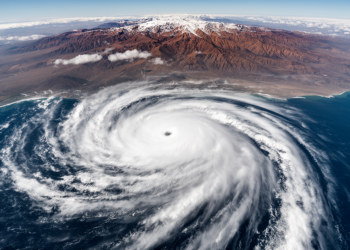
Climate model simulations indicate that the rise of the Tibetan Plateau accounted for nearly half of the increase in western ...
A new analysis of western North Pacific storm records from 1980 to 2025 shows that tropical cyclone activity and landfall ...


Embark on a thrilling journey of discovery with Scienmag.com—your ultimate source for cutting-edge breakthroughs. Immerse yourself in a world where curiosity knows no limits and tomorrow’s possibilities become today’s reality!