


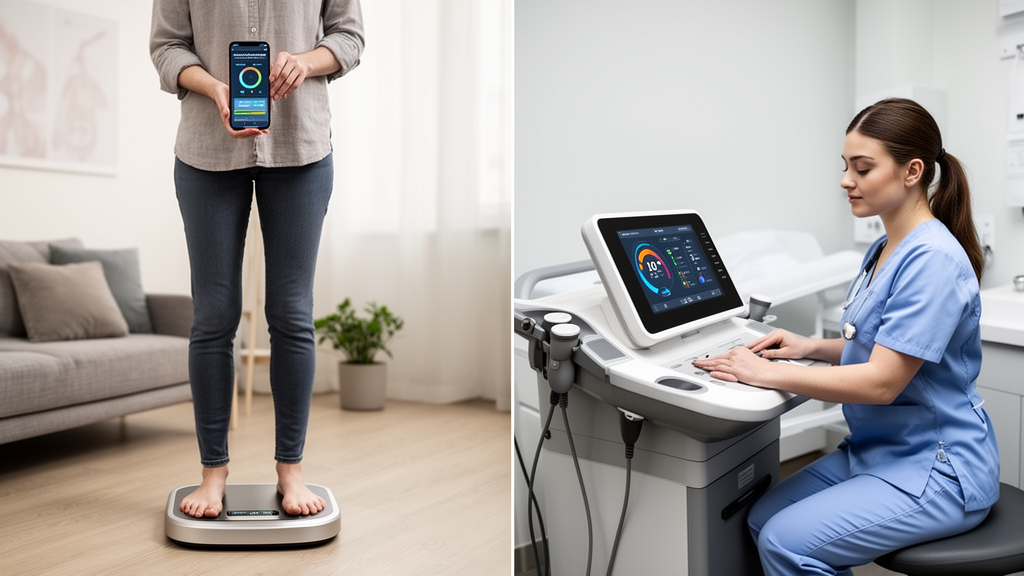
A prospective quasi-experimental study conducted at Holyoke Medical Center has demonstrated that a fully autonomous digital lifestyle intervention can produce weight loss and body composition outcomes comparable to those achieved through traditional provider-delivered care. Published in Frontiers in Digital Health, the research evaluated the RightBMI App, a software platform that generates personalized nutrition and exercise plans without ongoing human coaching. The study enrolled 160 patients being evaluated for metabolic and bariatric surgery between April 2024 and April 2025, splitting them into two groups of 80 based on the timing of their enrollment rather than random assignment.
The primary objective was to compare the efficacy of the software-generated intervention against plans delivered by experienced bariatric surgeons or physician assistants, with a specific focus on total body weight loss and the preservation of muscle mass. The RightBMI App operates using a rule-based clinical algorithm derived from over two decades of bariatric surgical and nutritional experience, rather than relying on machine learning or predictive artificial intelligence. Upon registration, patients provide demographic, clinical, and behavioral data, including sleep patterns, meal habits, and physical limitations.
The algorithm calculates an individualized daily protein intake goal, typically approximately 1 gram per kilogram of ideal body weight, and dynamically distributes this protein across the patient's awake hours to minimize prolonged periods without protein intake. This protein-centric approach is designed to achieve a controlled energy deficit while strategically prioritizing a high protein-to-energy ratio to maximize satiety and preserve lean body mass during rapid preoperative weight loss. In the provider-delivered group, healthcare professionals generated plans based on the same algorithmic principles, focusing on daily weight-based protein intake distributed throughout the patient's awake time.
Both groups were required to use consumer-grade bioimpedance scales for weekly body composition measurements, with standardized protocols for at-home weighing to ensure consistency. The study utilized Generalized Estimating Equations (GEE) with multiple imputation and inverse probability weighting to adjust for baseline differences in age, body mass index, and sex. This statistical approach was necessary because the sequential allocation resulted in the App group being significantly younger and having a higher proportion of male participants compared to the provider-delivered group.
The results indicated that after statistical adjustment, the App group showed significantly greater percentage total body weight loss at weeks 12 and 16 compared to the provider-delivered group. Specifically, the adjusted mean difference in total body weight loss was 2.64% at week 12 and 2.47% at week 16. Similarly, the App group demonstrated greater percentage fat mass loss at these mid-study time points, with adjusted mean differences of 2.94% and 4.20%, respectively.
However, by week 24, the outcomes between the two groups were comparable, with both achieving substantial fat mass loss while preserving muscle mass. A critical aspect of the study was the high rate of patients progressing to metabolic and bariatric surgery, which created informative censoring in the data. To address this, the researchers performed a time-to-event analysis using Kaplan-Meier curves and Cox proportional hazards regression.
This analysis showed no significant difference in the time to achieve at least 10% total body weight loss between the two groups, with a log-rank p-value of 0.23 and an adjusted hazard ratio of 0.83. Despite the comparable time to event, the App group had a significantly higher clearance rate for surgery by week 24, with 90% of patients cleared compared to 71.25% in the provider-delivered group. This difference was statistically significant, with a p-value of 0.0023.
Both groups achieved clinically meaningful outcomes, with the App group reporting a mean total body weight loss of 19.9% and a fat mass loss of 35.8% at 24 weeks. The study highlighted that fat mass loss and visceral fat loss were linearly associated with total body weight loss, whereas muscle mass loss did not show a significant correlation with weight loss. The preservation of muscle mass is a critical factor for long-term metabolic health, and the RightBMI App’s focus on protein intake appears to support this objective effectively.
The use of visual portion sizes, referred to as "forkfuls," in the app’s interface was noted as a distinctive feature that reduces cognitive burden while maintaining accuracy in protein intake. User engagement and satisfaction were high in the App group, with a mean satisfaction score of 8.76 out of 10 and an average session duration of 7.19 minutes. The return usage rate was 90.9%, and the bounce rate was low at 9.6%, indicating strong adherence to the digital platform.
Attrition rates were low in both groups, with only 1.25% of the provider-delivered group and 3.75% of the App group dropping out of the study. These low dropout rates compare favorably to the 20% to 40% attrition rates typically observed in similar lifestyle intervention studies. The study also included an exploratory equity analysis, which found no statistically significant differences in weight loss outcomes between Hispanic and non-Hispanic participants within the App group, although Hispanic participants demonstrated lower engagement metrics.
The study has several limitations that must be considered when interpreting the results. First, the quasi-experimental design with sequential allocation rather than randomization means that residual confounding cannot be entirely excluded, despite statistical adjustments. Second, the use of consumer-grade bioimpedance scales for body composition measurements introduces potential variability, although standardized protocols and consistent device use per participant were employed to mitigate this.
Third, adherence was assessed through application engagement metrics and body composition trends rather than direct objective measures such as food diaries or wearable devices, which limits the ability to directly verify dietary and exercise compliance. Additionally, the study was conducted at a single center, which may limit the generalizability of the findings to other populations or healthcare settings. Despite these limitations, the findings support the potential of fully autonomous digital platforms as scalable alternatives to traditional provider-led interventions in metabolic and bariatric surgery candidates.
The RightBMI App demonstrated the ability to deliver structured, individualized guidance that matches the efficacy of provider-delivered care while offering the advantages of standardization and accessibility. The platform’s autonomy minimizes provider bias and addresses gaps in obesity care by providing consistent, evidence-based recommendations. Future research should focus on large-scale, multicenter randomized controlled trials with extended follow-up to validate the long-term durability of the App’s benefits and to explore the synergistic effects of combining digital interventions with pharmacological treatments such as GLP-1/GIP receptor agonists.
In conclusion, the autonomous digital lifestyle intervention represented by the RightBMI App offers a promising tool for weight management in patients with obesity. By leveraging a protein-focused algorithm and dynamic personalization, the app achieves comparable weight loss and body composition outcomes to provider-delivered care while maintaining high user engagement and satisfaction. The study underscores the growing role of digital health technologies in addressing the challenges of obesity care, providing a cost-effective and scalable solution that can enhance accessibility and mitigate healthcare disparities.
Subject of Research: Comparative efficacy of autonomous digital lifestyle intervention versus provider-delivered care for obesity management
Article Title: Autonomous digital lifestyle intervention for obesity: a comparative study of software-generated vs. provider-delivered body composition outcomes
Article References: Pagani, I., Syed, M., Ages, C., Bell, M., & Raftopoulos, Y. (2026). Autonomous digital lifestyle intervention for obesity: a comparative study of software-generated vs. provider-delivered body composition outcomes. Frontiers in Digital Health, 8, 1874279. https://doi.org/10.3389/fdgth.2026.1874279
Image Credits: AI Generated
DOI: 10.3389/fdgth.2026.1874279
Keywords: digital health, obesity, weight loss, body composition, lifestyle intervention, bariatric surgery, protein intake, mobile health, autonomous intervention, muscle preservation, Autonomous, digital
Cite Scienmag News
Daisy Hatcher. (October 23, 2026). Research report: Autonomous digital lifestyle intervention for obesity: a comparative study of software-generated vs. provider-delivered body composition outcomes. Scienmag. https://scienmag.com/research-report-autonomous-digital-lifestyle-intervention-for-obesity-a-comparative-study-of-software-generated-vs-provider-delivered-body-composition-outcomes/
Daisy Hatcher. "Research report: Autonomous digital lifestyle intervention for obesity: a comparative study of software-generated vs. provider-delivered body composition outcomes." Scienmag, 23 October 2026, https://scienmag.com/research-report-autonomous-digital-lifestyle-intervention-for-obesity-a-comparative-study-of-software-generated-vs-provider-delivered-body-composition-outcomes/. Accessed 23 October 2026.
Daisy Hatcher. "Research report: Autonomous digital lifestyle intervention for obesity: a comparative study of software-generated vs. provider-delivered body composition outcomes." Scienmag. October 23, 2026. https://scienmag.com/research-report-autonomous-digital-lifestyle-intervention-for-obesity-a-comparative-study-of-software-generated-vs-provider-delivered-body-composition-outcomes/


