


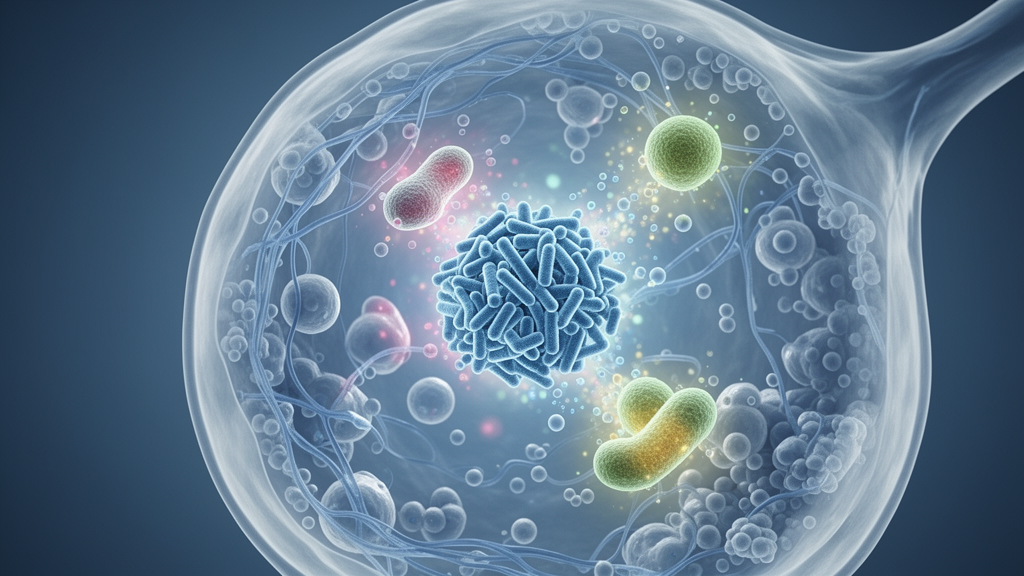
A targeted narrative review proposes that antibiotics for intracellular bacterial infections should be designed around the concentration, location and timing of active drugs at the bacterial niche, rather than around plasma exposure or laboratory potency alone. The authors’ subcellular pharmacokinetic-pharmacodynamic, or Sub-PK/PD, framework integrates spatial drug delivery, host-pathogen metabolic coupling, computational selection of complementary interventions and validation in models that reproduce human tissue architecture and dynamic dosing. It is a conceptual roadmap for generating testable combination regimens, not a demonstration that any particular combination is superior in patients.
The need for this approach follows from the variety of intracellular lifestyles used by bacteria. Mycobacterium tuberculosis persists in macrophage phagosomes and heterogeneous pulmonary lesions; Salmonella enterica remodels a membrane-bound vacuole and can enter a nonreplicating state; Listeria monocytogenes escapes into the cytosol; Chlamydia species construct specialized inclusions that intercept host lipids; and uropathogenic Escherichia coli can form intracellular bacterial communities in bladder epithelium. These locations expose bacteria to nutrient limitation, low pH, reactive species, hypoxia and metal stress, while also shielding them from antibodies and complement. Within a single nominal cell type, organisms may consequently occupy compartments with different pH, transport activity and physical barriers, and individual bacteria may range from rapid replication to metabolic activity without division or deep dormancy. The review describes this heterogeneity as a pharmacological as well as a microbiological problem, because infection location, bacterial state and host-cell condition jointly determine whether a drug reaches and kills its target.
That heterogeneity complicates the familiar pharmacokinetic journey from blood to infection. A drug must leave the circulation, cross tissue barriers, enter the relevant host cell, avoid efflux and inactivation, partition into the correct organelle and remain chemically active near its bacterial target. Total cellular accumulation is not equivalent to useful exposure: a large measured amount may be bound to membranes or concentrated in an organelle that does not contain the pathogen. The review cites imaging mass spectrometry, fluorescent analogues and subcellular fractionation showing that agents with comparable systemic exposure can distribute very differently among lesions, immune-cell populations and intracellular compartments. Plasma area under the concentration-time curve may therefore coexist with poor intracellular activity, while the unbound fraction at the bacterial surface tells a different story again. Tuberculosis illustrates the scale of the problem, with drug penetration differing between cellular rims and avascular caseum and sterilizing activity associated with adequate exposure in the lesion compartments that contain persistent bacilli.
Physicochemical properties further complicate local exposure. Weak bases can undergo ion trapping in acidic lysosomes, entering in an uncharged form and becoming protonated after crossing the membrane. The resulting concentration may be many times higher than the extracellular concentration, but it need not produce greater killing if the compound is unstable at low pH, binds poorly to its target or cannot cross the bacterial envelope. The review also notes the contrasting behavior of pyrazinamide, whose activity can depend on acidic or stressed environments that conventional neutral broth assays do not reproduce. A meaningful exposure map should therefore distinguish the extracellular medium, cytosol, pathogen-containing vacuole, lysosome and membrane- or lipid-associated fractions rather than treating all intracellular drug as equivalent. The relevant question is not whether a compound enters cells, but where its active fraction resides over time and whether it reaches the bacterial surface.
Pathogen-remodeled compartments add another layer. A mycobacterial phagosome can restrict maturation, a Salmonella-containing vacuole recruits host trafficking machinery, and a chlamydial inclusion captures lipids and vesicles without behaving like a conventional lysosome. These spaces differ in luminal pH, ion composition, protease activity and membrane permeability. A compound optimized to accumulate in a terminal lysosome may consequently miss bacteria in a less acidic or actively remodeled vacuole. Cytosolic pathogens present the opposite problem: an agent trapped almost entirely in acidic organelles may leave little free drug available in the cytosol. The review argues that combination partners should either overlap at the same bacterial population or deliberately provide coverage for spatially distinct reservoirs. Spatially separated activity may still be useful when different reservoirs contribute to persistence, but it represents population coverage rather than direct molecular synergy.
Sub-PK/PD also treats bacterial physiology as part of exposure rather than as a separate susceptibility measurement. Conventional minimum inhibitory concentration does not establish whether a population is replicating, slow-growing, nonreplicating but metabolically active or dormant. Intracellular conditions can themselves alter susceptibility without creating stable genetic resistance: macrophage uptake has been associated with nonreplicating Salmonella persisters, while macrophage-induced efflux contributes to reversible tolerance in mycobacteria. This distinction matters because resistance, tolerance and persistence are not interchangeable. Resistance changes the concentration required to inhibit growth through heritable mechanisms, tolerance permits survival during longer exposure without changing minimum inhibitory concentration, and persistence describes a small, reversible subpopulation that survives otherwise lethal treatment. A single endpoint reduction in bacterial abundance may represent delayed growth rather than killing. More informative experiments would trace viable counts over time, include washout and post-antibiotic regrowth, measure persister frequency and record host-cell viability alongside bacterial-state markers.
The infected host cell is also an active participant. Pattern-recognition signals, cytokines, hypoxia and organelle damage can alter glycolysis, oxidative phosphorylation, lipid handling, amino-acid metabolism, redox balance and metal transport, while bacterial effectors may redirect those changes. Intracellular Mycobacterium tuberculosis can use host cholesterol and persist in lipid-loaded macrophages, and Salmonella exploits multiple host nutrients in parallel rather than relying on one carbon source. Such flexibility means that blocking a single pathway may be compensated elsewhere. A host-directed intervention could restrict a critical nutrient, but starvation can also slow replication and deepen tolerance to growth-dependent antibiotics. The proposed combination would need to pair a nutrient or delivery constraint with an agent that disrupts bacterial stress adaptation, respiratory compensation or maintenance. Host pathways also require careful interpretation: increased glycolysis may support antimicrobial functions in some activated macrophages, while prolonged inflammation can damage tissue, and lipid accumulation can alter phagosome maturation as well as supply carbon to bacteria.
Paired and single-cell analyses are central to identifying shared bottlenecks. Dual RNA sequencing measures host and pathogen transcripts in the same infected material, allowing coordinated programs to be compared across species; single-cell methods can reveal minority states hidden by averages, while spatial methods can add an anatomical coordinate. These observations nominate possibilities rather than prove them. Transcript abundance does not establish metabolic flux, and a correlation between a host exporter and a bacterial importer does not by itself establish dependency. Stable-isotope tracing can constrain substrate use and exchange flux, while constraint-based metabolic models can test whether alternative pathways bypass an intervention. An actionable shared bottleneck should be active in the relevant niche, necessary across heterogeneous bacterial states, difficult to compensate, pharmacologically accessible and separable from essential host physiology. Selectivity must be demonstrated because host metabolic inhibition can cause immunosuppression, mitochondrial toxicity or organ-specific adverse effects, favoring partial and time-limited modulation over chronic pathway ablation in the proposed framework.
Computational tools are needed because combinations multiply the experimental search space across agents, doses, schedules, bacterial states and compartments. Genome-scale metabolic models can simulate metabolic dead ends in coupled host-pathogen networks. Graph-learning systems represent drugs, proteins, metabolites, pathways and compartments as typed nodes linked by transport, regulatory and biochemical relationships, allowing candidate combinations to be ranked before experimental testing. Machine-learning models can additionally integrate chemical structure, drug-induced transcriptional responses and known interactions. These approaches have supported mechanistic predictions, including models that connect compound interactions with pharmacokinetics and granuloma behavior, while graph-learning methods have been used to rank synergistic antibiotic combinations. The review stresses that such tools should prioritize experiments rather than replace validation: uncertainty must be reported, biological interpretations should remain inspectable, and prospective performance must be assessed in pathogens, cell types, chemical scaffolds and dosing schedules excluded from training. The framework also treats sequence as part of the regimen, because a host-directed primer may need to precede antibiotic exposure, a metabolic perturbation may briefly sensitize bacteria and then induce tolerance, and mismatched half-lives may create intervals of functional monotherapy.
Static monolayers cannot adequately test the resulting predictions because they omit cell differentiation, extracellular matrix, oxygen gradients, vascular delivery, mechanical forces and immune-cell recruitment, while constant drug concentrations omit the peaks, troughs and delays created by human dosing. Primary cells, organoids, three-dimensional granulomas and organ-on-a-chip systems can progressively reproduce selected features of tissue structure and flow. A lung-on-a-chip model, for example, revealed a contribution from alveolar epithelial cells to restriction of mycobacterial growth that was not apparent in macrophage-only systems, while a human bladder-chip reproduced dynamic intracellular E. coli communities under flowing conditions. These platforms are low-throughput validation checkpoints rather than broad combinatorial screens, and artifacts remain important: common poly(dimethylsiloxane) device material can adsorb lipophilic drugs, distorting measured free exposure. A biomimetic infection model should document cell provenance, differentiation, barrier function, multiplicity of infection, bacterial localization, oxygen, pH, binding conditions and reproducibility, while combination studies should measure viable burden, persister frequency, resistance emergence, host-cell death, barrier integrity, cytokines and compartment-specific drug concentrations. Fluorescence alone is inadequate because reporter signal may persist after death or change with metabolic state.
The resulting development pathway is stage-gated and explicitly probabilistic. Early studies should establish potency, host-cell toxicity and activity in a relevant infected-cell model. Spatial analysis should follow when efficacy and systemic exposure diverge; dynamic time-kill, sequential-dosing, washout and regrowth assays should replace endpoint checkerboards as central combination tests; and advanced candidates should move through primary cells, organoids or microfluidic models that reproduce the relevant barrier and exposure waveform. Host-directed partners require evidence of target engagement and an acceptable safety window, while repurposed drugs must achieve clinically attainable unbound concentrations in the target compartment. The review is limited by its targeted narrative design, publication bias toward well-studied organisms, inconsistent exposure reporting, small and repetitive machine-learning datasets and low throughput in biomimetic systems. Tuberculosis and Salmonella dominate the cited literature, and laboratory strains may differ from resistant clinical isolates. It therefore offers an organizing model for generating and testing hypotheses, not evidence that subcellular targeting will by itself improve clinical outcomes.
Subject of Research: Subcellular pharmacology systems for predicting combination therapies against intracellular bacterial infections
Article Title: Mapping the subcellular pharmacokinetic-pharmacodynamic landscape: a systems-pharmacology framework for predicting combination therapies against intracellular bacterial infections
Article References: Kumar Pinnelli, V. B., Thangachi, S. B., Jayashankar, C. A., Kandi, V., Manish, G. R., Sam, K. T., Raju Bhupathi Raju, P. K., Sucharitha, A. S., Barman, A., Sainath, G., & Singal, K. (2026). Mapping the subcellular pharmacokinetic-pharmacodynamic landscape: a systems-pharmacology framework for predicting combination therapies against intracellular bacterial infections. Frontiers in Pharmacology, 17, Article 1994202. https://doi.org/10.3389/fphar.2026.1994202
Image Credits: AI Generated
DOI: 10.3389/fphar.2026.1994202
Keywords: intracellular bacteria, systems pharmacology, antibiotic combinations, subcellular exposure, bacterial persistence, host-pathogen metabolism, pharmacokinetics, pharmacodynamics, organ-on-a-chip, machine learning, Mapping, subcellular
Cite Scienmag News
Louis Brooks. (October 22, 2026). Mapping the subcellular pharmacokinetic-pharmacodynamic landscape: a systems-pharmacology framework for predicting combination therapies against intracellular bacterial infections. Scienmag. https://scienmag.com/mapping-the-subcellular-pharmacokinetic-pharmacodynamic-landscape-a-systems-pharmacology-framework-for-predicting-combination-therapies-against-intracellular-bacterial-infections/
Louis Brooks. "Mapping the subcellular pharmacokinetic-pharmacodynamic landscape: a systems-pharmacology framework for predicting combination therapies against intracellular bacterial infections." Scienmag, 22 October 2026, https://scienmag.com/mapping-the-subcellular-pharmacokinetic-pharmacodynamic-landscape-a-systems-pharmacology-framework-for-predicting-combination-therapies-against-intracellular-bacterial-infections/. Accessed 22 October 2026.
Louis Brooks. "Mapping the subcellular pharmacokinetic-pharmacodynamic landscape: a systems-pharmacology framework for predicting combination therapies against intracellular bacterial infections." Scienmag. October 22, 2026. https://scienmag.com/mapping-the-subcellular-pharmacokinetic-pharmacodynamic-landscape-a-systems-pharmacology-framework-for-predicting-combination-therapies-against-intracellular-bacterial-infections/


