

Thursday, October 22, 2026
Science
No Result
View All Result
  • Login
  • HOME
  • SCIENCE NEWS
  • CONTACT US
  • HOME
  • SCIENCE NEWS
  • CONTACT US
No Result
View All Result
Scienmag
No Result
View All Result
Home Science News Medicine

Designed proteins enable enantioselective artificial photocatalysts

October 22, 2026
in Medicine, Technology and Engineering
Denise Maddox
By Denise Maddox Scienmag Editorial Profile - Mechanical Engineering
Reading Time: 2 mins read
0
Designed proteins enable enantioselective artificial photocatalysts

Designed proteins enable enantioselective artificial photocatalysts

65
SHARES
587
VIEWS
Share on FacebookShare on Twitter
ADVERTISEMENT

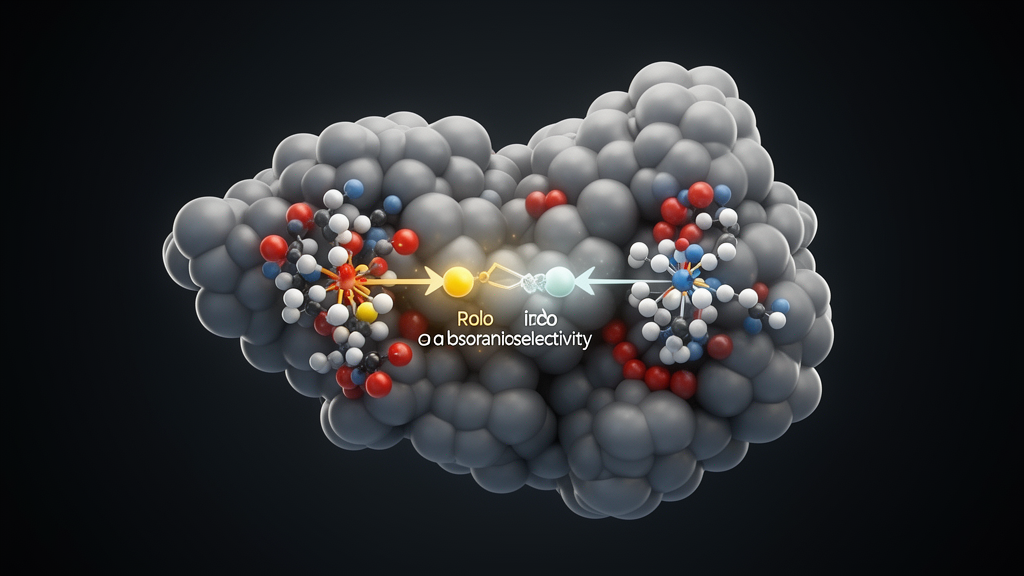
Researchers have combined generative protein design with laboratory evolution to build artificial metalloenzymes that use metal polypyridine photocatalysts to drive highly enantioselective light-driven reactions. The hybrid catalysts pair a synthetic metal cofactor with a purpose-built protein scaffold that binds the cofactor and helps control the reaction around it. The study reports efficient catalysis, high catalyst turnover, catalyst recycling and activity with commercially available racemic metal complexes, offering a strategy for controlling photocatalytic chemistry involving synthetic metal catalysts that lack natural protein partners.

Scaffold discovery has traditionally been constrained by trial-and-error screening and the functional limits of existing proteins. That problem is particularly pronounced for metal polypyridine photocatalysts, which are widely used in visible-light chemistry but had not previously been shown to support highly enantioselective photocatalysis within protein scaffolds. The researchers addressed the discovery problem by using generative protein-design methods to create de novo scaffolds that selectively bind the photocatalysts.

They then used directed evolution to refine these newly designed proteins into efficient and highly enantioselective catalytic systems. Generative design supplied protein scaffolds with the binding properties needed to accommodate a synthetic metal photocatalyst, while repeated mutation and selection improved catalytic activity and stereoselectivity. The resulting artificial metalloenzymes supported diverse light-driven reactions, reached high turnover and could be recycled.

Spectroscopic studies indicated that the protein scaffold was not simply a passive container for the metal complex. Its environment extended the photocatalyst’s excited-state lifetime and organized the substrate near the cofactor. These changes altered energy transfer and provided a structural basis for controlling stereoselectivity.

The findings therefore connect two functions within one engineered catalyst: the protein affects the photochemical behavior of the metal complex while also positioning the reacting substrate within a controlled local environment. The reported mechanism is specific to the designed systems and does not imply that every protein scaffold can control natural or engineered metal cofactors in the same way. This work is a proof-of-concept for a combined protein-design and directed-evolution strategy, rather than evidence that arbitrary proteins or metal complexes can be converted into efficient artificial metalloenzymes.

The reported scope focuses on metal polypyridine photocatalysts and on a process in which computationally generated binding scaffolds are subsequently optimized in the laboratory. Its significance lies in demonstrating that de novo design can provide scaffolds for synthetic metal complexes without natural protein partners, while directed evolution converts those initial scaffolds into functional, selective catalysts for non-natural photocatalytic chemistry.

Subject of Research: De novo protein scaffolds and directed evolution for enantioselective artificial metalloenzyme photocatalysts

Article Title: De novo design of enantioselective artificial metalloenzyme photocatalysts

Article References: Mishra, S., Payal, Evans, D., Bortey, K., Bootwala, H., Gonzalez-Gutierrez, G., Vázquez, R. J., Baker, D., & Lewis, J. C. (2026). De novo design of enantioselective artificial metalloenzyme photocatalysts. Nature. https://doi.org/10.1038/s41586-026-11317-6

Image Credits: AI Generated

DOI: 10.1038/s41586-026-11317-6

Keywords: artificial metalloenzymes, generative protein design, directed evolution, enantioselectivity, photocatalysis, metal polypyridine complexes, visible-light chemistry, excited-state lifetime, energy transfer, novo, design, enantioselective

Cite Scienmag News

Denise Maddox. (October 22, 2026). Designed proteins enable enantioselective artificial photocatalysts. Scienmag. https://scienmag.com/designed-proteins-enable-enantioselective-artificial-photocatalysts/

Denise Maddox. "Designed proteins enable enantioselective artificial photocatalysts." Scienmag, 22 October 2026, https://scienmag.com/designed-proteins-enable-enantioselective-artificial-photocatalysts/. Accessed 22 October 2026.

Denise Maddox. "Designed proteins enable enantioselective artificial photocatalysts." Scienmag. October 22, 2026. https://scienmag.com/designed-proteins-enable-enantioselective-artificial-photocatalysts/


Tags: artificial metalloenzymescatalyst recycling and turnovercontrolled photocatalytic chemistryde novo protein scaffold creationDesigndirected evolutionenantioselectiveenantioselective photocatalysisenantioselectivityenantioselectivity in light-driven reactionsenergy transferenzyme design for synthetic metal complexesexcited-state lifetimegenerative protein designhybrid catalysts with synthetic metal cofactorslaboratory evolution of enzymesmetal polypyridine complexesmetal polypyridine photocatalystsnovoPhotocatalysisprotein scaffold engineeringvisible-light chemistry
Share26Tweet16
Previous Post

Research report: Functional independence in pediatric hemiplegia, spastic diplegia, and spastic tetraplegia: two-year outcomes following comprehensive rehabilitation – a prospective observational study

Next Post

Wari-La Field Survey Records 82 Vascular Plant Species

Related Posts

Research report: Functional independence in pediatric hemiplegia, spastic diplegia, and spastic tetraplegia: two-year outcomes following comprehensive rehabilitation – a prospective observational study
Medicine

Research report: Functional independence in pediatric hemiplegia, spastic diplegia, and spastic tetraplegia: two-year outcomes following comprehensive rehabilitation – a prospective observational study

October 22, 2026
Trauma critical care shifts toward a multisystem, physiology-led approach
Medicine

Trauma critical care shifts toward a multisystem, physiology-led approach

October 22, 2026
Gold nanorod suspensions show tunable heating under resonance-matched pulsed lasers
Technology and Engineering

Gold nanorod suspensions show tunable heating under resonance-matched pulsed lasers

October 22, 2026
New Zealand asthma guidelines shifted reliever prescribing toward anti-inflammatory therapy
Medicine

New Zealand asthma guidelines shifted reliever prescribing toward anti-inflammatory therapy

October 22, 2026
Continuous Performance Tests Reveal ADHD Differences, Not Standalone Diagnoses
Medicine

Continuous Performance Tests Reveal ADHD Differences, Not Standalone Diagnoses

October 22, 2026
MRI Activity Drives Early High-Efficacy Treatment Choices in Multiple Sclerosis
Medicine

MRI Activity Drives Early High-Efficacy Treatment Choices in Multiple Sclerosis

October 22, 2026
Next Post
Wari-La Field Survey Records 82 Vascular Plant Species

Wari-La Field Survey Records 82 Vascular Plant Species

  • Mothers who receive childcare support from maternal grandparents show more optimized

    Mothers who receive childcare support from maternal grandparents show more parental warmth, finds NTU Singapore study

    27656 shares
    Share 11059 Tweet 6912
  • University of Seville Breaks 120-Year-Old Mystery, Revises a Key Einstein Concept

    1061 shares
    Share 424 Tweet 265
  • Bee body mass, pathogens and local climate influence heat tolerance

    682 shares
    Share 273 Tweet 171
  • Researchers record first-ever images and data of a shark experiencing a boat strike

    546 shares
    Share 218 Tweet 137
  • Groundbreaking Clinical Trial Reveals Lubiprostone Enhances Kidney Function

    531 shares
    Share 212 Tweet 133
Science

Embark on a thrilling journey of discovery with Scienmag.com—your ultimate source for cutting-edge breakthroughs. Immerse yourself in a world where curiosity knows no limits and tomorrow’s possibilities become today’s reality!

RECENT NEWS

  • Wari-La Field Survey Records 82 Vascular Plant Species
  • Designed proteins enable enantioselective artificial photocatalysts
  • Research report: Functional independence in pediatric hemiplegia, spastic diplegia, and spastic tetraplegia: two-year outcomes following comprehensive rehabilitation – a prospective observational study
  • Trauma critical care shifts toward a multisystem, physiology-led approach

Categories

  • Agriculture
  • Anthropology
  • Archaeology
  • Athmospheric
  • Biology
  • Biotechnology
  • Blog
  • Bussines
  • Cancer
  • Chemistry
  • Climate
  • Earth Science
  • Editorial Policy
  • Marine
  • Mathematics
  • Medicine
  • Pediatry
  • Policy
  • Psychology & Psychiatry
  • Science Education
  • Science News
  • Social Science
  • Space
  • Technology and Engineering

Subscribe to Blog via Email

Enter your email address to subscribe to this blog and receive notifications of new posts by email.

Join 5,151 other subscribers

© 2025 Scienmag - Science Magazine

Welcome Back!

Login to your account below

Forgotten Password?

Retrieve your password

Please enter your username or email address to reset your password.

Log In
No Result
View All Result
  • HOME
  • SCIENCE NEWS
  • CONTACT US

© 2025 Scienmag - Science Magazine

Discover more from Science

Subscribe now to keep reading and get access to the full archive.

Continue reading