

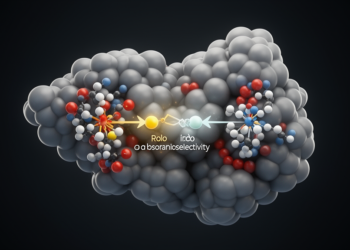
Designed proteins enable enantioselective artificial photocatalysts
Generative protein design and directed evolution produced artificial metalloenzymes that support highly enantioselective light-driven reactions with synthetic metal photocatalysts.
Generative protein design and directed evolution produced artificial metalloenzymes that support highly enantioselective light-driven reactions with synthetic metal photocatalysts.

Chemists in Munich have created a four-amino-acid peptide weighing under 750 daltons that harvests visible light and catalyzes enantioselective deracemizations ...
A palladium-catalysed nucleophile-sorting strategy enables the one-pot, enantioselective assembly of chiral 1,2-amino alcohols from unprotected amines and alcohols.
Scientists at Caltech and the University of Pittsburgh have engineered haemproteins to convert simple unactivated alkenes directly into chiral oxazolidinone ...
Researchers built a zirconium-based two-dimensional metal-organic framework carrying chiral BINAP-derived rhodium sites that achieve over 99 percent yield and enantioselectivity ...
Chemists have developed a single-enantiomer covalent inhibitor that locks the cell-death protein BAX in its inactive state and protects tissue ...
A comprehensive review traces how BINAP, oxazoline, BINOL, and bis(imine) ligand architectures around ruthenium, rhodium, copper, palladium, and aluminum metals ...

Embark on a thrilling journey of discovery with Scienmag.com—your ultimate source for cutting-edge breakthroughs. Immerse yourself in a world where curiosity knows no limits and tomorrow’s possibilities become today’s reality!