

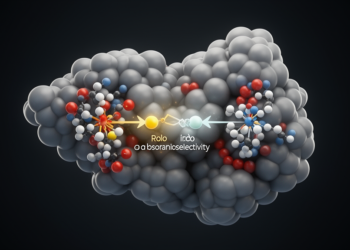
Designed proteins enable enantioselective artificial photocatalysts
Generative protein design and directed evolution produced artificial metalloenzymes that support highly enantioselective light-driven reactions with synthetic metal photocatalysts.
Generative protein design and directed evolution produced artificial metalloenzymes that support highly enantioselective light-driven reactions with synthetic metal photocatalysts.

A new analysis of roughly 25,000 amino acid substitutions from evolved E. coli shows that adaptive laboratory evolution samples less ...
Researchers at ITQB NOVA have characterised the first bacterial galactose oxidase and engineered it into a biocatalyst up to 1800 ...
Researchers have shown that RNA droplets trap their own DNA templates, and that even low rates of mutation produce stable ...
A Nature Biotechnology commentary highlights how shotgun genetic engineering, which tests vast random combinations of genes in mammalian cells, enabled ...
Crystal structures of an engineered hyperthermophilic sugar dehydrogenase reveal how two mutations relieve a steric barrier and boost calcium uptake ...
Researchers used directed evolution to create AAV5-AlyT, an adeno-associated virus variant that delivers genes efficiently to photoreceptors after minimally invasive ...
Researchers are combining computational de novo protein design with directed evolution in plants to create synthetic immune receptors that can ...
A new method called MIDAS assembles and screens hundreds of protein variants directly in mammalian cells without any microbial cloning ...
Researchers used a protein language model and an epistatic rescue algorithm to computationally humanize a bacterial peptide transporter, paving the ...

Embark on a thrilling journey of discovery with Scienmag.com—your ultimate source for cutting-edge breakthroughs. Immerse yourself in a world where curiosity knows no limits and tomorrow’s possibilities become today’s reality!