

Thursday, October 22, 2026
Science
No Result
View All Result
  • Login
  • HOME
  • SCIENCE NEWS
  • CONTACT US
  • HOME
  • SCIENCE NEWS
  • CONTACT US
No Result
View All Result
Scienmag
No Result
View All Result
Home Science News Science Education

Free check-ups linked to smaller inpatient inequality among older Chinese adults

October 22, 2026
in Science Education
Courtney Benton
By Courtney Benton Scienmag Editorial Profile - Science and Technology Policy
Reading Time: 3 mins read
0
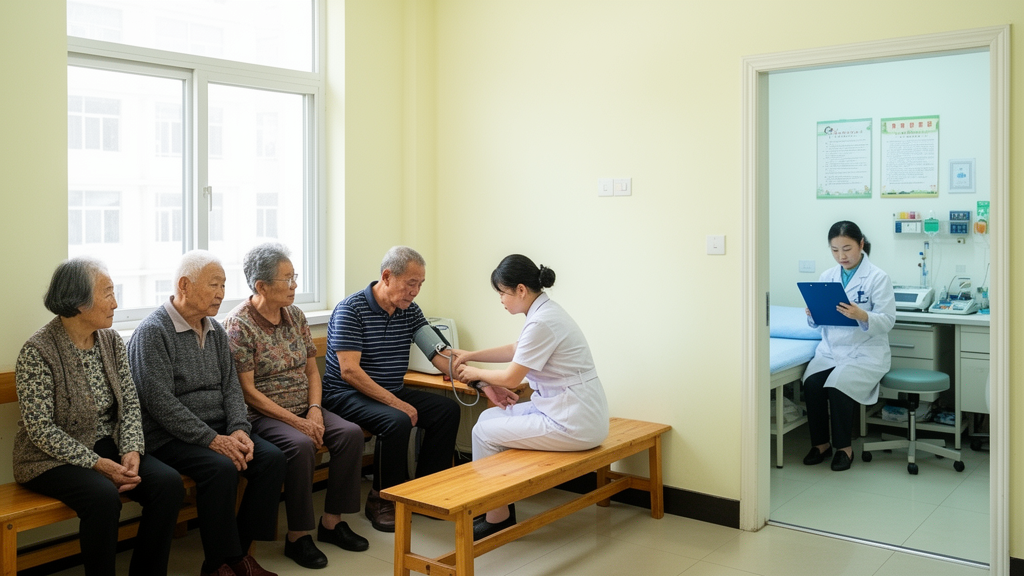
Free check-ups linked to smaller inpatient inequality among older Chinese adults

Free check-ups linked to smaller inpatient inequality among older Chinese adults

65
SHARES
587
VIEWS
Share on FacebookShare on Twitter
ADVERTISEMENT

A longitudinal analysis of older adults in China found that free health check-ups were associated with smaller socioeconomic inequalities in hospital admissions and inpatient expenditure, while self-paid check-ups were associated with higher healthcare utilization and medical spending. The researchers divided participants into three groups: those who had received no health check-up, those who had received a free health check-up and those who had obtained a self-paid examination. Overall, 52.8% of participants took part in a check-up, including 27.86% who received a free examination and 24.94% who paid for one themselves.

The investigators used two-way fixed-effects models to assess associations between check-up type and healthcare utilization while accounting for stable, time-invariant individual characteristics. Compared with participants who had not received a check-up, those in the self-paid group had a significantly higher probability of hospital admission and higher medical expenditure. Free health check-ups showed no consistent association with greater overall healthcare utilization.

Their clearest association was with inequality in inpatient outcomes. The pro-rich concentration index for annual hospital admissions was 0.07 lower in the free check-up group than in the no-check-up group, with a P value of 0.018. The difference in annual inpatient expenditure was 0.06, with a P value of 0.026.

The free check-up group also had a lower pro-rich inequality index than the self-paid group for annual hospital admissions, by 0.10 (P = 0.003), and for annual inpatient expenditure, by 0.07 (P = 0.013). The study did not define the term “pro-rich” in the supplied research summary, so the inequality measures should not be interpreted more specifically than the reported concentration-index comparisons allow. The authors additionally applied Recentered Influence Function regression decomposition, including an Oaxaca decomposition, to identify factors correlating with differences in inequality between check-up groups.

The factors accounting for those differences varied across pairwise comparisons, indicating that the statistical sources of inequality were not uniform across the three check-up categories or across the measured outcomes. Because the analysis was observational, its findings describe associations rather than causal effects. The fixed-effects approach reduced the influence of persistent individual differences, but the design could not rule out every source of confounding.

The results also apply to the older-adult population and setting covered by the CHARLS survey rather than establishing the effects of free or self-paid check-ups in other populations. The study did not show that free examinations reduced total hospitalization or spending, nor did it show that self-paid examinations caused greater use. Instead, it separated two related findings: self-paid check-ups were associated with more utilization and expenditure, while free check-ups were associated with smaller measured inequalities in selected inpatient outcomes.

The researchers argued that policy should go beyond expanding check-up coverage by strengthening follow-up, referral support and financial protection. Its central result is that the type of check-up was linked to different patterns of healthcare utilization and inequality: self-paid participation accompanied higher utilization and medical expenditure, whereas free participation did not consistently increase overall utilization and was associated with lower pro-rich inequality in hospital admissions and inpatient expenditure among older Chinese adults.

Subject of Research: Health check-up type, healthcare utilization and inequality among older adults in China

Article Title: Associations of different health check-up types with healthcare utilization and its inequalities among older adults in China: evidence from a nationally representative survey

Article References: Qian, Y., Liu, Y., Zhu, R., Wang, G., & Wang, Z. (2026). Associations of different health check-up types with healthcare utilization and its inequalities among older adults in China: evidence from a nationally representative survey. International Journal for Equity in Health. https://doi.org/10.1186/s12939-026-03086-5

Image Credits: AI Generated

DOI: 10.1186/s12939-026-03086-5

Keywords: health check-ups, older adults, healthcare utilization, health inequality, hospital admissions, inpatient expenditure, CHARLS, free screening, self-paid care, China, Associations, different

Cite Scienmag News

Courtney Benton. (October 22, 2026). Free check-ups linked to smaller inpatient inequality among older Chinese adults. Scienmag. https://scienmag.com/free-check-ups-linked-to-smaller-inpatient-inequality-among-older-chinese-adults/


Courtney Benton. "Free check-ups linked to smaller inpatient inequality among older Chinese adults." Scienmag, 22 October 2026, https://scienmag.com/free-check-ups-linked-to-smaller-inpatient-inequality-among-older-chinese-adults/. Accessed 22 October 2026.

Courtney Benton. "Free check-ups linked to smaller inpatient inequality among older Chinese adults." Scienmag. October 22, 2026. https://scienmag.com/free-check-ups-linked-to-smaller-inpatient-inequality-among-older-chinese-adults/

Tags: associationsCHARLSChinaChina healthcare system and elderly health managementdifferenteffects of health check-ups on inpatient expenditureFree health check-ups and healthcare inequality among older Chinese adultsfree screeninghealth check-up participation rates among seniorshealth check-upshealth disparities in aging populationshealth inequalityhealthcare utilizationhospital admissionsimpact of free vs. paid health screeningsinpatient expenditurelongitudinal analysis of healthcare utilizationolder adultspolicy implications for healthcare accessreducing inpatient inequality through preventive careself-paid caresocioeconomic disparities in hospital admissionssocioeconomic factors influencing healthcare spendingtwo-way fixed-effects models in health research
Share26Tweet16
Previous Post

Cognitive social capital linked to saliva-related quality of life in cancer survivors

Next Post

A self-shadowing black hole accretion disk at sub-Eddington luminosities

Related Posts

Expert-Derived Framework Maps Virtual Escape Room Design in Health Education
Science Education

Expert-Derived Framework Maps Virtual Escape Room Design in Health Education

October 22, 2026
Study links online flipped learning to higher nursing knowledge scores
Science Education

Study links online flipped learning to higher nursing knowledge scores

October 22, 2026
Research report: Uniform SCI Publication mandates are associated with unequal clinical training burdens: a quasi-experiment comparing two medical training pathways in China
Science Education

Research report: Uniform SCI Publication mandates are associated with unequal clinical training burdens: a quasi-experiment comparing two medical training pathways in China

October 22, 2026
Cross-sectional survey finds chatbot use widespread among Sudanese medical students
Science Education

Cross-sectional survey finds chatbot use widespread among Sudanese medical students

October 22, 2026
Pre- and post-course study measures student-led high-value care education
Science Education

Pre- and post-course study measures student-led high-value care education

October 22, 2026
Final-Year Medical Students Embrace Possibility of Simulated Patient Death
Science Education

Final-Year Medical Students Embrace Possibility of Simulated Patient Death

October 22, 2026
Next Post
A self-shadowing black hole accretion disk at sub-Eddington luminosities

A self-shadowing black hole accretion disk at sub-Eddington luminosities

  • Mothers who receive childcare support from maternal grandparents show more optimized

    Mothers who receive childcare support from maternal grandparents show more parental warmth, finds NTU Singapore study

    27656 shares
    Share 11059 Tweet 6912
  • University of Seville Breaks 120-Year-Old Mystery, Revises a Key Einstein Concept

    1061 shares
    Share 424 Tweet 265
  • Bee body mass, pathogens and local climate influence heat tolerance

    682 shares
    Share 273 Tweet 171
  • Researchers record first-ever images and data of a shark experiencing a boat strike

    546 shares
    Share 218 Tweet 137
  • Groundbreaking Clinical Trial Reveals Lubiprostone Enhances Kidney Function

    531 shares
    Share 212 Tweet 133
Science

Embark on a thrilling journey of discovery with Scienmag.com—your ultimate source for cutting-edge breakthroughs. Immerse yourself in a world where curiosity knows no limits and tomorrow’s possibilities become today’s reality!

RECENT NEWS

  • A self-shadowing black hole accretion disk at sub-Eddington luminosities
  • Free check-ups linked to smaller inpatient inequality among older Chinese adults
  • Cognitive social capital linked to saliva-related quality of life in cancer survivors
  • Evidence review identifies nursing activity-care statements for advanced lung cancer

Categories

  • Agriculture
  • Anthropology
  • Archaeology
  • Athmospheric
  • Biology
  • Biotechnology
  • Blog
  • Bussines
  • Cancer
  • Chemistry
  • Climate
  • Earth Science
  • Editorial Policy
  • Marine
  • Mathematics
  • Medicine
  • Pediatry
  • Policy
  • Psychology & Psychiatry
  • Science Education
  • Science News
  • Social Science
  • Space
  • Technology and Engineering

Subscribe to Blog via Email

Enter your email address to subscribe to this blog and receive notifications of new posts by email.

Join 5,151 other subscribers

© 2025 Scienmag - Science Magazine

Welcome Back!

Login to your account below

Forgotten Password?

Retrieve your password

Please enter your username or email address to reset your password.

Log In
No Result
View All Result
  • HOME
  • SCIENCE NEWS
  • CONTACT US

© 2025 Scienmag - Science Magazine

Discover more from Science

Subscribe now to keep reading and get access to the full archive.

Continue reading