

Thursday, October 22, 2026
Science
No Result
View All Result
  • Login
  • HOME
  • SCIENCE NEWS
  • CONTACT US
  • HOME
  • SCIENCE NEWS
  • CONTACT US
No Result
View All Result
Scienmag
No Result
View All Result
Home Science News Science Education

Study links online flipped learning to higher nursing knowledge scores

October 22, 2026
in Science Education
Courtney Benton
By Courtney Benton Scienmag Editorial Profile - Science and Technology Policy
Reading Time: 3 mins read
0
Study links online flipped learning to higher nursing knowledge scores

Study links online flipped learning to higher nursing knowledge scores

65
SHARES
587
VIEWS
Share on FacebookShare on Twitter
ADVERTISEMENT

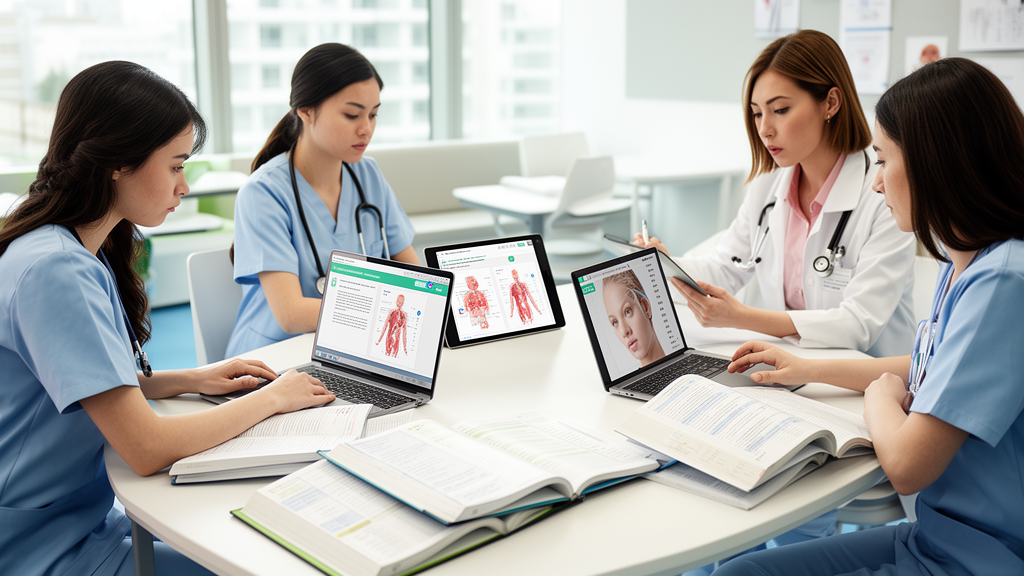
An entirely online flipped classroom model was associated with higher post-test infection-control knowledge scores among first-year nursing students in a quasi-experimental study of 76 learners. The study, reported in BMC Medical Education , compared the model with traditional online teacher-centered instruction. After researchers adjusted the analysis for students’ pre-test knowledge scores, the online flipped classroom group showed a statistically significant advantage in post-test performance, with a moderate effect size.

Findings for psychomotor skills were less conclusive: the flipped classroom group performed better in hand hygiene and sterile glove donning and doffing, but those differences did not remain statistically significant after correction for multiple comparisons. Participants were matched by gender and grade-point-average band before an independent statistician allocated 38 students each to the experimental and control groups. The experimental group followed a fully online flipped classroom model comprising asynchronous, interactive video learning with embedded formative questions and synchronous sessions that included case discussions, self-directed skill practice and peer-assessed skill demonstrations.

The control group received traditional online instruction delivered by teachers. Researchers assessed infection-control knowledge before and after the intervention through a knowledge test. Pre-test scores were similar between the groups, with no significant difference at p = 0.095.

The adjusted post-test comparison favored the flipped classroom group at p = 0.002, indicating a moderate difference in knowledge scores under the study conditions. Psychomotor performance was evaluated across four procedural domains: hand hygiene, sterile glove donning and doffing, personal protective equipment use and sterile field preparation. Two independent, blinded assessors judged student performance, and inter-rater reliability coefficients ranged from 0.721 to 0.989.

The experimental group had higher post-intervention performance in hand hygiene and sterile glove donning and doffing, with small-to-moderate effect sizes, but the adjusted between-group differences were no longer significant after correction for multiple comparisons. No significant differences were detected for personal protective equipment use or sterile field preparation. Interpretation of the psychomotor results is limited by the absence of a baseline skill assessment.

Unlike knowledge, which was measured before and after the intervention, skills were assessed only after the instructional period. The study therefore could not determine whether post-intervention differences reflected changes from a common starting point. The knowledge finding, which incorporated adjustment for pre-test scores, provides stronger support than the skill findings, while the procedural results remain preliminary.

The research also involved one cohort of first-year nursing students and a particular combination of asynchronous videos, synchronous case discussions, self-directed practice and peer assessment. The authors noted that adding brief in-person or simulation-based practice may help support psychomotor competency, but that combined approach was not tested in the study. Overall, the results identify a clear adjusted difference in infection-control knowledge and weaker, skill-specific evidence for differences in procedural performance following fully online flipped learning.

Subject of Research: Effects of fully online flipped classroom instruction on nursing students’ infection-control knowledge and psychomotor performance

Article Title: Effects of an online flipped classroom model on nursing students’ infection control knowledge and psychomotor skills

Article References: Yıldız, R., & Ünlüsoy Di̇nçer, N. (2026). Effects of an online flipped classroom model on nursing students’ infection control knowledge and psychomotor skills. BMC Medical Education. https://doi.org/10.1186/s12909-026-10667-z

Image Credits: AI Generated

DOI: 10.1186/s12909-026-10667-z

Keywords: nursing education, online learning, flipped classroom, infection control, knowledge assessment, hand hygiene, psychomotor skills, sterile procedures, quasi-experimental study, Effects, online, flipped

Cite Scienmag News

Courtney Benton. (October 22, 2026). Study links online flipped learning to higher nursing knowledge scores. Scienmag. https://scienmag.com/study-links-online-flipped-learning-to-higher-nursing-knowledge-scores/

Courtney Benton. "Study links online flipped learning to higher nursing knowledge scores." Scienmag, 22 October 2026, https://scienmag.com/study-links-online-flipped-learning-to-higher-nursing-knowledge-scores/. Accessed 22 October 2026.

Courtney Benton. "Study links online flipped learning to higher nursing knowledge scores." Scienmag. October 22, 2026. https://scienmag.com/study-links-online-flipped-learning-to-higher-nursing-knowledge-scores/


Tags: asynchronous and synchronous learning in nursingEffectseffects of flipped classroom on nursing psychomotor skillsflippedflipped classroomhand hygieneimproving nursing knowledge through online flipped modelsinfection controlinfection control knowledge assessment in nursingknowledge assessmentNursing educationonlineonline flipped classroom in nursing educationonline flipped classroom vs traditional online instructiononline flipped learning impact on nursing studentsonline interactive video learning in nursing educationonline learningpeer assessment in online nursing educationpsychomotor skillsquasi-experimental studyquasi-experimental study on nursing teaching methodsself-directed skill practice in nursing trainingstatistical analysis of flipped classroom outcomessterile procedures
Share26Tweet16
Previous Post

PSMA-PRED protocol plans biomarker search for lutetium-PSMA treatment response

Next Post

African infectious-disease AI review finds 43 studies, uneven coverage and barriers

Related Posts

Research report: Uniform SCI Publication mandates are associated with unequal clinical training burdens: a quasi-experiment comparing two medical training pathways in China
Science Education

Research report: Uniform SCI Publication mandates are associated with unequal clinical training burdens: a quasi-experiment comparing two medical training pathways in China

October 22, 2026
Cross-sectional survey finds chatbot use widespread among Sudanese medical students
Science Education

Cross-sectional survey finds chatbot use widespread among Sudanese medical students

October 22, 2026
Pre- and post-course study measures student-led high-value care education
Science Education

Pre- and post-course study measures student-led high-value care education

October 22, 2026
Final-Year Medical Students Embrace Possibility of Simulated Patient Death
Science Education

Final-Year Medical Students Embrace Possibility of Simulated Patient Death

October 22, 2026
Modified scale shows acceptable validity among Japanese medical students
Science Education

Modified scale shows acceptable validity among Japanese medical students

October 21, 2026
New Jersey launches statewide supercomputer initiative with NJIT
Science Education

New Jersey launches statewide supercomputer initiative with NJIT

October 21, 2026
Next Post
African infectious-disease AI review finds 43 studies, uneven coverage and barriers

African infectious-disease AI review finds 43 studies, uneven coverage and barriers

  • Mothers who receive childcare support from maternal grandparents show more optimized

    Mothers who receive childcare support from maternal grandparents show more parental warmth, finds NTU Singapore study

    27656 shares
    Share 11059 Tweet 6912
  • University of Seville Breaks 120-Year-Old Mystery, Revises a Key Einstein Concept

    1061 shares
    Share 424 Tweet 265
  • Bee body mass, pathogens and local climate influence heat tolerance

    682 shares
    Share 273 Tweet 171
  • Researchers record first-ever images and data of a shark experiencing a boat strike

    546 shares
    Share 218 Tweet 137
  • Groundbreaking Clinical Trial Reveals Lubiprostone Enhances Kidney Function

    531 shares
    Share 212 Tweet 133
Science

Embark on a thrilling journey of discovery with Scienmag.com—your ultimate source for cutting-edge breakthroughs. Immerse yourself in a world where curiosity knows no limits and tomorrow’s possibilities become today’s reality!

RECENT NEWS

  • African infectious-disease AI review finds 43 studies, uneven coverage and barriers
  • Study links online flipped learning to higher nursing knowledge scores
  • PSMA-PRED protocol plans biomarker search for lutetium-PSMA treatment response
  • CBCL somatic scale shows measurement invariance in adolescent ABCD sample

Categories

  • Agriculture
  • Anthropology
  • Archaeology
  • Athmospheric
  • Biology
  • Biotechnology
  • Blog
  • Bussines
  • Cancer
  • Chemistry
  • Climate
  • Earth Science
  • Editorial Policy
  • Marine
  • Mathematics
  • Medicine
  • Pediatry
  • Policy
  • Psychology & Psychiatry
  • Science Education
  • Science News
  • Social Science
  • Space
  • Technology and Engineering

Subscribe to Blog via Email

Enter your email address to subscribe to this blog and receive notifications of new posts by email.

Join 5,151 other subscribers

© 2025 Scienmag - Science Magazine

Welcome Back!

Login to your account below

Forgotten Password?

Retrieve your password

Please enter your username or email address to reset your password.

Log In
No Result
View All Result
  • HOME
  • SCIENCE NEWS
  • CONTACT US

© 2025 Scienmag - Science Magazine

Discover more from Science

Subscribe now to keep reading and get access to the full archive.

Continue reading