

Wednesday, October 21, 2026
Science
No Result
View All Result
  • Login
  • HOME
  • SCIENCE NEWS
  • CONTACT US
  • HOME
  • SCIENCE NEWS
  • CONTACT US
No Result
View All Result
Scienmag
No Result
View All Result
Home Science News Biology

RXLR effectors of Phytophthora infestans: delivery, host targets and immune suppression

October 21, 2026
in Biology
Kristina Jarvis
By Kristina Jarvis Scienmag Editorial Profile - Infectious Disease Medicine
Reading Time: 2 mins read
0
RXLR effectors of Phytophthora infestans: delivery, host targets and immune suppression

RXLR effectors of Phytophthora infestans: delivery, host targets and immune suppression

65
SHARES
587
VIEWS
Share on FacebookShare on Twitter
ADVERTISEMENT

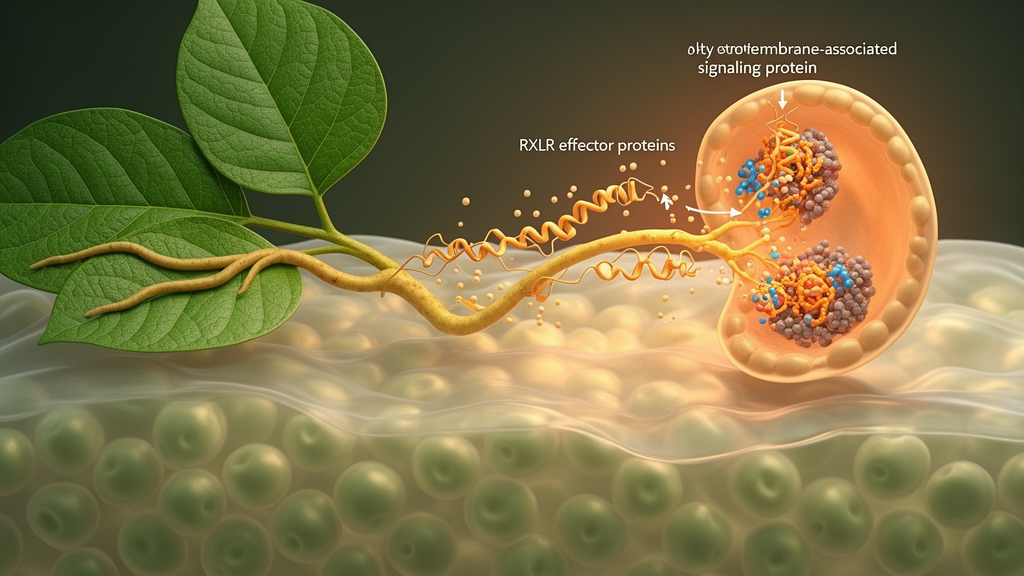
A review in Molecular Biology Reports identifies cytoplasmic RXLR effector proteins as major determinants of the pathogenic success of Phytophthora infestans , the pathogen responsible for potato late blight. The article synthesizes current knowledge of how these effectors enter host cells, localise within them, target host processes and interfere with plant immune responses, including pattern-triggered immunity and effector-triggered immunity. RXLR effectors accumulate inside host cells and act on several cellular processes involved in the interaction between pathogen and plant.

The review reports that their targets include transcriptional regulation, post-translational modifications, vesicle trafficking, autophagy, chloroplast-mediated immune signalling and protein stability. Rather than being associated with only one immune pathway, the effectors converge on multiple host cellular systems, reprogramming cellular networks in ways that support pathogen colonisation and disease progression. The available evidence describes this diversity at the level of established target processes; the supplied abstract and preview do not specify the mechanism or contribution of each individual effector.

The review also examines the subcellular localisation of P. infestans RXLR effectors and their relationships with host susceptibility factors. Advances in genomics, structural biology and host–interactor screening have expanded knowledge of effector diversity and helped clarify the molecular mechanisms through which these proteins interact with host components. The resulting picture is that different effectors can influence distinct, yet functionally connected, immune and cell-biological processes, allowing a plant pathogen to suppress resistance across multiple layers of defence.

This publication is a review, not a report of a new experiment, field trial or intervention. It assembles findings from earlier studies rather than presenting a new quantitative assessment of late blight severity. The supplied text does not quantify how much the overall effector repertoire contributes to disease, establish the precise molecular function of every RXLR protein or show whether modifying a particular host target improves resistance in agricultural conditions.

Those limits are important when interpreting the review’s broader conclusion about immune suppression and host manipulation. The practical significance discussed in the review lies in its implications for developing durable resistance strategies against late blight. Understanding the host targets used by RXLR effectors may provide a basis for resistance approaches that account for the pathogen’s capacity to influence several cellular processes at once.

Instead, it identifies effector–host interactions as an area relevant to the pursuit of more durable forms of plant resistance.

Subject of Research: RXLR effector proteins, host targets and immune suppression in the potato late blight pathogen

Article Title: RXLR effectors of Phytophthora infestans: delivery, host targets and immune suppression

Article References: Saini, O., Arora, A., Kaur, A., & Saini, S. (2026). RXLR effectors of Phytophthora infestans: delivery, host targets and immune suppression. Molecular Biology Reports, 53(1), Article 1776. https://doi.org/10.1007/s11033-026-12983-5

Image Credits: AI Generated

DOI: 10.1007/s11033-026-12983-5

Keywords: Phytophthora infestans, late blight, RXLR effectors, plant immunity, host-pathogen interaction, oomycetes, vesicle trafficking, autophagy, chloroplast signalling, protein stability, RXLR, effectors

Cite Scienmag News

Kristina Jarvis. (October 21, 2026). RXLR effectors of Phytophthora infestans: delivery, host targets and immune suppression. Scienmag. https://scienmag.com/rxlr-effectors-of-phytophthora-infestans-delivery-host-targets-and-immune-suppression/


Kristina Jarvis. "RXLR effectors of Phytophthora infestans: delivery, host targets and immune suppression." Scienmag, 21 October 2026, https://scienmag.com/rxlr-effectors-of-phytophthora-infestans-delivery-host-targets-and-immune-suppression/. Accessed 21 October 2026.

Kristina Jarvis. "RXLR effectors of Phytophthora infestans: delivery, host targets and immune suppression." Scienmag. October 21, 2026. https://scienmag.com/rxlr-effectors-of-phytophthora-infestans-delivery-host-targets-and-immune-suppression/

Tags: autophagychloroplast signallingchloroplast-mediated defense signalingeffector diversity and structural biologyeffector subcellular localizationeffector targeting of plant cellular processeseffectorshost cell entry mechanismshost susceptibility factorshost-pathogen interactionimmune pathway interferencelate blightmolecular mechanisms of effector-host interactionsoomycetespathogen-host interactionPhytophthora infestansPhytophthora infestans RXLR effectorsplant immune suppressionplant immunityprotein stabilityRXLRRXLR effectorsvesicle traffickingvesicle trafficking and autophagy in plant immunity
Share26Tweet16
Previous Post

Scoping review maps AI roles in primary English education

Next Post

Nursing homes still deny buprenorphine after federal prescribing rules changed

Related Posts

TranscriptFormer Maps 112 Million Cells Across 12 Species
Biology

TranscriptFormer Maps 112 Million Cells Across 12 Species

October 21, 2026
PDIM and EsxA drive distinct stages of vacuole damage in mycobacteria
Biology

PDIM and EsxA drive distinct stages of vacuole damage in mycobacteria

October 21, 2026
Polynesian ancestry study maps genetic links to 13 cardiometabolic traits
Biology

Polynesian ancestry study maps genetic links to 13 cardiometabolic traits

October 21, 2026
Sodium selenite curbs bone loss in mice through GPX4-linked ferroptosis inhibition
Biology

Sodium selenite curbs bone loss in mice through GPX4-linked ferroptosis inhibition

October 21, 2026
Computer model finds timing and dose govern simulated endothelial repair
Biology

Computer model finds timing and dose govern simulated endothelial repair

October 21, 2026
Mutation bias and gene conversion shape sequences near human transcription start sites
Biology

Mutation bias and gene conversion shape sequences near human transcription start sites

October 21, 2026
Next Post
Nursing homes still deny buprenorphine after federal prescribing rules changed

Nursing homes still deny buprenorphine after federal prescribing rules changed

  • Mothers who receive childcare support from maternal grandparents show more optimized

    Mothers who receive childcare support from maternal grandparents show more parental warmth, finds NTU Singapore study

    27656 shares
    Share 11059 Tweet 6912
  • University of Seville Breaks 120-Year-Old Mystery, Revises a Key Einstein Concept

    1061 shares
    Share 424 Tweet 265
  • Bee body mass, pathogens and local climate influence heat tolerance

    682 shares
    Share 273 Tweet 171
  • Researchers record first-ever images and data of a shark experiencing a boat strike

    546 shares
    Share 218 Tweet 137
  • Groundbreaking Clinical Trial Reveals Lubiprostone Enhances Kidney Function

    531 shares
    Share 212 Tweet 133
Science

Embark on a thrilling journey of discovery with Scienmag.com—your ultimate source for cutting-edge breakthroughs. Immerse yourself in a world where curiosity knows no limits and tomorrow’s possibilities become today’s reality!

RECENT NEWS

  • Nursing homes still deny buprenorphine after federal prescribing rules changed
  • RXLR effectors of Phytophthora infestans: delivery, host targets and immune suppression
  • Scoping review maps AI roles in primary English education
  • Single-fibre multi-omics links inflammation to altered myosin energetics in ICU weakness

Categories

  • Agriculture
  • Anthropology
  • Archaeology
  • Athmospheric
  • Biology
  • Biotechnology
  • Blog
  • Bussines
  • Cancer
  • Chemistry
  • Climate
  • Earth Science
  • Editorial Policy
  • Marine
  • Mathematics
  • Medicine
  • Pediatry
  • Policy
  • Psychology & Psychiatry
  • Science Education
  • Science News
  • Social Science
  • Space
  • Technology and Engineering

Subscribe to Blog via Email

Enter your email address to subscribe to this blog and receive notifications of new posts by email.

Join 5,151 other subscribers

© 2025 Scienmag - Science Magazine

Welcome Back!

Login to your account below

Forgotten Password?

Retrieve your password

Please enter your username or email address to reset your password.

Log In
No Result
View All Result
  • HOME
  • SCIENCE NEWS
  • CONTACT US

© 2025 Scienmag - Science Magazine

Discover more from Science

Subscribe now to keep reading and get access to the full archive.

Continue reading