

Wednesday, October 21, 2026
Science
No Result
View All Result
  • Login
  • HOME
  • SCIENCE NEWS
  • CONTACT US
  • HOME
  • SCIENCE NEWS
  • CONTACT US
No Result
View All Result
Scienmag
No Result
View All Result
Home Science News Medicine

South Indian Parkinson’s study links gut microbes to inflammation

October 21, 2026
in Medicine
Cassandra Pierce
By Cassandra Pierce Scienmag Editorial Profile - Systems Neuroscience
Reading Time: 3 mins read
0
South Indian Parkinson’s study links gut microbes to inflammation

South Indian Parkinson’s study links gut microbes to inflammation

65
SHARES
587
VIEWS
Share on FacebookShare on Twitter
ADVERTISEMENT

A study of people with Parkinson’s disease in Kerala, India, has identified gut microbiome patterns associated with the disorder, including increased abundance of several microbial groups linked by the researchers to inflammation and reduced abundance of groups associated with anti-inflammatory activity. The findings, based on 16S rRNA gene amplicon sequencing, provide a population-specific snapshot of the gut microbiome in South Indian patients and highlight candidate microbial signatures that may help guide broader multi-omics investigations into Parkinson’s disease.

Parkinson’s disease is a progressive neurodegenerative disorder characterized by aggregation of alpha-synuclein in dopaminergic neurons. The new study examined the gut microbiomes of people with Parkinson’s disease and healthy controls from Kerala, a region where the microbial composition of the population may differ from that studied in other parts of the world. Researchers said the design was motivated in part by geographic variation in gut microbial communities, which makes local evidence important when evaluating proposed links among microbiota, inflammation and neurodegeneration.

The investigators found significant differences in both microbial diversity and taxonomic composition between the Parkinson’s disease and control groups. The microbial community in the Parkinson’s group contained higher relative abundances of Akkermansia, Bifidobacterium, Escherichia-Shigella, Collinsella, an unclassified Eggerthellaceae genus, an unclassified Enterobacterales group and Intestinimonas. At the same time, Bacteroides, Lachnospira, Agathobacter, Prevotella and Erysipelotrichaceae UCG-003 were reduced. These are comparative observations from this cohort; they do not establish that any particular organism causes Parkinson’s disease or that changing the microbiome would alter clinical outcomes.

The team then used predictive functional profiling to estimate which metabolic capabilities might be associated with the observed microbial communities. The analysis pointed to differences in pathways involved in neurotransmitter-related processes, including dopaminergic, glutamatergic and GABAergic metabolism. Predicted shifts also extended to amino acid, polyamine, nucleotide and energy metabolism. An integrative network analysis connected Parkinson’s-enriched taxa with dysregulated metabolic pathways, suggesting that taxonomic changes and predicted functional potential may form coordinated biological patterns rather than isolated microbial differences.

Because the work was based on amplicon sequencing and computational functional prediction, it cannot directly measure microbial metabolites, inflammatory molecules or the brain. The study therefore identifies associations and testable candidates rather than demonstrating a gut-microbiome mechanism for Parkinson’s disease. Larger studies incorporating metabolomics, metagenomics, host inflammatory measurements and longitudinal clinical data will be needed to determine whether the reported signatures are reproducible, causally relevant or capable of distinguishing Parkinson’s disease in other populations. Within those limits, the research offers an exploratory regional baseline and a framework for future multi-omics studies of inflammation-related microbiome patterns in Parkinson’s disease.

Subject of Research: Gut microbiome composition and predicted metabolic functions in South Indian patients with Parkinson’s disease

Article Title: Integrative microbiome and functional profiling decodes pro-inflammatory gut microbiome signatures in South Indian patients with Parkinson’s disease

Article References: Painadath Alikunju, A., Jose, D., Venkatachalam, S., Tajudeen, J., Azhchath Vasu, D., K K, D., Raman, G., L, G. T., Thomas, F., K P, D., Manoj, N., Krishnan, S., & P S, B. C. (2026). Integrative microbiome and functional profiling decodes pro-inflammatory gut microbiome signatures in South Indian patients with Parkinson’s disease. npj Parkinson's Disease. https://doi.org/10.1038/s41531-026-01547-w

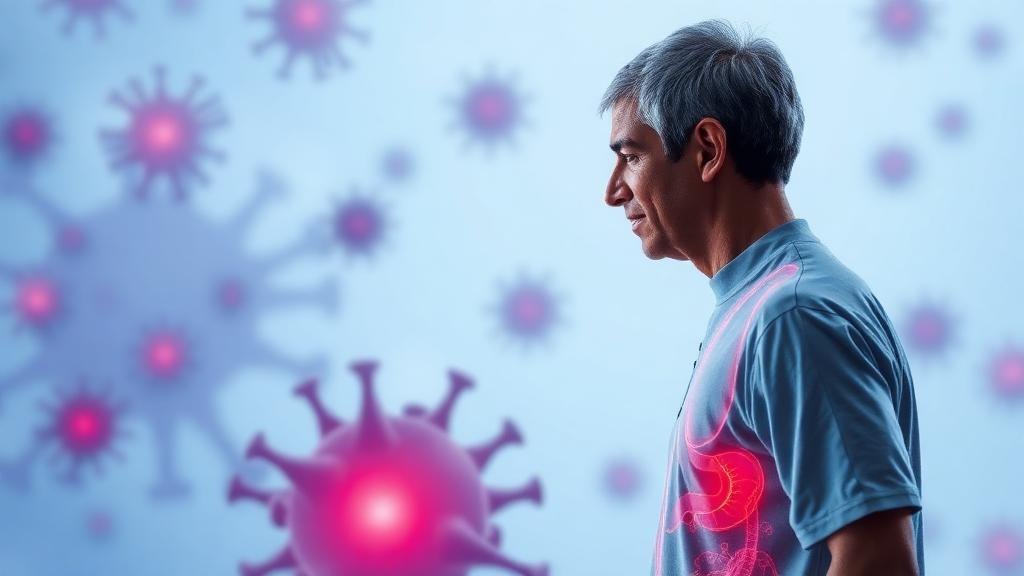
Image Credits: AI Generated

DOI: 10.1038/s41531-026-01547-w

Keywords: Parkinson’s disease, gut microbiome, microbiome dysbiosis, inflammation, 16S rRNA sequencing, metabolic pathways, South India, Kerala, multi-omics, Integrative, microbiome, functional

Cite Scienmag News

Cassandra Pierce. (October 21, 2026). South Indian Parkinson’s study links gut microbes to inflammation. Scienmag. https://scienmag.com/south-indian-parkinsons-study-links-gut-microbes-to-inflammation/

Cassandra Pierce. "South Indian Parkinson’s study links gut microbes to inflammation." Scienmag, 21 October 2026, https://scienmag.com/south-indian-parkinsons-study-links-gut-microbes-to-inflammation/. Accessed 21 October 2026.

Cassandra Pierce. "South Indian Parkinson’s study links gut microbes to inflammation." Scienmag. October 21, 2026. https://scienmag.com/south-indian-parkinsons-study-links-gut-microbes-to-inflammation/


Tags: 16S rRNA gene sequencing in Parkinson’s16S rRNA sequencingfunctionalgut microbes and neuroinflammationGut microbiomegut-brain axis and Parkinson'sinflammationinflammation-linked gut bacteriaIntegrativeKeralametabolic pathwaysmicrobial diversity in Parkinson’s patientsmicrobial signatures in Parkinson’smicrobiomemicrobiome dysbiosismicrobiota and neurodegenerationmulti-omicsParkinson's diseaseParkinson’s disease gut microbiomepopulation-specific microbiome analysisregional microbiota differences in diseaseregional variations in gut microbiotaSouth IndiaSouth Indian microbiome study
Share26Tweet16
Previous Post

Research report: A Study Evaluating the Feasibility of a Self-compassion Meditation on Body Image in Retired Athletes

Next Post

China’s 70-year soil conservation record shows recovery can take decades

Related Posts

Retrospective Japan cohort links liver-resection drains to lower mortality
Medicine

Retrospective Japan cohort links liver-resection drains to lower mortality

October 21, 2026
Five-Year Consortium Plans Bioengineered Hearts for Children
Medicine

Five-Year Consortium Plans Bioengineered Hearts for Children

October 21, 2026
Systematic assessment finds confounding gap in multiple sclerosis trial emulations
Medicine

Systematic assessment finds confounding gap in multiple sclerosis trial emulations

October 21, 2026
Pamidronate linked to fewer fractures in Romanian children with bone fragility
Medicine

Pamidronate linked to fewer fractures in Romanian children with bone fragility

October 21, 2026
Machine learning estimates factory-worker stress from brain signals
Medicine

Machine learning estimates factory-worker stress from brain signals

October 21, 2026
Triage disparities widen in lower-risk emergency visits, multicenter analysis finds
Medicine

Triage disparities widen in lower-risk emergency visits, multicenter analysis finds

October 21, 2026
Next Post
China’s 70-year soil conservation record shows recovery can take decades

China’s 70-year soil conservation record shows recovery can take decades

  • Mothers who receive childcare support from maternal grandparents show more optimized

    Mothers who receive childcare support from maternal grandparents show more parental warmth, finds NTU Singapore study

    27656 shares
    Share 11059 Tweet 6912
  • University of Seville Breaks 120-Year-Old Mystery, Revises a Key Einstein Concept

    1061 shares
    Share 424 Tweet 265
  • Bee body mass, pathogens and local climate influence heat tolerance

    682 shares
    Share 273 Tweet 171
  • Researchers record first-ever images and data of a shark experiencing a boat strike

    546 shares
    Share 218 Tweet 137
  • Groundbreaking Clinical Trial Reveals Lubiprostone Enhances Kidney Function

    531 shares
    Share 212 Tweet 133
Science

Embark on a thrilling journey of discovery with Scienmag.com—your ultimate source for cutting-edge breakthroughs. Immerse yourself in a world where curiosity knows no limits and tomorrow’s possibilities become today’s reality!

RECENT NEWS

  • Parasite-Derived MicroRNA Attenuates Liver Fibrosis in Mice
  • China’s 70-year soil conservation record shows recovery can take decades
  • South Indian Parkinson’s study links gut microbes to inflammation
  • Research report: A Study Evaluating the Feasibility of a Self-compassion Meditation on Body Image in Retired Athletes

Categories

  • Agriculture
  • Anthropology
  • Archaeology
  • Athmospheric
  • Biology
  • Biotechnology
  • Blog
  • Bussines
  • Cancer
  • Chemistry
  • Climate
  • Earth Science
  • Editorial Policy
  • Marine
  • Mathematics
  • Medicine
  • Pediatry
  • Policy
  • Psychology & Psychiatry
  • Science Education
  • Science News
  • Social Science
  • Space
  • Technology and Engineering

Subscribe to Blog via Email

Enter your email address to subscribe to this blog and receive notifications of new posts by email.

Join 5,150 other subscribers

© 2025 Scienmag - Science Magazine

Welcome Back!

Login to your account below

Forgotten Password?

Retrieve your password

Please enter your username or email address to reset your password.

Log In
No Result
View All Result
  • HOME
  • SCIENCE NEWS
  • CONTACT US

© 2025 Scienmag - Science Magazine

Discover more from Science

Subscribe now to keep reading and get access to the full archive.

Continue reading