

Wednesday, October 21, 2026
Science
No Result
View All Result
  • Login
  • HOME
  • SCIENCE NEWS
  • CONTACT US
  • HOME
  • SCIENCE NEWS
  • CONTACT US
No Result
View All Result
Scienmag
No Result
View All Result
Home Science News Cancer

Review links ncRNA signaling to macrophage states in colorectal cancer

October 21, 2026
in Cancer
Nathaniel Bowman
By Nathaniel Bowman Scienmag Editorial Profile - Precision Oncology
Reading Time: 3 mins read
0
Review links ncRNA signaling to macrophage states in colorectal cancer

Review links ncRNA signaling to macrophage states in colorectal cancer

65
SHARES
587
VIEWS
Share on FacebookShare on Twitter
ADVERTISEMENT

A review of evidence on colorectal cancer identifies non-coding RNAs as regulators of tumor-associated macrophage polarization, linking these molecular signals to processes associated with tumor progression, metastasis, immune evasion and treatment response. The review examines microRNAs, long non-coding RNAs and circular RNAs that help coordinate communication between colorectal cancer cells and immune cells. It is a synthesis of existing research rather than a report of a new clinical trial or treatment study.

Macrophages are immune cells that can adopt different functional states within the tumor microenvironment. The review describes a balance between pro-inflammatory M1 macrophages and pro-tumorigenic M2 macrophages. M2 polarization can favor processes associated with tumor progression, whereas M1 polarization is linked in the reviewed evidence to inhibition of tumor growth.

Several non-coding RNAs are linked with M2 polarization in the review. miR-934, lncRNA RPPH1 and circPLCE1 are associated with M2 polarization and metastasis through signaling involving PI3K/AKT, NF-κB and STAT3. Their effects are presented as part of the molecular communication networks that connect colorectal cancer cells with tumor-associated macrophages. The review places these molecules within the broader biological context of tumor progression and metastatic behavior.

Other non-coding RNAs are associated with the M1 state. miR-195-5p and lncRNA GAS5 are described in the reviewed literature as favoring M1 polarization and suppressing tumor growth. The contrast between these molecules illustrates that non-coding RNA activity can be associated with different macrophage states and opposing effects on tumor-related processes. The mechanisms summarized in the review include exosomal transfer, competing endogenous RNA interactions and transcriptional regulation.

Transcriptional regulation provides another level at which these signals can affect cellular behavior. Together, these mechanisms form intricate communication networks between colorectal cancer cells and immune components, including tumor-associated macrophages. The review also discusses the possible translational applications of this biology.

Circulating exosomal non-coding RNAs are presented as candidate biomarkers that could improve diagnostic precision, and ncRNA-regulated macrophage polarization is identified as a possible target for immunomodulatory and precision-treatment strategies. These are research opportunities rather than established clinical benefits. Colorectal cancer remains a major global health burden, with incidence and mortality rates continuing to rise worldwide, according to the review.

The article cites a projection of 3.2 million colorectal cancer cases by 2040 and attributes this expected burden to complex interactions among genetic, environmental and lifestyle factors. The review positions ncRNA signaling within this wider disease context because these molecules may influence tumor-cell behavior, immune evasion, therapeutic resistance and the states of macrophages in the tumor microenvironment. Its central conclusion is that targeting ncRNA-regulated macrophage polarization holds promise for developing next-generation precision therapies and advancing immunomodulatory strategies in colorectal cancer.

That conclusion is a direction for research, not evidence of clinical efficacy. The review’s contribution is to assemble current knowledge about how microRNAs, long non-coding RNAs and circular RNAs relate to macrophage polarization and cancer progression, providing a framework for further investigation of these molecular connections.

Subject of Research: Non-coding RNA regulation of tumor-associated macrophage polarization in colorectal cancer

Article Title: Macrophage polarization and non-coding RNAs in colorectal cancer progression and metastasis

Article References: Nami, M. T., Fattahiyan, I., Eini, P., Eramian, M., & Vanan, A. G. (2026). Macrophage polarization and non-coding RNAs in colorectal cancer progression and metastasis. Medical Oncology, 43(11), Article 350. https://doi.org/10.1007/s12032-026-03482-5

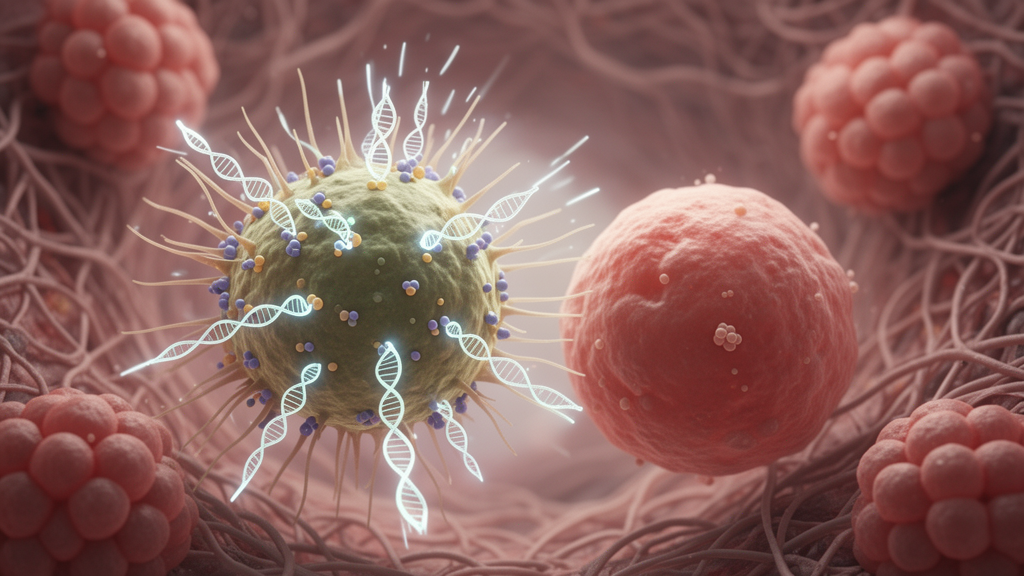
Image Credits: AI Generated

DOI: 10.1007/s12032-026-03482-5

Keywords: colorectal cancer, non-coding RNAs, tumor-associated macrophages, macrophage polarization, microRNAs, long non-coding RNAs, circular RNAs, cancer metastasis, tumor microenvironment, exosomal biomarkers, Macrophage, polarization

Cite Scienmag News

Nathaniel Bowman. (October 21, 2026). Review links ncRNA signaling to macrophage states in colorectal cancer. Scienmag. https://scienmag.com/review-links-ncrna-signaling-to-macrophage-states-in-colorectal-cancer/

Nathaniel Bowman. "Review links ncRNA signaling to macrophage states in colorectal cancer." Scienmag, 21 October 2026, https://scienmag.com/review-links-ncrna-signaling-to-macrophage-states-in-colorectal-cancer/. Accessed 21 October 2026.

Nathaniel Bowman. "Review links ncRNA signaling to macrophage states in colorectal cancer." Scienmag. October 21, 2026. https://scienmag.com/review-links-ncrna-signaling-to-macrophage-states-in-colorectal-cancer/


Tags: cancer metastasiscircular RNAscircular RNAs in tumor microenvironmentColorectal cancercolorectal cancer metastasis mechanismsexosomal biomarkerslong non-coding RNAslong non-coding RNAs and immune regulationM1 and M2 macrophage states in cancermacrophagemacrophage polarizationmacrophage polarization biomarkers in colorectal cancermicroRNAsmicroRNAs in cancer progressionmolecular signaling pathways in tumor immune evasionnon-coding RNA signaling networksnon-coding RNAsnon-coding RNAs in colorectal cancerpolarizationrole of non-coding RNAs in treatment responsetumor microenvironmenttumor microenvironment immune interactionstumor-associated macrophage polarizationtumor-associated macrophages
Share26Tweet16
Previous Post

Chemically linked phage endolysins broaden and strengthen in vitro bacterial killing

Next Post

Hemodialysis patients face high burden of sleep disorders, review finds

Related Posts

Artificial intelligence for symptom assessment and patient-reported outcomes in neuro-oncology
Cancer

Artificial intelligence for symptom assessment and patient-reported outcomes in neuro-oncology

October 21, 2026
Plasma metabolite shows similar performance to CA19-9 in 60-person pancreatic cancer study
Cancer

Plasma metabolite shows similar performance to CA19-9 in 60-person pancreatic cancer study

October 21, 2026
Dietary Intake Fell After Pancreatic Surgery Despite Falling Inflammation
Cancer

Dietary Intake Fell After Pancreatic Surgery Despite Falling Inflammation

October 21, 2026
Network meta-analysis compares 20 blood biomarkers for pancreatic cancer
Cancer

Network meta-analysis compares 20 blood biomarkers for pancreatic cancer

October 21, 2026
World’s First Dose of CD25-Targeting Antibody Drug Conjugate DS1025 Given in Phase 1 Cancer Trial
Cancer

First DS1025 dose administered in international Phase 1 solid-tumor trial

October 21, 2026
Johns Hopkins-led team wins up to $52 million to decode how proteins misfold
Cancer

Johns Hopkins-led protein-misfolding research protocol receives up to $52.1 million

October 21, 2026
Next Post
Hemodialysis patients face high burden of sleep disorders, review finds

Hemodialysis patients face high burden of sleep disorders, review finds

  • Mothers who receive childcare support from maternal grandparents show more optimized

    Mothers who receive childcare support from maternal grandparents show more parental warmth, finds NTU Singapore study

    27656 shares
    Share 11059 Tweet 6912
  • University of Seville Breaks 120-Year-Old Mystery, Revises a Key Einstein Concept

    1061 shares
    Share 424 Tweet 265
  • Bee body mass, pathogens and local climate influence heat tolerance

    682 shares
    Share 273 Tweet 171
  • Researchers record first-ever images and data of a shark experiencing a boat strike

    546 shares
    Share 218 Tweet 137
  • Groundbreaking Clinical Trial Reveals Lubiprostone Enhances Kidney Function

    531 shares
    Share 212 Tweet 133
Science

Embark on a thrilling journey of discovery with Scienmag.com—your ultimate source for cutting-edge breakthroughs. Immerse yourself in a world where curiosity knows no limits and tomorrow’s possibilities become today’s reality!

RECENT NEWS

  • Laboratory tests assess consolidated coal gangue in mining-area pavement concrete
  • Bio-Inspired Alignment Cut AES Trace Needs in Preliminary Test
  • Hemodialysis patients face high burden of sleep disorders, review finds
  • Review links ncRNA signaling to macrophage states in colorectal cancer

Categories

  • Agriculture
  • Anthropology
  • Archaeology
  • Athmospheric
  • Biology
  • Biotechnology
  • Blog
  • Bussines
  • Cancer
  • Chemistry
  • Climate
  • Earth Science
  • Editorial Policy
  • Marine
  • Mathematics
  • Medicine
  • Pediatry
  • Policy
  • Psychology & Psychiatry
  • Science Education
  • Science News
  • Social Science
  • Space
  • Technology and Engineering

Subscribe to Blog via Email

Enter your email address to subscribe to this blog and receive notifications of new posts by email.

Join 5,150 other subscribers

© 2025 Scienmag - Science Magazine

Welcome Back!

Login to your account below

Forgotten Password?

Retrieve your password

Please enter your username or email address to reset your password.

Log In
No Result
View All Result
  • HOME
  • SCIENCE NEWS
  • CONTACT US

© 2025 Scienmag - Science Magazine

Discover more from Science

Subscribe now to keep reading and get access to the full archive.

Continue reading