


Despite decades of prevailing concerns about overfishing and its detrimental impacts on global marine ecosystems, Southeast Asia’s capture fisheries continue to thrive, exhibiting both resilience and adaptability. This paradox is particularly striking against the backdrop of a worldwide trend towards diminishing fish populations and degraded marine habitats. Scholars and conservationists alike have raised alarms about the alarming trajectory of most global fisheries, yet Southeast Asia stands out as a compelling case study, where ecological balance and community sustenance are not only maintained but have seen notable success over the past three decades.
In a groundbreaking investigation published in the journal Fisheries Science, Professor Matsuishi Takashi Fritz from Hokkaido University has conducted a thorough analysis of the status of fisheries in Southeast Asia. The study scrutinizes regional practices and sustainability methods, aiming to uncover the factors that enable this area to buck the global trend of overfishing. As fishing pressure increases globally, it is essential to dissect what Southeast Asia has done correctly and how those lessons might be applicable to other regions struggling with their fisheries management.
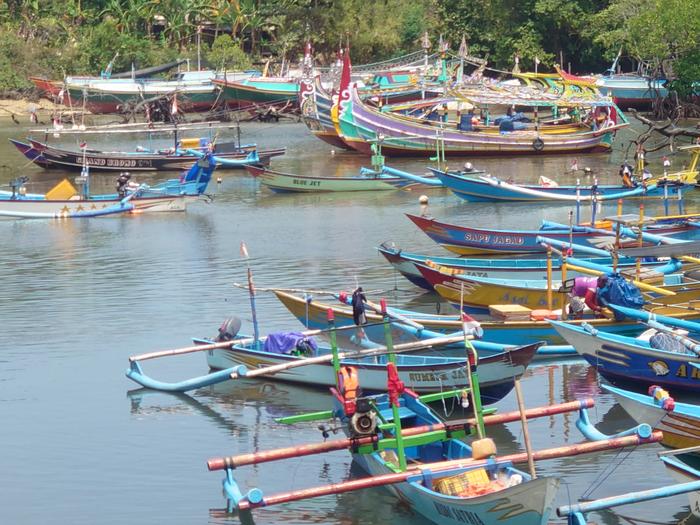
The region has observed a steady increment in fish production over the last 30 years, positioning it as a leader in global output. Though this growth has plateaued since 2018 due to rising environmental concerns and regulatory frameworks, Southeast Asian fisheries still outperform other regions in terms of biodiversity and sustainable practices. This achievement can be attributed in part to a unique socio-economic structure in which small-scale and artisanal fishing predominates. Embedded in the cultural fabric, these fishing practices prioritize local food security and nutritional needs, exploiting local waters sustainably.
Engagement in fishing activities among the population is markedly higher in Southeast Asia than in many other parts of the world. The percentage of individuals involved in fisheries is approximately 3.4 times greater than the global average, which coincides with the region’s historical reliance on aquatic foods as a primary protein source. This engagement has motivated local communities to adopt fishing practices that are less intrusive and more sustainable compared to industrial-scale fishing operations. Small-scale fishers typically source enough catch for personal consumption and local markets without depleting stocks.
The sustainability of these practices is underscored by Professor Fritz’s findings that highlight the region’s comparative advantage regarding underfished stocks. The percent of overfished species in Southeast Asia aligns closely with the global average; however, interestingly, the ratio of underfished stocks is three times higher than average. This combination creates a unique ecological balance that allows local fisheries to operate sustainably without falling into the traps of overexploited species which are so prevalent in other areas worldwide.
The importance of biodiversity within these fisheries cannot be overstated. Within Southeast Asian waters, the ecological balance has been preserved more effectively than in many other parts of the globe. Capture fisheries in this region tend to support diverse species, which mitigates risks associated with relying heavily on a few commercial species. Consequently, managing these fisheries focuses on nurturing a multi-species approach rather than adopting a one-size-fits-all strategy that can often lead to ecological harm.
Professor Fritz emphasizes the critical need for multi-species fisheries management strategies aimed at sustaining biodiversity. To maintain this rich marine life, he advocates for policies that promote non-species-selective fishing practices. These approaches not only help ensure the long-term viability of the fisheries but also protect delicate marine ecosystems from the adverse impacts of overfishing and habitat destruction.
Artisanal fisheries, with their focus on sustainable practices, create employment and support local economies while safeguarding marine habitats. They harness traditional fishing methods suited to the ecological characteristics of Southeast Asian waters, often utilizing gear that minimizes environmental footprints. The low impact of these small-scale practices uniquely positions them to contribute positively to both livelihoods and conservation efforts.
The findings of this study serve as important lessons for fisheries management worldwide. The experiences and practices of Southeast Asian fisheries provide a roadmap toward sustainable fishing, emphasizing local participation, traditional knowledge, and ecological diversity. To replicate these successes in other parts of the world, policymakers must engage local communities, prioritize sustainable practices, and enforce regulations that protect marine biodiversity.
In conclusion, the resilience of Southeast Asia’s capture fisheries amid the global crisis of overfishing points towards crucial pathways for sustainable fisheries management. As global fish stocks decline, understanding the dynamics of local fisheries that have managed to thrive may hold the key to informing future conservation efforts. Adequately addressing overfishing requires collaboration between scientists, government entities, and local fishers themselves to foster resilient, diverse, and sustainable fishing practices that prioritize marine ecosystem health and food security.
Southeast Asia’s fisheries illustrate that when communities are empowered and sustainable practices are adopted, it becomes possible to balance human needs with ecological integrity. The findings of this research underline the importance of local engagement in fisheries and flesh out a narrative of hope amidst widespread ecological challenges facing our oceans today. This study presents a framework for other regions to emulate, potentially altering the trajectory of global fisheries management toward a more sustainable future.
Cite Scienmag News
Violet Maxwell. (March 24, 2025). Small-Scale, Multispecies Capture Boosts Fisheries in Southeast Asia. Scienmag. https://scienmag.com/small-scale-multispecies-capture-boosts-fisheries-in-southeast-asia/
Violet Maxwell. "Small-Scale, Multispecies Capture Boosts Fisheries in Southeast Asia." Scienmag, 24 March 2025, https://scienmag.com/small-scale-multispecies-capture-boosts-fisheries-in-southeast-asia/. Accessed 4 September 2026.
Violet Maxwell. "Small-Scale, Multispecies Capture Boosts Fisheries in Southeast Asia." Scienmag. March 24, 2025. https://scienmag.com/small-scale-multispecies-capture-boosts-fisheries-in-southeast-asia/


