

Wednesday, October 21, 2026
Science
No Result
View All Result
  • Login
  • HOME
  • SCIENCE NEWS
  • CONTACT US
  • HOME
  • SCIENCE NEWS
  • CONTACT US
No Result
View All Result
Scienmag
No Result
View All Result
Home Science News Biology

Morphological study describes three bamboo-associated Vekunta species from Guizhou, China

October 21, 2026
in Biology, Science News
Gavin Prescott
By Gavin Prescott Scienmag Editorial Profile - Ecology and Ecosystem Dynamics
Reading Time: 3 mins read
0
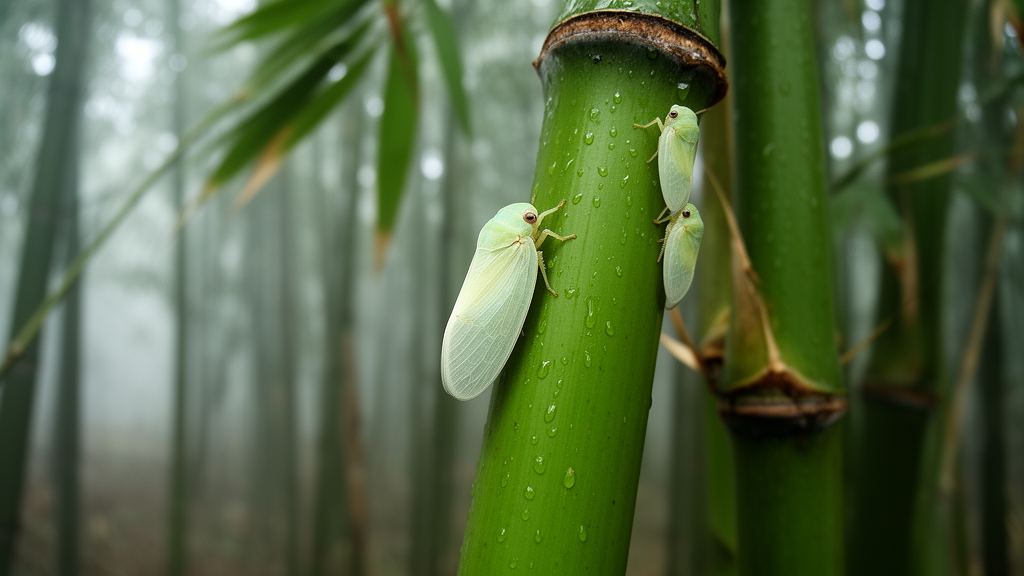
Three New Bamboo-Feeding Planthopper Species Discovered in Guizhou, China

Three New Bamboo-Feeding Planthopper Species Discovered in Guizhou, China

65
SHARES
587
VIEWS
Share on FacebookShare on Twitter
ADVERTISEMENT

A morphological study of museum and field collections described three new bamboo-associated species of the planthopper genus Vekunta from Guizhou Province, China: Vekunta deflecta, V. fodingshanensis and V. furcata. The study also reported V. fuscolineata from China for the first time.

The researchers examined dried specimens using stereomicroscopy and an ocular micrometer. Body length was measured from the apex of the vertex to the tip of the forewing, while wing venation and external anatomy were described using established morphological terminology. Male genital segments were removed, macerated in 10% sodium hydroxide and transferred to glycerine jelly for examination and illustration.

Colour photographs of adult habitus were taken with imaging systems, and the dissected terminalia were drawn under a stereomicroscope. The resulting line drawings were scanned and assembled digitally. The study was taxonomic and descriptive rather than an ecological experiment, and its conclusions were based on morphology, collection records and the available host-plant observations.

V. deflecta was represented by five males collected in Libo in 2011 and 2015. The species measured 5.48–6.34 mm in body length, including the forewing, and 4.53–5.43 mm in forewing length. Its name refers to the male anal tube, which is distinctly inclined to the left. The authors distinguished it from V. asymmetrica using the asymmetrical anal tube and differences in the phallic complex.

V. fodingshanensis was described from four males collected at Fodingshan National Nature Reserve in 2025. Body length, including the forewing, ranged from 5.33 to 5.40 mm, while forewing length ranged from 4.40 to 4.66 mm. Its name refers to the type locality. The authors compared it with V. nigra and identified differences involving the male pygofer, gonostyli and periandrium.

V. furcata was described from four males collected in Guizhou between 2012 and 2019. The specimens measured 4.45–4.91 mm in body length, including the forewing, and 3.82–4.29 mm in forewing length. The name refers to a forked, Y-shaped process on the male periandrium. The paper distinguished the species from V. umbripennis through features of the male terminalia.

All three new species were reported from bamboo. V. deflecta and V. fodingshanensis were associated with Bambusa emeiensis, while the host of V. furcata was identified only as Bambusa sp. The authors noted that host records for Vekunta remain scarce and that bamboo-associated and other-host specimens share the genus’s diagnostic characters, without showing clear morphological divergence.

These observations support the possibility that bamboo is an important host plant for Vekunta, but they do not establish that all species in the genus feed exclusively on bamboo. The researchers emphasized that host-associated morphological differences cannot be ruled out, that some species may have broader host ranges, and that further field surveys and more accurate host-association data are needed.

The study also updated the Chinese species list for Vekunta and provided a key to Chinese males based mainly on male terminalia. Five species known only from females were excluded from the key. The authors placed the new species in the genus Vekunta within the tribe Cenchreini, where fused RP and MP1+2 forewing veins help distinguish it from the externally similar Chinese genus Goneokara.

Subject of Research: Taxonomic description of three new Vekunta planthopper species from Guizhou, China

Article Title: Three bamboo-feeding new species of the genus Vekunta Distant ( Hemiptera , Fulgoromorpha , Derbidae ) from Guizhou Province, China

Article References: Yao, X., Sui, Y.-J., Lv, S.-S., Long, J.-K., Chang, Z.-M., Li, Z.-Z., Chen, X.-S., & Yang, L. (2026). Three bamboo-feeding new species of the genus Vekunta Distant (Hemiptera, Fulgoromorpha, Derbidae) from Guizhou Province, China. ZooKeys, 1289, 335-351. https://doi.org/10.3897/zookeys.1289.186813

Image Credits: AI Generated

DOI: 10.3897/zookeys.1289.186813

Keywords: Vekunta, planthoppers, Derbidae, taxonomy, morphology, Guizhou, China, bamboo-associated insects, species description, Three, bamboo-feeding, species

Cite Scienmag News

Gavin Prescott. (October 21, 2026). Morphological study describes three bamboo-associated Vekunta species from Guizhou, China. Scienmag. https://scienmag.com/morphological-study-describes-three-bamboo-associated-vekunta-species-from-guizhou-china/


Gavin Prescott. "Morphological study describes three bamboo-associated Vekunta species from Guizhou, China." Scienmag, 21 October 2026, https://scienmag.com/morphological-study-describes-three-bamboo-associated-vekunta-species-from-guizhou-china/. Accessed 21 October 2026.

Gavin Prescott. "Morphological study describes three bamboo-associated Vekunta species from Guizhou, China." Scienmag. October 21, 2026. https://scienmag.com/morphological-study-describes-three-bamboo-associated-vekunta-species-from-guizhou-china/

Tags: bamboo-associated insectsBamboo-associated planthopper speciesbamboo-feedingChinaDerbidaedigital illustration of insect terminaliadiscovery of new insect species in ChinaGuizhouGuizhou China insect diversityhost-plant relationships of Vekunta speciesmale genitalia analysis in insectsmorphological examination of planthoppersmorphologymuseum and field collection methods for insect taxonomyplanthoppersspeciesspecies descriptionspecies description and identificationtaxonomythreeuse of stereomicroscopy in entomologyVekuntaVekunta genus taxonomywing venation and external anatomy in planthoppers
Share26Tweet16
Previous Post

Tanshinone IIA linked to bone, metabolic and protein changes in rat osteonecrosis study

Next Post

Subcutaneous live flu injection protected mice at 277 days without detectable lung virus

Related Posts

Confidence Alone Doesn’t Pass the Test: Behavior Is the Missing Link in Language Learning
Science News

Study links self-efficacy, engagement pathways and CET-4 scores among Chinese EFL undergraduates

October 21, 2026
Skin Injection of Live Flu Virus Delivers Durable Protection Without Lung Damage
Biology

Subcutaneous live flu injection protected mice at 277 days without detectable lung virus

October 21, 2026
Tanshinone IIA Shows Multi-Target Protective Effects in Steroid-Induced Hip Bone Death, Rat Study Finds
Science News

Tanshinone IIA linked to bone, metabolic and protein changes in rat osteonecrosis study

October 21, 2026
John S. Dugdale, the Entomologist Who Mapped New Zealand’s Moths, Dies at 86
Science News

John S. Dugdale’s six decades of fieldwork reshaped New Zealand entomology

October 21, 2026
Two new spider wasps lift China’s Episyron count to eight species
Biology

Taxonomic review describes two new Episyron species and three new records for China

October 21, 2026
Ancient Spike Moss Trapped in Dominican Amber Fills 20-Million-Year Gap
Science News

Morphological study identifies probable first Miocene Selaginella macrofossil in Dominican amber

October 21, 2026
Next Post
Skin Injection of Live Flu Virus Delivers Durable Protection Without Lung Damage

Subcutaneous live flu injection protected mice at 277 days without detectable lung virus

  • Mothers who receive childcare support from maternal grandparents show more optimized

    Mothers who receive childcare support from maternal grandparents show more parental warmth, finds NTU Singapore study

    27656 shares
    Share 11059 Tweet 6912
  • University of Seville Breaks 120-Year-Old Mystery, Revises a Key Einstein Concept

    1061 shares
    Share 424 Tweet 265
  • Bee body mass, pathogens and local climate influence heat tolerance

    682 shares
    Share 273 Tweet 171
  • Researchers record first-ever images and data of a shark experiencing a boat strike

    546 shares
    Share 218 Tweet 137
  • Groundbreaking Clinical Trial Reveals Lubiprostone Enhances Kidney Function

    531 shares
    Share 212 Tweet 133
Science

Embark on a thrilling journey of discovery with Scienmag.com—your ultimate source for cutting-edge breakthroughs. Immerse yourself in a world where curiosity knows no limits and tomorrow’s possibilities become today’s reality!

RECENT NEWS

  • Study links self-efficacy, engagement pathways and CET-4 scores among Chinese EFL undergraduates
  • Subcutaneous live flu injection protected mice at 277 days without detectable lung virus
  • Morphological study describes three bamboo-associated Vekunta species from Guizhou, China
  • Tanshinone IIA linked to bone, metabolic and protein changes in rat osteonecrosis study

Categories

  • Agriculture
  • Anthropology
  • Archaeology
  • Athmospheric
  • Biology
  • Biotechnology
  • Blog
  • Bussines
  • Cancer
  • Chemistry
  • Climate
  • Earth Science
  • Editorial Policy
  • Marine
  • Mathematics
  • Medicine
  • Pediatry
  • Policy
  • Psychology & Psychiatry
  • Science Education
  • Science News
  • Social Science
  • Space
  • Technology and Engineering

Subscribe to Blog via Email

Enter your email address to subscribe to this blog and receive notifications of new posts by email.

Join 5,150 other subscribers

© 2025 Scienmag - Science Magazine

Welcome Back!

Login to your account below

Forgotten Password?

Retrieve your password

Please enter your username or email address to reset your password.

Log In
No Result
View All Result
  • HOME
  • SCIENCE NEWS
  • CONTACT US

© 2025 Scienmag - Science Magazine

Discover more from Science

Subscribe now to keep reading and get access to the full archive.

Continue reading