

Wednesday, October 21, 2026
Science
No Result
View All Result
  • Login
  • HOME
  • SCIENCE NEWS
  • CONTACT US
  • HOME
  • SCIENCE NEWS
  • CONTACT US
No Result
View All Result
Scienmag
No Result
View All Result
Home Science News Biology

Kazakh Uplands vegetation dataset documents 117 plots across forests, steppes and other habitats

October 21, 2026
in Biology, Science News, Technology and Engineering
Drew Townsend
By Drew Townsend Scienmag Editorial Profile - Cell Biology
Reading Time: 3 mins read
0
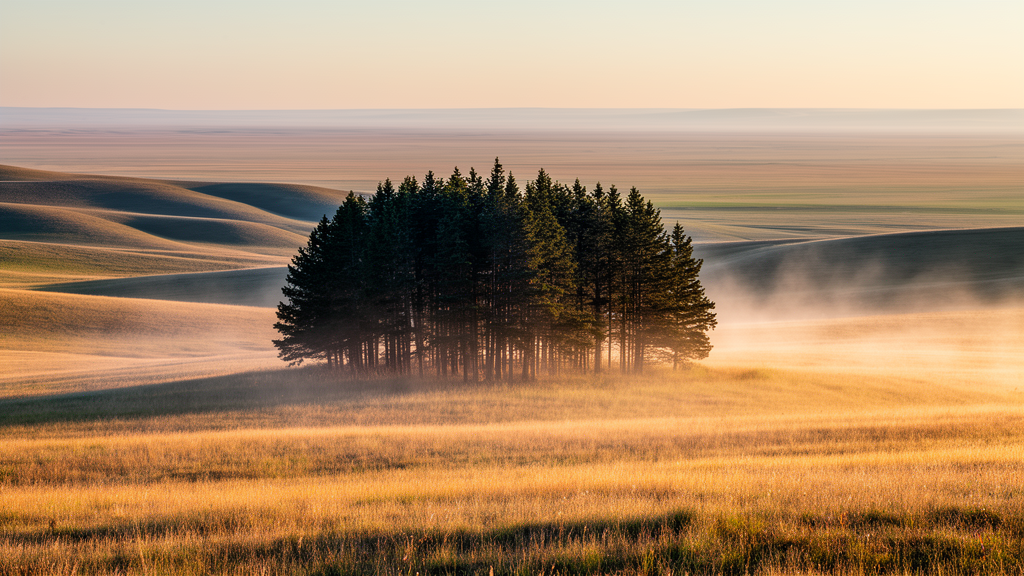
Relict boreal forests of Kazakh Uplands revealed in first open-access vegetation dataset

Relict boreal forests of Kazakh Uplands revealed in first open-access vegetation dataset

65
SHARES
587
VIEWS
Share on FacebookShare on Twitter
ADVERTISEMENT

A newly released dataset documents 117 vegetation relevés collected in the Kazakh Uplands between 2014 and 2025. The records cover forests, steppes, grasslands, floodplains, forest edges, post-fire forest sites and abandoned agricultural land across Central Kazakhstan, with all sampling locations georeferenced in the WGS84 coordinate system.

The dataset was assembled from five field projects: Bisons, PermanentPlots, Scabiosa, CentralKZ and Kendara. Sampling occurred in the Qaraghandy and Ulytau regions and, in part, in southern Akmola Region. Coordinates span 47.46957–51.63357 degrees north and 66.963623–76.22422 degrees east.

Vegetation was surveyed using the relevé method and either the Braun–Blanquet or Drude cover-abundance scale. Investigators estimated total and species-level cover for vascular plants in the tree canopy, understorey or shrub, and herb layers where those layers were present. Plot sizes were 100 or 1,600 square metres.

Most sampling locations were forests: 76 relevés were in forest stands, two in forest sites after fires and five at forest edges. Another 21 surveys represented dry xerophytic forb, forb–feather grass and forb–grass meadow steppe habitats. Eight plots were in grassland, two in floodplains and three on abandoned agricultural land. Pine-dominated stands accounted for 28 forest relevés; other surveys covered birch, aspen, mixed and black alder stands.

The records contain 481 unique scientific names representing 60 families and 238 genera. Of these, 420 taxa were identified to species level, 12 to subspecies and three to variety. Species were identified by Margarita Ishmuratova using regional floras and identification keys, with herbarium specimens deposited in the QAR collection. Scientific names were checked through the GBIF species-matching tool.

Eight alien plant species are represented in the relevés: Agropyron cristatum, Echinops sphaerocephalus, Echium vulgare, Cota tinctoria, Malus baccata, Caragana arborescens, Stellaria media and Acer negundo. The dataset includes fields describing how each was introduced, its degree of establishment and its pathway, drawing on previous research into the flora of Central Kazakhstan.

Boxelder maple, Acer negundo, was recorded twice. One occurrence was in an aspen stand in the Ortau Mountain forests, where it accounted for 25% cover of the understorey layer. The second was a young individual in a mixed forest stand in Karkaraly State National Natural Park. The authors describe the species as potentially the most dangerous among the alien plants in the dataset, citing its invasive status in Russia and unpublished field observations of initial colonisation in Central Kazakhstan.

Field data were digitised and standardised in Darwin Core. They were first released through GBIF as sampling-event datasets, but the GBIF Relevé Darwin Core Extension was not then indexed, so the authors merged the records and published the full dataset through Zenodo. It comprises an event table with plot characteristics and an occurrence table containing species-abundance data.

The dataset offers field observations from a defined geographic area and sampling period rather than a systematic estimate of vegetation across all Central Kazakhstan. Its habitat representation is uneven, with forests accounting for most plots, and the field records alone do not establish the regional prevalence, long-term trend or ecological effect of the alien species recorded.

Subject of Research: Vegetation plot dataset for forests, steppes and other habitats in the Kazakh Uplands

Article Title: Forest and steppe communities of Kazakh Uplands: vegetation plot dataset

Article References: Ivanova, N., Ishmuratova, M., & Tyrzhanova, S. (2026). Forest and steppe communities of Kazakh Uplands: vegetation plot dataset. Biodiversity Data Journal, 14, Article e189416. https://doi.org/10.3897/bdj.14.e189416

Image Credits: AI Generated

DOI: 10.3897/BDJ.14.e189416

Keywords: Kazakh Uplands, vegetation relevés, plant diversity, forest communities, steppe vegetation, Darwin Core, GBIF, alien plants, Central Kazakhstan, open biodiversity data, Forest, steppe

Cite Scienmag News

Drew Townsend. (October 21, 2026). Kazakh Uplands vegetation dataset documents 117 plots across forests, steppes and other habitats. Scienmag. https://scienmag.com/kazakh-uplands-vegetation-dataset-documents-117-plots-across-forests-steppes-and-other-habitats/


Drew Townsend. "Kazakh Uplands vegetation dataset documents 117 plots across forests, steppes and other habitats." Scienmag, 21 October 2026, https://scienmag.com/kazakh-uplands-vegetation-dataset-documents-117-plots-across-forests-steppes-and-other-habitats/. Accessed 21 October 2026.

Drew Townsend. "Kazakh Uplands vegetation dataset documents 117 plots across forests, steppes and other habitats." Scienmag. October 21, 2026. https://scienmag.com/kazakh-uplands-vegetation-dataset-documents-117-plots-across-forests-steppes-and-other-habitats/

Tags: abandoned agricultural land vegetationalien plantsbiodiversity assessment in Kazakh UplandsBraun–Blanquet cover scaleCentral KazakhstanCentral Kazakhstan plant surveysDarwin CoreDrude cover-abundance scaleforestforest and steppe habitat documentationforest communitiesGBIFgeoreferenced plant plotshabitat diversity and distributionKazakh UplandsKazakh Uplands vegetation datasetopen biodiversity dataplant diversitypost-fire forest ecologysteppesteppe vegetationvascular plant cover estimationvegetation relevé methodvegetation relevés
Share26Tweet16
Previous Post

CaBOL field survey adds 23 spider species to Georgia’s documented fauna

Next Post

Late Jurassic Aspidorhynchus skulls preserve evidence of fish and crustacean prey

Related Posts

Intralipid and Corticosteroids: New Clinical Protocols Target Immune-Driven Reproductive Failure
Medicine

Clinical protocol proposes Intralipid-based immunomodulation for selected reproductive failures, but evidence remains uncertain

October 21, 2026
One Tiny Larva in an Ancient Armenian Lake Rewrites the Map of a Hidden Insect Species
Biology

Single-larva study confirms Chironomus nuditarsis in Armenia’s Sevan Lake

October 21, 2026
Jurassic gut fossils reveal prey inside decapitated predator fish
Science News

Late Jurassic Aspidorhynchus skulls preserve evidence of fish and crustacean prey

October 21, 2026
DNA Barcodes Reveal Dozens of Spider Species New to Georgia and the Caucasus
Science News

CaBOL field survey adds 23 spider species to Georgia’s documented fauna

October 21, 2026
A South American Nightshade Is Quietly Colonizing Europe’s Disturbed Ground
Science News

Observational study links emerging non-native Solanum nitidibaccatum to ruderal community structure in Poland

October 21, 2026
New Crab Spider Species Discovered on Extinct Volcano in Georgia
Science News

A new Psammitis species (Araneae, Thomisidae) from an extinct volcano in Georgia with reevaluation of the generic position of Xysticus marmoratus Thorell, 1875

October 21, 2026
Next Post
Jurassic gut fossils reveal prey inside decapitated predator fish

Late Jurassic Aspidorhynchus skulls preserve evidence of fish and crustacean prey

  • Mothers who receive childcare support from maternal grandparents show more optimized

    Mothers who receive childcare support from maternal grandparents show more parental warmth, finds NTU Singapore study

    27656 shares
    Share 11059 Tweet 6912
  • University of Seville Breaks 120-Year-Old Mystery, Revises a Key Einstein Concept

    1061 shares
    Share 424 Tweet 265
  • Bee body mass, pathogens and local climate influence heat tolerance

    682 shares
    Share 273 Tweet 171
  • Researchers record first-ever images and data of a shark experiencing a boat strike

    546 shares
    Share 218 Tweet 137
  • Groundbreaking Clinical Trial Reveals Lubiprostone Enhances Kidney Function

    531 shares
    Share 212 Tweet 133
Science

Embark on a thrilling journey of discovery with Scienmag.com—your ultimate source for cutting-edge breakthroughs. Immerse yourself in a world where curiosity knows no limits and tomorrow’s possibilities become today’s reality!

RECENT NEWS

  • Clinical protocol proposes Intralipid-based immunomodulation for selected reproductive failures, but evidence remains uncertain
  • Single-larva study confirms Chironomus nuditarsis in Armenia’s Sevan Lake
  • Late Jurassic Aspidorhynchus skulls preserve evidence of fish and crustacean prey
  • Kazakh Uplands vegetation dataset documents 117 plots across forests, steppes and other habitats

Categories

  • Agriculture
  • Anthropology
  • Archaeology
  • Athmospheric
  • Biology
  • Biotechnology
  • Blog
  • Bussines
  • Cancer
  • Chemistry
  • Climate
  • Earth Science
  • Editorial Policy
  • Marine
  • Mathematics
  • Medicine
  • Pediatry
  • Policy
  • Psychology & Psychiatry
  • Science Education
  • Science News
  • Social Science
  • Space
  • Technology and Engineering

Subscribe to Blog via Email

Enter your email address to subscribe to this blog and receive notifications of new posts by email.

Join 5,150 other subscribers

© 2025 Scienmag - Science Magazine

Welcome Back!

Login to your account below

Forgotten Password?

Retrieve your password

Please enter your username or email address to reset your password.

Log In
No Result
View All Result
  • HOME
  • SCIENCE NEWS
  • CONTACT US

© 2025 Scienmag - Science Magazine

Discover more from Science

Subscribe now to keep reading and get access to the full archive.

Continue reading