

Wednesday, October 21, 2026
Science
No Result
View All Result
  • Login
  • HOME
  • SCIENCE NEWS
  • CONTACT US
  • HOME
  • SCIENCE NEWS
  • CONTACT US
No Result
View All Result
Scienmag
No Result
View All Result
Home Science News

A new Psammitis species (Araneae, Thomisidae) from an extinct volcano in Georgia with reevaluation of the generic position of Xysticus marmoratus Thorell, 1875

October 21, 2026
in Science News
Violet Maxwell
By Violet Maxwell Scienmag Editorial Profile - Natural Hazards
Reading Time: 3 mins read
0
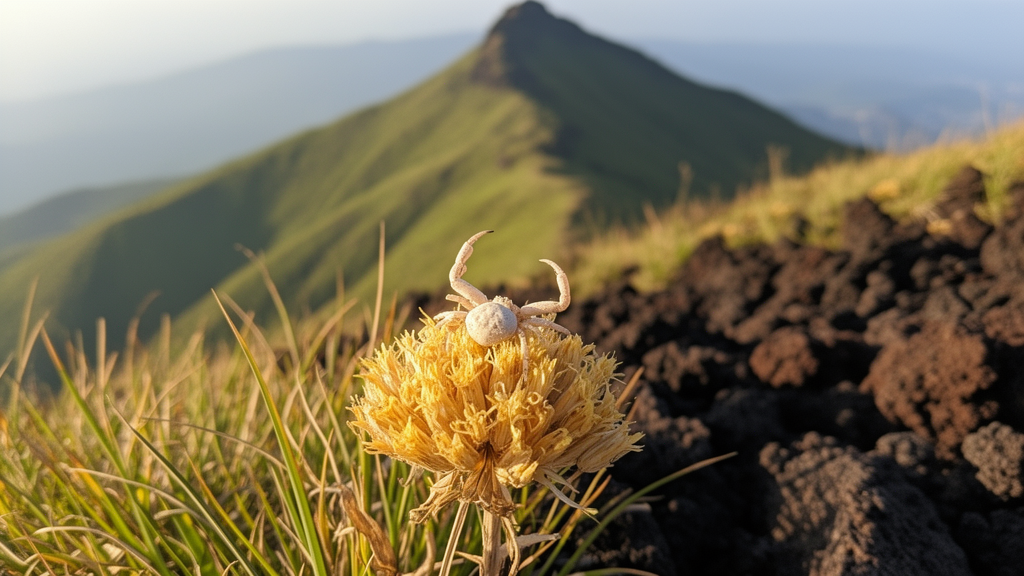
New Crab Spider Species Discovered on Extinct Volcano in Georgia

New Crab Spider Species Discovered on Extinct Volcano in Georgia

65
SHARES
587
VIEWS
Share on FacebookShare on Twitter
ADVERTISEMENT

A taxonomic study has described a new species of crab spider from Georgia’s extinct Didi Abuli volcano and reassessed the generic placement of Xysticus marmoratus Thorell, 1875. The researchers named the new species Psammitis abuliensis and proposed transferring X. marmoratus to Psammitis as Psammitis marmoratus.

The description was based on two male specimens collected under small stones at the summit of Didi Abuli on 12 September 2018. The mountain is the highest peak in the Lesser Caucasus and lies in the Abul-Samsari Range. The holotype and paratype, both males, were deposited in the scientific collections of Ilia State University in Tbilisi, Georgia.

P. abuliensis resembles the Georgian species Psammitis sabulosus and the Turkish species P. demirsoyi. Its male genital structures distinguish it from both: the embolus tip is very short and broad and bow tie-shaped, the basal embolus is longer, and a large tutacular apophysis is present. The absence of that apophysis distinguishes the new species from P. demirsoyi, while P. sabulosus has a longer, thinner embolus tip.

The holotype measures 6.90 mm in total length, and the paratype measures 6.85 mm. Their carapaces are 3.41 and 3.39 mm long, respectively, and their abdomens are 3.80 and 3.85 mm long. The study also documented leg measurements and spination, sternum markings, coloration and the diagnostic genital morphology.

DNA analysis yielded identical mitochondrial COI barcodes for the two specimens, deposited in BOLD as AFP6894. In BOLD, the nearest listed neighbor was a Psammitis ninnii specimen from Spain with a private status, at an uncorrected p-distance of 6.3%. The new species is currently known only from its type locality, and no female was available for description.

For the broader assessment, the researchers combined the new COI sequences with published and project-generated barcodes of Psammitis and several outgroup genera. They used uncorrected p-distances to construct a Neighbor-Joining tree in MEGA 11 with 1,000 bootstrap replicates. The analysis included 13 COI sequences representing 10 thomisid species.

The authors transferred Xysticus marmoratus to Psammitis as Psammitis marmoratus comb. nov. The reassessment was based partly on the similarity of the male palp to the Psammitis type species, which has an anapophysate tegulum. The phylogenetic tree also placed X. marmoratus in close association with species of Psammitis.

Because females of Psammitis and Xysticus did not exhibit clearly defined characters that could reliably separate the genera, the evidence for the transfer rested on male morphology and the barcode-based tree. The analysis involved a limited set of specimens and taxa, and the new species remains represented by two males from one locality.

The authors said the reevaluation indicates that additional revision of Xysticus may be warranted. They also noted that exploration of remote and poorly studied localities in Georgia could reveal more species and help clarify three Caucasus-endemic Xysticus species originally described from single females.

Subject of Research: Taxonomic description and molecular reassessment of Georgian crab spiders in the family Thomisidae

Article Title: A new Psammitis species ( Araneae , Thomisidae ) from an extinct volcano in Georgia with reevaluation of the generic position of Xysticus marmoratus Thorell, 1875

Article References: Seropian, A., & Mumladze, L. (2024). A new Psammitis species (Araneae, Thomisidae) from an extinct volcano in Georgia with reevaluation of the generic position of Xysticus marmoratus Thorell, 1875. Caucasiana, 3, 119-126. https://doi.org/10.3897/caucasiana.3.e120656

Image Credits: AI Generated

DOI: 10.3897/caucasiana.3.e120656

Keywords: Psammitis abuliensis, Psammitis marmoratus, Xysticus marmoratus, Thomisidae, crab spiders, Georgia, Didi Abuli, DNA barcoding, COI phylogeny, species description, Psammitis, species

Cite Scienmag News

Violet Maxwell. (October 21, 2026). A new Psammitis species (Araneae, Thomisidae) from an extinct volcano in Georgia with reevaluation of the generic position of Xysticus marmoratus Thorell, 1875. Scienmag. https://scienmag.com/a-new-psammitis-species-araneae-thomisidae-from-an-extinct-volcano-in-georgia-with-reevaluation-of-the-generic-position-of-xysticus-marmoratus-thorell-1875/


Violet Maxwell. "A new Psammitis species (Araneae, Thomisidae) from an extinct volcano in Georgia with reevaluation of the generic position of Xysticus marmoratus Thorell, 1875." Scienmag, 21 October 2026, https://scienmag.com/a-new-psammitis-species-araneae-thomisidae-from-an-extinct-volcano-in-georgia-with-reevaluation-of-the-generic-position-of-xysticus-marmoratus-thorell-1875/. Accessed 21 October 2026.

Violet Maxwell. "A new Psammitis species (Araneae, Thomisidae) from an extinct volcano in Georgia with reevaluation of the generic position of Xysticus marmoratus Thorell, 1875." Scienmag. October 21, 2026. https://scienmag.com/a-new-psammitis-species-araneae-thomisidae-from-an-extinct-volcano-in-georgia-with-reevaluation-of-the-generic-position-of-xysticus-marmoratus-thorell-1875/

Tags: arachnid systematicsCaucasus endemic spidersCOI phylogenyCrab spider taxonomycrab spidersDidi AbuliDNA barcodingextinct volcano biodiversityGeorgiaGeorgia arachnologyLeaser Caucasus mountain faunanew spider species descriptionPsammitisPsammitis abuliensisPsammitis marmoratusPsammitis species discoveryspeciesspecies descriptionspecies differentiation in Thomisidaespider genital structureThomisidaeThomisidae morphological analysisXysticus genus reevaluationXysticus marmoratus
Share26Tweet16
Previous Post

Taxonomic study identifies two new capitellid species from southern China

Next Post

Observational study links emerging non-native Solanum nitidibaccatum to ruderal community structure in Poland

Related Posts

Jurassic gut fossils reveal prey inside decapitated predator fish
Science News

Late Jurassic Aspidorhynchus skulls preserve evidence of fish and crustacean prey

October 21, 2026
Relict boreal forests of Kazakh Uplands revealed in first open-access vegetation dataset
Biology

Kazakh Uplands vegetation dataset documents 117 plots across forests, steppes and other habitats

October 21, 2026
DNA Barcodes Reveal Dozens of Spider Species New to Georgia and the Caucasus
Science News

CaBOL field survey adds 23 spider species to Georgia’s documented fauna

October 21, 2026
A South American Nightshade Is Quietly Colonizing Europe’s Disturbed Ground
Science News

Observational study links emerging non-native Solanum nitidibaccatum to ruderal community structure in Poland

October 21, 2026
Two New Species of Mud-Dwelling Marine Worms Discovered on China’s Southern Coast
Biology

Taxonomic study identifies two new capitellid species from southern China

October 21, 2026
Reproductive and growth parameters of Chelon auratus (Actinopterygii, Mugiliformes, Mugilidae) in Bizerte Lagoon, Tunisia
Science News

One-year field study measures golden grey mullet reproduction and growth in Tunisia’s Bizerte Lagoon

October 21, 2026
Next Post
A South American Nightshade Is Quietly Colonizing Europe’s Disturbed Ground

Observational study links emerging non-native Solanum nitidibaccatum to ruderal community structure in Poland

  • Mothers who receive childcare support from maternal grandparents show more optimized

    Mothers who receive childcare support from maternal grandparents show more parental warmth, finds NTU Singapore study

    27656 shares
    Share 11059 Tweet 6912
  • University of Seville Breaks 120-Year-Old Mystery, Revises a Key Einstein Concept

    1061 shares
    Share 424 Tweet 265
  • Bee body mass, pathogens and local climate influence heat tolerance

    682 shares
    Share 273 Tweet 171
  • Researchers record first-ever images and data of a shark experiencing a boat strike

    546 shares
    Share 218 Tweet 137
  • Groundbreaking Clinical Trial Reveals Lubiprostone Enhances Kidney Function

    531 shares
    Share 212 Tweet 133
Science

Embark on a thrilling journey of discovery with Scienmag.com—your ultimate source for cutting-edge breakthroughs. Immerse yourself in a world where curiosity knows no limits and tomorrow’s possibilities become today’s reality!

RECENT NEWS

  • Late Jurassic Aspidorhynchus skulls preserve evidence of fish and crustacean prey
  • Kazakh Uplands vegetation dataset documents 117 plots across forests, steppes and other habitats
  • CaBOL field survey adds 23 spider species to Georgia’s documented fauna
  • Observational study links emerging non-native Solanum nitidibaccatum to ruderal community structure in Poland

Categories

  • Agriculture
  • Anthropology
  • Archaeology
  • Athmospheric
  • Biology
  • Biotechnology
  • Blog
  • Bussines
  • Cancer
  • Chemistry
  • Climate
  • Earth Science
  • Editorial Policy
  • Marine
  • Mathematics
  • Medicine
  • Pediatry
  • Policy
  • Psychology & Psychiatry
  • Science Education
  • Science News
  • Social Science
  • Space
  • Technology and Engineering

Subscribe to Blog via Email

Enter your email address to subscribe to this blog and receive notifications of new posts by email.

Join 5,150 other subscribers

© 2025 Scienmag - Science Magazine

Welcome Back!

Login to your account below

Forgotten Password?

Retrieve your password

Please enter your username or email address to reset your password.

Log In
No Result
View All Result
  • HOME
  • SCIENCE NEWS
  • CONTACT US

© 2025 Scienmag - Science Magazine

Discover more from Science

Subscribe now to keep reading and get access to the full archive.

Continue reading