


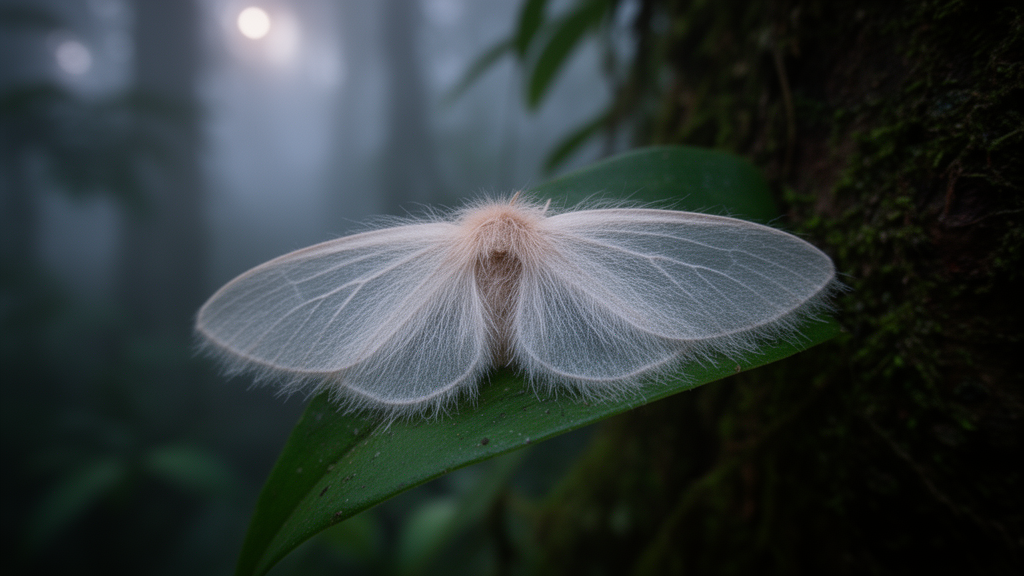
A taxonomic review of the tussock moth genus Carriola Swinhoe, 1922 restored the genus to valid status and described four new species: C. witti from Borneo, and C. polyakovi, C. shorokhovi and C. zolotuhini from the Philippines. The study reviewed five previously known species using external morphology and male and female genital structures, bringing the recognized total to nine species divided between two morphological groups.
The review examined about 400 specimens, primarily from the Entomological Museum Thomas J. Witt collection in Munich, with additional material obtained from European collections. Investigators dissected genitalia from traditionally dried, pinned specimens after immersing the abdomens in 10% potassium hydroxide. Male aedeagi were removed and photographed after eversion of the vesica with 99% isopropyl alcohol, while genitalia and abdomens were stained with eosin and slide-mounted in Euparal. The work used established dissection, anatomical nomenclature and wing-venation methods adapted for lymantriine moths.
Carriola was established in 1922 for three closely related species from Southeast Asia: Leucoma ecnomoda from Java, L. saturnioides from Sulawesi and L. fenestrata from Sri Lanka. Its original diagnosis emphasized wing venation and the presence of large hyaline windows. Bryk later added L. thyridophora from Sri Lanka and L. seminsula from Hong Kong. A 2015 molecular phylogenetic analysis subsequently transferred Carriola into Arctornis, but the authors of the present review considered that broader synonymization premature because the molecular sample covered only 18 specimens and 17 species, while Arctornis sensu lato contains more than 130 described species.
Direct morphological comparisons with the type species of Arctornis, Phalaena l-nigrum, and several additional Oriental species supported reinstating Carriola as a separate genus. Members of Carriola have beige-green wings with distinctive hyaline windows, including a large central window and a satellite spot between it and the apex. Females have almost transparent wings except where scales remain in the basal and marginal areas. In living moths, light green veins and greenish windows become yellow in preserved specimens.
Several anatomical features distinguish Carriola from the examined Arctornis species. Its forewing venation includes an RS1–RS4 cell that was absent from the Arctornis material studied. Males lack the tymbal organs present on the third abdominal sternum of Arctornis. In the male genitalia, Carriola lacks the saccular pocket at the base of the valva and the long, slender harp arising from it in Arctornis. Females of Carriola possess a medial oval projection of sternum VII over the anterior margin of the antrum, elongated, uniformly narrow pseudopapillae, and a large scobinated signum that is heart-shaped or triangular with rounded edges.
These characters also support division of the nine recognized species into two groups. The ecnomoda group is characterized by a simple, elongated valva without sclerotized processes and a heart-shaped signum. It comprises C. ecnomoda, C. thyridophora, C. witti, C. seminsula, C. saturnioides, C. polyakovi and C. shorokhovi. The fenestrata group has a well-sclerotized costal process on the valva and a triangular signum with rounded edges; it contains C. fenestrata and C. zolotuhini.
Carriola witti is based on a male holotype collected on Mount Trus Madi in Sabah at 1,200 metres above sea level, with paratypes from Malaysian Borneo and the Philippine islands of Palawan and Tawi-Tawi. Its external appearance can be confused with C. seminsula and C. thyridophora, but genital examination distinguishes it. The male has an elongated, pointed, isosceles trapezoidal valva, while the female has a scobinate, heart-shaped signum about one third the size of the bursa. The species was named in memory of lepidopterist Thomas J. Witt, whose collection funded the research.
Among the three Philippine species, C. polyakovi was recorded from Luzon, Panay, Negros and Samar. Its male can be distinguished externally by a basal forewing hyaline window that sometimes merges with the central window; its strongly elongated valva has an upward-curved, toothed tip. C. shorokhovi was recorded from Mindanao, Mindoro and Leyte and has an elongated, pointed valva without the upward-curved tip, together with a large V-shaped signum occupying about three quarters of the bursa. C. zolotuhini is known from Mindanao and has a dark grey male form without hindwing hyaline windows. These three species were named for Viktor P. Polyakov, Sergey E. Shorokhov and Vadim V. Zolotuhin, respectively, with the source describing their professional roles individually.
The review also clarified distributions and diagnoses for the five known species. C. ecnomoda, whose caterpillars have been reported feeding on Durio zibethinus, is restricted to Java and the Lesser Sunda Islands, and earlier records from Borneo and the Philippines were treated as erroneous. C. thyridophora occurs from India and the Andaman Islands through parts of mainland Southeast Asia to Sumatra. C. seminsula, the smallest species in the genus, is known from Hong Kong, Hainan, Vietnam and Thailand, while the largest, C. saturnioides, is confined to Sulawesi and nearby Peleng Island. C. fenestrata ranges from Nepal, India and Sri Lanka through China and mainland Southeast Asia to Peninsular Malaysia. The study’s conclusions are based on the examined specimens and morphological comparisons, while the authors note that broader molecular sampling would be needed to clarify relationships across the much more diverse Arctornithini.
Subject of Research: Morphological taxonomy and revision of the tussock moth genus Carriola
Article Title: Review of the genus Carriola Swinhoe, 1922 ( Lepidoptera , Erebidae , Lymantriinae ), with descriptions of four new species
Article References: Shovkoon, D. F., & Trofimova, T. A. (2024). Review of the genus Carriola Swinhoe, 1922 (Lepidoptera, Erebidae, Lymantriinae), with descriptions of four new species. Nota Lepidopterologica, 47, 57-79. https://doi.org/10.3897/nl.47.114772
Image Credits: AI Generated
DOI: 10.3897/nl.47.114772
Keywords: Carriola, Lepidoptera, Erebidae, Lymantriinae, taxonomic revision, species description, moth morphology, genitalia analysis, Borneo, Philippines, Review, genus
Cite Scienmag News
Ophelia Keating. (October 20, 2026). Taxonomic review restores Carriola as a valid moth genus and describes four new species. Scienmag. https://scienmag.com/taxonomic-review-restores-carriola-as-a-valid-moth-genus-and-describes-four-new-species/
Ophelia Keating. "Taxonomic review restores Carriola as a valid moth genus and describes four new species." Scienmag, 20 October 2026, https://scienmag.com/taxonomic-review-restores-carriola-as-a-valid-moth-genus-and-describes-four-new-species/. Accessed 20 October 2026.
Ophelia Keating. "Taxonomic review restores Carriola as a valid moth genus and describes four new species." Scienmag. October 20, 2026. https://scienmag.com/taxonomic-review-restores-carriola-as-a-valid-moth-genus-and-describes-four-new-species/


