

Tuesday, October 20, 2026
Science
No Result
View All Result
  • Login
  • HOME
  • SCIENCE NEWS
  • CONTACT US
  • HOME
  • SCIENCE NEWS
  • CONTACT US
No Result
View All Result
Scienmag
No Result
View All Result
Home Science News Medicine

Trajectories of the double burden of malnutrition and social inequality in 6–12-year-old South African children: The NW-child study

October 20, 2026
in Medicine
Courtney Benton
By Courtney Benton Scienmag Editorial Profile - Science and Technology Policy
Reading Time: 2 mins read
0
Six Years of Tracking Reveal How Poverty and Wealth Split Malnutrition Risks in South African Children

Six Years of Tracking Reveal How Poverty and Wealth Split Malnutrition Risks in South African Children

65
SHARES
587
VIEWS
Share on FacebookShare on Twitter
ADVERTISEMENT

A longitudinal analysis of 333 South African children found persistent differences in malnutrition measures between groups of low and high socioeconomic status from Grade 1 through Grade 7. The study abstract reports that children in the low-SES group were more frequently classified as at risk of stunting or being underweight, while children in the high-SES group showed higher prevalence of overweight or obesity when assessed by several measures. The pattern was observed at the population level rather than for each individual child.

The researchers used data collected from 2010 to 2016 through the North-West Child-Health-Integrated with Learning and Development longitudinal study. The same children were followed at three ages: Grade 1, when participants were 6–7 years old; Grade 4, when they were 9–10; and Grade 7, when they were 12–13. The cohort included 186 children classified as low SES and 147 as high SES, with boys and girls analyzed in each group. Undernutrition risk was assessed using height-for-age, weight-for-age, and body mass index-for-age, while overnutrition was assessed using body mass index-for-age, waist-to-height ratio, and body fat percentage.

Across Grades 1 to 7, low-SES children had a significantly higher risk of being at risk of stunting and underweight, with all reported p-values at or below 0.001. Their relative risk of classification as at risk of stunting was at least 178%, and the relative risk of being underweight was at least 259%. Conversely, low-SES children had lower measured prevalence of overweight or obesity by body mass index-for-age, waist-to-height ratio, and body fat percentage. The reported reductions in relative risk were at least 68% for waist-to-height ratio, at least 68% for body fat percentage, and at least 71% for body mass index-for-age, with all p-values at or below 0.003.

Some patterns changed during puberty. Stunting-risk prevalence increased by 24.1% among pubertal boys. Among pubertal girls, the higher risk of classification as at risk of stunting and the lower risk of overweight or obesity by body mass index-for-age each lost statistical significance over time. The abstract describes these results as indicating a population-level, but not individual-level, double burden of malnutrition, characterized by persistent undernutrition risk among low-SES children and greater overnutrition among high-SES children. Because the available evidence is the study abstract, it does not provide the full methods, detailed statistical estimates, or results needed to assess individual-level classification across all measures or the study’s wider limitations.

Subject of Research: Longitudinal differences in malnutrition measures by socioeconomic status among South African children aged 6 to 13

Article Title: Trajectories of the double burden of malnutrition and social inequality in 6–12-year-old South African children: The NW-child study

Article References: van Niekerk, E., Pienaar, A. E., & Monyeki, M. A. (2026). Trajectories of the double burden of malnutrition and social inequality in 6–12-year-old South African children: The NW-child study. BMC Pediatrics. https://doi.org/10.1186/s12887-026-07548-1

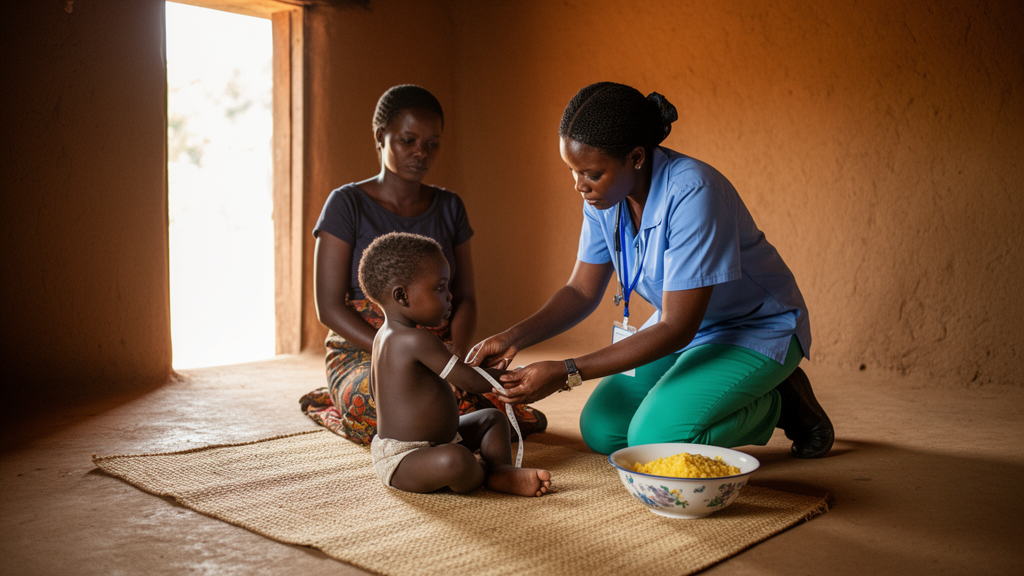
Image Credits: AI Generated

DOI: 10.1186/s12887-026-07548-1

Keywords: child malnutrition, South Africa, longitudinal study, socioeconomic status, stunting, underweight, overweight, obesity, body composition, puberty, Trajectories, double

Cite Scienmag News

Courtney Benton. (October 20, 2026). Trajectories of the double burden of malnutrition and social inequality in 6–12-year-old South African children: The NW-child study. Scienmag. https://scienmag.com/trajectories-of-the-double-burden-of-malnutrition-and-social-inequality-in-6-12-year-old-south-african-children-the-nw-child-study/


Courtney Benton. "Trajectories of the double burden of malnutrition and social inequality in 6–12-year-old South African children: The NW-child study." Scienmag, 20 October 2026, https://scienmag.com/trajectories-of-the-double-burden-of-malnutrition-and-social-inequality-in-6-12-year-old-south-african-children-the-nw-child-study/. Accessed 20 October 2026.

Courtney Benton. "Trajectories of the double burden of malnutrition and social inequality in 6–12-year-old South African children: The NW-child study." Scienmag. October 20, 2026. https://scienmag.com/trajectories-of-the-double-burden-of-malnutrition-and-social-inequality-in-6-12-year-old-south-african-children-the-nw-child-study/

Tags: body compositionbody composition measures in pediatric healthchild malnutritionchildhood obesity risk in high SES childrendoubledouble burden of malnutritionhealth disparities in childhood nutritionimpact of socioeconomic factors on childhood malnutritionlongitudinal child health studylongitudinal studymalnutrition trajectories in South African childrenobesityoverweightpubertysocial inequality and childhood healthsocioeconomic statussocioeconomic status and child growthSouth AfricaSouth African child development researchstuntingstunting and underweight prevalence in low SES groupstrajectoriesundernutrition and overnutrition in school-aged childrenunderweight
Share26Tweet16
Previous Post

Systematic review and German field case study assess acoustic monitoring for invasive animals

Next Post

Erzincan field assessment finds high plant diversity across seven settlements

Related Posts

AI Challenges May Drive Integrity Awareness and Innovation in Postgraduate Nursing Students, Survey Finds
Medicine

AI challenges, academic integrity awareness and innovative behaviour linked in postgraduate nursing survey

October 20, 2026
Five-Year Trial Puts Movement Inside Brazilian Classrooms to Test Cognitive Gains in Children
Medicine

Protocol for five-year cluster-randomized trial of active lessons and breaks among Aracaju schoolchildren

October 20, 2026
Why Legal Aid Struggles to Reach Veterans Facing Abuse Inside America’s Largest Health System
Medicine

Barriers to Implementing Medical-Legal Partnerships for Survivors of Intimate Partner Violence: Qualitative Perspectives from the Veterans Health Administration

October 20, 2026
Novel FRRS1L Gene Variant Linked to Fatal Childhood Epilepsy in First Chinese Case
Medicine

Novel homozygous FRRS1L variant reported in Chinese girl with DEE37-related symptoms

October 20, 2026
Why Some People Say Yes to Tuberculosis Preventive Treatment and Others Refuse
Medicine

Cross-sectional study identifies seven predictors of stated willingness to accept TB preventive treatment among Xinjiang close contacts

October 20, 2026
Trauma-informed care pathway for unaccompanied asylum-seeking children wins broad staff support
Medicine

Qualitative evaluation identifies support and implementation challenges for integrated care for asylum-seeking youth

October 20, 2026
Next Post
Erzincan Districts Score High in Biodiversity-Friendly City Assessment

Erzincan field assessment finds high plant diversity across seven settlements

  • Mothers who receive childcare support from maternal grandparents show more optimized

    Mothers who receive childcare support from maternal grandparents show more parental warmth, finds NTU Singapore study

    27656 shares
    Share 11059 Tweet 6912
  • University of Seville Breaks 120-Year-Old Mystery, Revises a Key Einstein Concept

    1061 shares
    Share 424 Tweet 265
  • Bee body mass, pathogens and local climate influence heat tolerance

    682 shares
    Share 273 Tweet 171
  • Researchers record first-ever images and data of a shark experiencing a boat strike

    546 shares
    Share 218 Tweet 137
  • Groundbreaking Clinical Trial Reveals Lubiprostone Enhances Kidney Function

    531 shares
    Share 212 Tweet 133
Science

Embark on a thrilling journey of discovery with Scienmag.com—your ultimate source for cutting-edge breakthroughs. Immerse yourself in a world where curiosity knows no limits and tomorrow’s possibilities become today’s reality!

RECENT NEWS

  • Erzincan field assessment finds high plant diversity across seven settlements
  • Trajectories of the double burden of malnutrition and social inequality in 6–12-year-old South African children: The NW-child study
  • Systematic review and German field case study assess acoustic monitoring for invasive animals
  • US FGM/C model suggests earlier estimates undercounted affected women and overcounted girls at risk

Categories

  • Agriculture
  • Anthropology
  • Archaeology
  • Athmospheric
  • Biology
  • Biotechnology
  • Blog
  • Bussines
  • Cancer
  • Chemistry
  • Climate
  • Earth Science
  • Editorial Policy
  • Marine
  • Mathematics
  • Medicine
  • Pediatry
  • Policy
  • Psychology & Psychiatry
  • Science Education
  • Science News
  • Social Science
  • Space
  • Technology and Engineering

Subscribe to Blog via Email

Enter your email address to subscribe to this blog and receive notifications of new posts by email.

Join 5,150 other subscribers

© 2025 Scienmag - Science Magazine

Welcome Back!

Login to your account below

Forgotten Password?

Retrieve your password

Please enter your username or email address to reset your password.

Log In
No Result
View All Result
  • HOME
  • SCIENCE NEWS
  • CONTACT US

© 2025 Scienmag - Science Magazine

Discover more from Science

Subscribe now to keep reading and get access to the full archive.

Continue reading