

Tuesday, October 20, 2026
Science
No Result
View All Result
  • Login
  • HOME
  • SCIENCE NEWS
  • CONTACT US
  • HOME
  • SCIENCE NEWS
  • CONTACT US
No Result
View All Result
Scienmag
No Result
View All Result
Home Science News Technology and Engineering

Antimicrobial cyclic peptide shows multi-target effects in laboratory acne models

October 20, 2026
in Technology and Engineering
Denise Maddox
By Denise Maddox Scienmag Editorial Profile - Mechanical Engineering
Reading Time: 2 mins read
0
Cyclic peptide attacks acne on multiple fronts in lab study

Cyclic peptide attacks acne on multiple fronts in lab study

65
SHARES
587
VIEWS
Share on FacebookShare on Twitter
ADVERTISEMENT

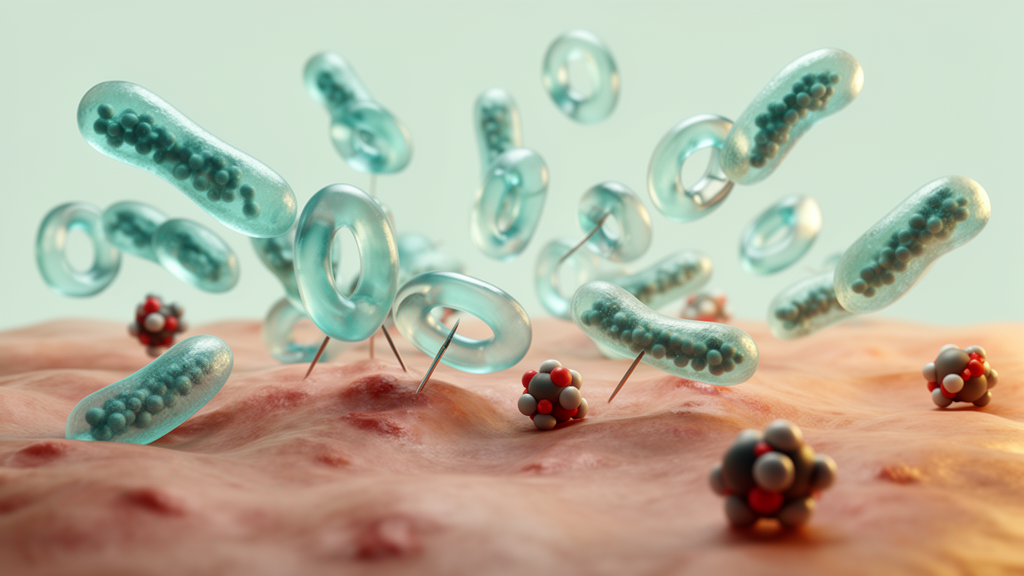
A laboratory study summarized in a Scientific Reports abstract reports that a newly characterized antimicrobial cyclic peptide, abbreviated AMCP, reduced lipid synthesis in SZ95 sebocytes, killed two bacterial species, and suppressed several inflammatory mediators in cultured skin cells. The findings describe effects in experimental systems and do not establish that AMCP improves acne in people.

At a concentration of 20 µg/mL, AMCP reduced dihydrotestosterone- and linoleic acid-induced lipid synthesis in SZ95 sebocytes by 40.0% and 29.1%, respectively. The peptide also had minimum inhibitory and minimum bactericidal concentrations of 0.5 µg/mL against Cutibacterium acnes and 1.0 µg/mL against Staphylococcus aureus, indicating bactericidal activity in the reported bacterial assays.

In HaCaT keratinocytes and SZ95 sebocytes, AMCP suppressed IL-6, IL-8, IL-1β, TNF-α and PGE₂ in a concentration-dependent manner. The abstract also reports that AMCP promoted keratinocyte migration, increased expression of the epidermal differentiation genes FLG, IVL, Claudin-1 and KRT1, and reduced KLK7 expression. Together, these results support activity across lipid synthesis, antibacterial activity, inflammation and cellular measures relevant to skin biology.

The study additionally evaluated topical dermal delivery. Combining AMCP with 2% propylene glycol and 0.1% sodium surfactin increased cumulative permeation fivefold at eight hours under the reported test conditions. The supplied abstract does not describe testing in people or report clinical outcomes, and it does not provide information on selectivity, safety, formulation stability or whether the compound was tested in animals elsewhere in the full study. AMCP therefore remains a multitarget candidate whose laboratory effects require further evaluation before any conclusion about clinical benefit can be made.

Subject of Research: Laboratory evaluation of an antimicrobial cyclic peptide for multi-target activity in acne-related cellular and bacterial models

Article Title: An antimicrobial cyclic peptide with multitarget efficacy for acne

Article References: Yu, N., Guo, G., Zhang, L., He, T., Zhang, M., Wang, J., Wang, J., Yao, R., Wang, G.-L., & Wang, J. (2026). An antimicrobial cyclic peptide with multitarget efficacy for acne. Scientific Reports. https://doi.org/10.1038/s41598-026-75285-7

Image Credits: AI Generated

DOI: 10.1038/s41598-026-75285-7

Keywords: antimicrobial cyclic peptide, AMCP, acne vulgaris, sebocytes, keratinocytes, Cutibacterium acnes, inflammation, topical delivery, laboratory study, antimicrobial, cyclic, peptide

Cite Scienmag News

Denise Maddox. (October 20, 2026). Antimicrobial cyclic peptide shows multi-target effects in laboratory acne models. Scienmag. https://scienmag.com/antimicrobial-cyclic-peptide-shows-multi-target-effects-in-laboratory-acne-models/


Denise Maddox. "Antimicrobial cyclic peptide shows multi-target effects in laboratory acne models." Scienmag, 20 October 2026, https://scienmag.com/antimicrobial-cyclic-peptide-shows-multi-target-effects-in-laboratory-acne-models/. Accessed 20 October 2026.

Denise Maddox. "Antimicrobial cyclic peptide shows multi-target effects in laboratory acne models." Scienmag. October 20, 2026. https://scienmag.com/antimicrobial-cyclic-peptide-shows-multi-target-effects-in-laboratory-acne-models/

Tags: acne treatment researchacne vulgarisAMCPanti-inflammatory effects in skin cellsantimicrobialantimicrobial activity against Cutibacterium acnesantimicrobial cyclic peptidebacterial inhibition in skinCutibacterium acnescycliccytokine suppression in skininflammationkeratinocyte differentiation enhancementkeratinocyteslaboratory studymulti-target acne therapypeptidesebocyte lipid synthesis reductionsebocytesskin biological effects of cyclic peptidesskin cell migration promotiontopical deliverytopical peptide delivery
Share26Tweet16
Previous Post

Persistent tinnitus preceded diagnosis of multifocal tuberculosis in a 32-year-old patient: case report

Next Post

Scoping review maps methodological drivers and transfer limits in HPV vaccination economic evaluations

Related Posts

Coconut-derived carbon nanofiber aerogel with CoNi alloy nanoparticles delivers strong electromagnetic wave absorption
Technology and Engineering

Experimental coconut-derived C/CoNi aerogel shows measured electromagnetic absorption and shielding performance

October 20, 2026
New theory maps when AI actually makes organizations cyber-resilient
Technology and Engineering

Research report: An integrative theoretical model of AI-supported cybersecurity governance and organizational resilience

October 20, 2026
Machine Learning Meets Quantum Mechanics to Design Stronger Titanium Alloys
Technology and Engineering

Cross-scale regulation mechanisms of alloying elements on the mechanical properties of β-Ti alloys: a synergistic strategy to integrate machine learning and first-principles calculations

October 20, 2026
AI Traces Privacy Leaks Through the Hidden Data Chains of QR-Code Ordering
Technology and Engineering

Synthetic benchmark test finds sensitivity-aware graph model improves privacy-leak path ranking

October 20, 2026
Entropy Tames Terbium: Disorder Stabilizes Cubic Rare-Earth Oxides
Technology and Engineering

Entropy-assisted stabilization of cubic bixbyite phases in multicomponent rare-earth oxides

October 20, 2026
Silver Content Steers How Copper-Silver Alloys Dissolve Into Single Phases Under Extreme Twisting
Technology and Engineering

Silver content and initial structure shape hardening in high-pressure-torsion CuAg cast alloys

October 20, 2026
Next Post
Why HPV Vaccine Cost-Effectiveness Findings Vary So Widely Across Countries

Scoping review maps methodological drivers and transfer limits in HPV vaccination economic evaluations

  • Mothers who receive childcare support from maternal grandparents show more optimized

    Mothers who receive childcare support from maternal grandparents show more parental warmth, finds NTU Singapore study

    27656 shares
    Share 11059 Tweet 6912
  • University of Seville Breaks 120-Year-Old Mystery, Revises a Key Einstein Concept

    1061 shares
    Share 424 Tweet 265
  • Bee body mass, pathogens and local climate influence heat tolerance

    682 shares
    Share 273 Tweet 171
  • Researchers record first-ever images and data of a shark experiencing a boat strike

    546 shares
    Share 218 Tweet 137
  • Groundbreaking Clinical Trial Reveals Lubiprostone Enhances Kidney Function

    531 shares
    Share 212 Tweet 133
Science

Embark on a thrilling journey of discovery with Scienmag.com—your ultimate source for cutting-edge breakthroughs. Immerse yourself in a world where curiosity knows no limits and tomorrow’s possibilities become today’s reality!

RECENT NEWS

  • Mixed-methods study maps abuse and bribery in Ibadan road-enforcement encounters
  • Scoping review maps methodological drivers and transfer limits in HPV vaccination economic evaluations
  • Antimicrobial cyclic peptide shows multi-target effects in laboratory acne models
  • Persistent tinnitus preceded diagnosis of multifocal tuberculosis in a 32-year-old patient: case report

Categories

  • Agriculture
  • Anthropology
  • Archaeology
  • Athmospheric
  • Biology
  • Biotechnology
  • Blog
  • Bussines
  • Cancer
  • Chemistry
  • Climate
  • Earth Science
  • Editorial Policy
  • Marine
  • Mathematics
  • Medicine
  • Pediatry
  • Policy
  • Psychology & Psychiatry
  • Science Education
  • Science News
  • Social Science
  • Space
  • Technology and Engineering

Subscribe to Blog via Email

Enter your email address to subscribe to this blog and receive notifications of new posts by email.

Join 5,150 other subscribers

© 2025 Scienmag - Science Magazine

Welcome Back!

Login to your account below

Forgotten Password?

Retrieve your password

Please enter your username or email address to reset your password.

Log In
No Result
View All Result
  • HOME
  • SCIENCE NEWS
  • CONTACT US

© 2025 Scienmag - Science Magazine

Discover more from Science

Subscribe now to keep reading and get access to the full archive.

Continue reading