

Tuesday, October 20, 2026
Science
No Result
View All Result
  • Login
  • HOME
  • SCIENCE NEWS
  • CONTACT US
  • HOME
  • SCIENCE NEWS
  • CONTACT US
No Result
View All Result
Scienmag
No Result
View All Result
Home Science News Biology

Healthy remodeling-phase wound factors improve stem-cell repair in diabetic rat wounds

October 20, 2026
in Biology
Drew Townsend
By Drew Townsend Scienmag Editorial Profile - Cell Biology
Reading Time: 2 mins read
0
Healthy remodeling-phase wound factors improve stem-cell repair in diabetic rat wounds

Healthy remodeling-phase wound factors improve stem-cell repair in diabetic rat wounds

65
SHARES
587
VIEWS
Share on FacebookShare on Twitter
ADVERTISEMENT

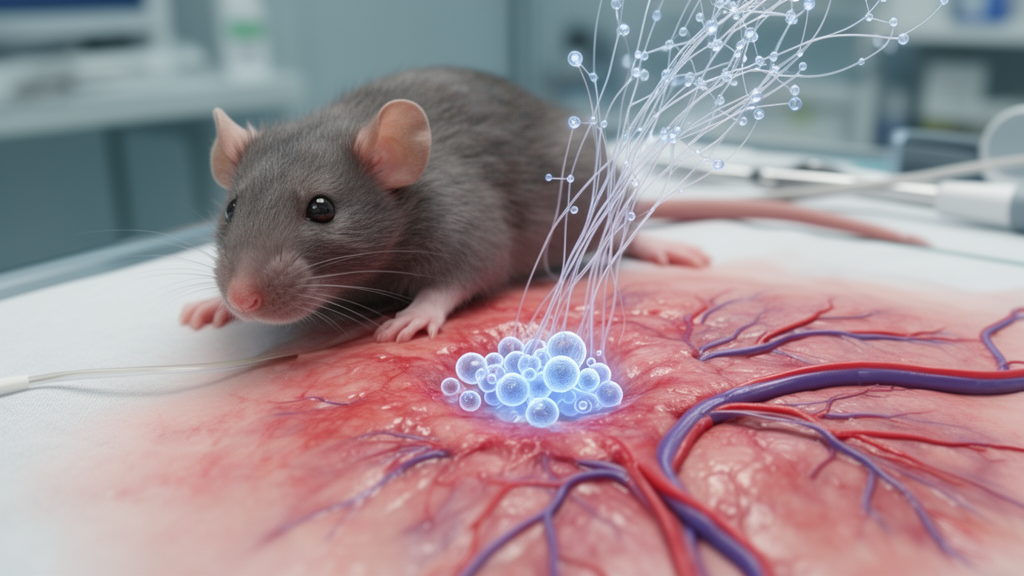
Protein factors collected from healthy wounds during the remodeling phase improved the performance of mesenchymal stem cells in laboratory assays and a diabetic rat model, according to a preclinical study. Researchers conditioned bone marrow-derived mesenchymal stem cells with wound extract obtained nine days after injury in normal or streptozotocin-induced diabetic rats. At a non-cytotoxic concentration of 10 µg/mL, cells conditioned with normal day-9 extract, called N9, increased closure of scratch-wound gaps in vitro. After transplantation into diabetic wounds, N9-conditioned cells significantly accelerated wound closure and improved measures of tissue architecture, collagen organization and vascular remodeling.

Diabetic wounds can experience dysregulated inflammation and impaired progression through the inflammatory, proliferative and remodeling stages of healing. Mesenchymal stem cells have regenerative and paracrine potential, but their function may be compromised within the diabetic wound microenvironment. The study investigated whether factors associated with a particular stage of normal wound repair could condition the cells before they were introduced into diabetic wounds. The investigators isolated and characterized bone marrow-derived mesenchymal stem cells, evaluated extracts from normal and diabetic rat wounds, and used the 10 µg/mL concentration because it did not kill the cells during conditioning.

Scratch assays showed that N9-conditioned mesenchymal stem cells enhanced wound closure in vitro. In contrast, cells conditioned with diabetic day-9 wound extract, designated D9, had elevated expression of inflammatory genes and reduced expression of angiogenic and proliferative markers. These measurements indicate that day-9 extracts from normal and diabetic wounds exerted different molecular effects on the conditioned cells. The findings do not isolate which individual proteins were responsible for those effects or establish how the factor mixture acted over time.

In the diabetic wound transplantation model, N9-conditioned mesenchymal stem cells significantly accelerated wound closure compared with the experimental controls. Histological analysis using hematoxylin and eosin staining indicated restoration of tissue architecture and improved collagen organization. Immunofluorescence for α-smooth muscle actin, or α-SMA, showed an increased number of α-SMA-positive vascular structures, supporting enhanced vascular remodeling in the treated wounds. These observations provide evidence that the normal day-9 extract improved several measured outcomes in diabetic wound repair, although the experiments involved cultured cells and rats rather than people with diabetes.

The study therefore supports phase-specific wound-derived factors as a means of changing mesenchymal stem-cell behavior before transplantation. Its strongest result is that conditioning with N9 produced cells with greater wound-closure activity in vitro and improved closure, tissue structure, collagen organization and α-SMA-positive vascular structures in the rat model. The evidence does not demonstrate clinical benefit in human diabetic wounds, and no human trial was reported. The results offer a preclinical basis for further studying wound-derived protein factors in cell-based repair, while the contribution of individual factors and the relevance of the strategy across settings remain unresolved.

Subject of Research: Preclinical testing of remodeling-phase wound factors and mesenchymal stem cells in diabetic wound repair

Article Title: Remodeling-phase wound-derived protein factors enhance mesenchymal stem cell function and improve diabetic wound healing

Article References: Zaidi, M. B., Aslam, S., Jameel, F., Khan, I., & Salim, A. (2026). Remodeling-phase wound-derived protein factors enhance mesenchymal stem cell function and improve diabetic wound healing. Molecular Biology Reports, 53(1), Article 1515. https://doi.org/10.1007/s11033-026-12706-w

Image Credits: AI Generated

DOI: 10.1007/s11033-026-12706-w

Keywords: mesenchymal stem cells, diabetic wounds, wound healing, tissue remodeling, cell conditioning, vascular remodeling, protein factors, rat model, regenerative medicine, Remodeling-phase, wound-derived, protein

Cite Scienmag News

Drew Townsend. (October 20, 2026). Healthy remodeling-phase wound factors improve stem-cell repair in diabetic rat wounds. Scienmag. https://scienmag.com/healthy-remodeling-phase-wound-factors-improve-stem-cell-repair-in-diabetic-rat-wounds/


Drew Townsend. "Healthy remodeling-phase wound factors improve stem-cell repair in diabetic rat wounds." Scienmag, 20 October 2026, https://scienmag.com/healthy-remodeling-phase-wound-factors-improve-stem-cell-repair-in-diabetic-rat-wounds/. Accessed 20 October 2026.

Drew Townsend. "Healthy remodeling-phase wound factors improve stem-cell repair in diabetic rat wounds." Scienmag. October 20, 2026. https://scienmag.com/healthy-remodeling-phase-wound-factors-improve-stem-cell-repair-in-diabetic-rat-wounds/

Tags: cell conditioningcollagen organization in healingdiabetic wound microenvironmentdiabetic woundsimpact of healthy wound factors on stem cell therapymesenchymal stem cell conditioningmesenchymal stem cellspreclinical diabetic wound modelsproteinprotein factorsrat modelRegenerative Medicineregenerative potential of mesenchymal stem cellsremodeling phase wound healing factorsRemodeling-phasestem-cell therapy for diabetic wound healingtissue remodelingvascular remodelingvascular remodeling in woundswound extract effects on stem cellswound healingwound healing stages and factorswound tissue regenerationwound-derived
Share26Tweet16
Previous Post

Hormone therapy linked to sustained semaglutide weight loss in observational cohort

Next Post

White blood cell shifts may predict actionable sepsis sequencing results

Related Posts

White blood cell shifts may predict actionable sepsis sequencing results
Biology

White blood cell shifts may predict actionable sepsis sequencing results

October 20, 2026
Compositional diversity and dietary implications of cereal and legume crops as functional resources for non-alcoholic fatty liver disease prevention: a review
Biology

Compositional diversity and dietary implications of cereal and legume crops as functional resources for non-alcoholic fatty liver disease prevention: a review

October 20, 2026
Lactylation links glioblastoma metabolism to progression and resistance
Biology

Lactylation links glioblastoma metabolism to progression and resistance

October 20, 2026
Review: placental galectins can defend against or enable viruses
Biology

Review: placental galectins can defend against or enable viruses

October 20, 2026
Big Data Cancer Biomarker Studies Advance Discovery but Await Clinical Validation
Biology

Big Data Cancer Biomarker Studies Advance Discovery but Await Clinical Validation

October 20, 2026
Morphology and DNA identify two new mushroom corals on Southern Mid-Atlantic Ridge
Biology

Morphology and DNA identify two new mushroom corals on Southern Mid-Atlantic Ridge

October 20, 2026
Next Post
White blood cell shifts may predict actionable sepsis sequencing results

White blood cell shifts may predict actionable sepsis sequencing results

  • Mothers who receive childcare support from maternal grandparents show more optimized

    Mothers who receive childcare support from maternal grandparents show more parental warmth, finds NTU Singapore study

    27656 shares
    Share 11059 Tweet 6912
  • University of Seville Breaks 120-Year-Old Mystery, Revises a Key Einstein Concept

    1061 shares
    Share 424 Tweet 265
  • Bee body mass, pathogens and local climate influence heat tolerance

    682 shares
    Share 273 Tweet 171
  • Researchers record first-ever images and data of a shark experiencing a boat strike

    546 shares
    Share 218 Tweet 137
  • Groundbreaking Clinical Trial Reveals Lubiprostone Enhances Kidney Function

    531 shares
    Share 212 Tweet 133
Science

Embark on a thrilling journey of discovery with Scienmag.com—your ultimate source for cutting-edge breakthroughs. Immerse yourself in a world where curiosity knows no limits and tomorrow’s possibilities become today’s reality!

RECENT NEWS

  • Research report: Research on the evolutionary characteristics of hot topics in online public opinion of Chinese universities based on Weibo texts
  • White blood cell shifts may predict actionable sepsis sequencing results
  • Healthy remodeling-phase wound factors improve stem-cell repair in diabetic rat wounds
  • Hormone therapy linked to sustained semaglutide weight loss in observational cohort

Categories

  • Agriculture
  • Anthropology
  • Archaeology
  • Athmospheric
  • Biology
  • Biotechnology
  • Blog
  • Bussines
  • Cancer
  • Chemistry
  • Climate
  • Earth Science
  • Editorial Policy
  • Marine
  • Mathematics
  • Medicine
  • Pediatry
  • Policy
  • Psychology & Psychiatry
  • Science Education
  • Science News
  • Social Science
  • Space
  • Technology and Engineering

Subscribe to Blog via Email

Enter your email address to subscribe to this blog and receive notifications of new posts by email.

Join 5,150 other subscribers

© 2025 Scienmag - Science Magazine

Welcome Back!

Login to your account below

Forgotten Password?

Retrieve your password

Please enter your username or email address to reset your password.

Log In
No Result
View All Result
  • HOME
  • SCIENCE NEWS
  • CONTACT US

© 2025 Scienmag - Science Magazine

Discover more from Science

Subscribe now to keep reading and get access to the full archive.

Continue reading