


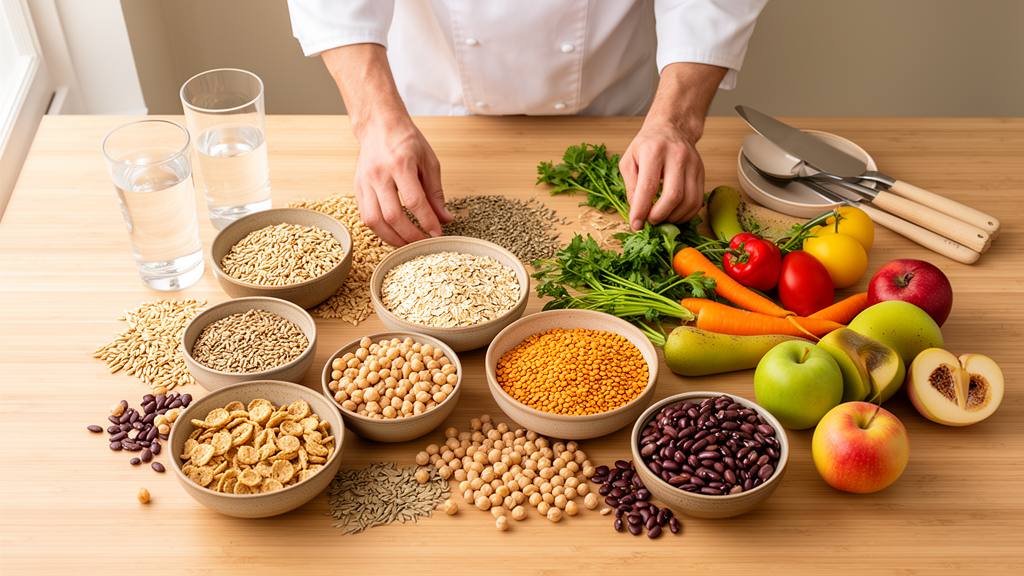
A crop-focused review concludes that cereals and legumes may influence pathways involved in non-alcoholic fatty liver disease through distinct combinations of branched-chain amino acids, fatty acids, dietary fiber and phenolic compounds. The analysis combines evidence from preclinical animal studies with human observational and intervention research, finding that whole-crop studies offer a more realistic route toward practical dietary strategies than experiments involving only isolated compounds. However, heterogeneous study designs, variable bioavailability, inconsistent crop descriptions and the effects of food processing prevent the review from establishing definitive dietary recommendations for preventing or managing the condition.
Non-alcoholic fatty liver disease is a chronic metabolic disorder characterized by excessive fat accumulation in hepatocytes without alcohol consumption or another identifiable cause. An international multi-society consensus introduced the term metabolic dysfunction-associated steatotic liver disease in 2023, although the review retains the NAFLD abbreviation because much of the cited literature uses that terminology. The source estimates that NAFLD affects approximately 20% to 40% of populations in Western countries and 5% to 40% of the general population in the Asia-Pacific region. Its development is strongly associated with obesity, particularly abdominal obesity, insulin resistance and dietary habits, including high consumption of refined carbohydrates and saturated lipids.
The review describes a two-hit framework for the onset and progression of NAFLD. The first hit is insulin resistance, which impairs insulin-mediated suppression of hepatic glucose production and is associated with fatty-acid accumulation in hepatocytes. The second involves oxidation of accumulated fat and the production of metabolic by-products such as free radicals, which can promote hepatocyte damage and inflammation. Lipotoxicity, oxidative stress, mitochondrial damage, stellate-cell activation and fibrogenic signaling are also linked to progression from steatosis toward fibrosis and cirrhosis. These mechanisms identify possible points at which crop-derived constituents might act, but they do not demonstrate that eating a particular grain, oil or legume will prevent disease in an individual.
Rather than treating cereals and legumes as containers for single nutrients, the review examines them as whole-food matrices containing proteins, amino acids, fiber, lipids, phenolics, vitamins and minerals that may interact. Rice, barley, wheat, soybeans, adzuki beans, corn, sorghum and millets differ substantially in these constituents. Oats and barley are major sources of soluble β-glucan, while sorghum and millets contain diverse phenolic compounds; soybean and adzuki bean combine proteins, branched-chain amino acids, fiber and phytochemicals. Crop species, cultivars, growing environments, harvest conditions and processing can alter ingredient concentrations, bioaccessibility and biological activity. In one high-fat-diet mouse experiment, a whole corn-common bean formulation attenuated hepatic steatosis and reduced serum cholesterol and triglycerides while changing hepatic gene expression related to lipid metabolism, although such whole-food evidence remains limited.
Branched-chain amino acids demonstrate why concentration alone cannot define a crop’s metabolic effect. Soybean generally contains more protein and leucine, isoleucine and valine than cereal grains, while cereal matrices provide comparatively little of these amino acids alongside more fiber and phenolics. In animal models, administering 2% BCAAs in drinking water for eight weeks reduced hepatic triglycerides and serum aminotransferases in mice with diet-induced nonalcoholic steatohepatitis; another long-term mouse experiment reported reduced steatosis, inflammation and fibrosis, with liver-tumor incidence falling from 73.5% to 30.8%. Human findings are less straightforward. High circulating BCAA levels have been associated with adverse liver features in patients with biopsy-proven NAFLD or NASH, and a randomized exercise study found that reductions in circulating BCAAs were associated with lower liver fat independently of changes in body-mass index or insulin resistance. The review cautions that elevated blood BCAA concentrations can reflect impaired amino-acid catabolism rather than greater dietary intake, so these associations cannot be equated with the effects of eating protein-rich crops.
Fatty-acid evidence similarly depends on the balance of fatty acids and the surrounding dietary context. Soybean is relatively lipid-rich and supplies polyunsaturated fatty acids, including linoleic and α-linolenic acids, whereas sorghum and millet generally contain less total lipid but have profiles dominated by linoleic acid. Population studies have associated higher n-3 and n-6 polyunsaturated fatty acid intake with lower odds of NAFLD, although the direction and magnitude of these associations differ across populations. In experimental models, foxtail-millet oil reduced hepatic lipid accumulation and improved glucose and lipid metabolism while downregulating lipogenic genes and affecting AMPK–PPAR signaling, gut microbiota and bile-acid metabolism. Other animal experiments found that trans-fat-rich and oxidized-oil diets increased hepatic lipid peroxidation, suppressed antioxidant enzyme activity and promoted hepatocyte ballooning and necroinflammation. These findings show that processing can alter the biological character of crop-derived lipids, but they remain preclinical observations rather than clinical benefits.
Phenolic compounds add further complexity because their abundance and composition vary with species, cultivar, environment and post-harvest handling. Sorghum and millets contain phenolic acids, tannins, flavonoids and anthocyanins, while soybean is a major source of isoflavones. A randomized placebo-controlled trial reported that a supplement providing 100 mg of soy isoflavones per day for 12 weeks lowered serum triglycerides, low-density lipoprotein cholesterol, total cholesterol and some anthropometric indices in patients with NAFLD. Preclinical studies offer a different level of evidence. In mouse models, bound foxtail-millet polyphenols improved NAFLD-related phenotypes while changing gut microbiota composition, intestinal-barrier integrity and short-chain fatty acid production. Sorghum-bran polyphenols and extruded sorghum flour also reduced hepatic steatosis or systemic hyperlipidemia in obese animals. Such compound, extract or concentrated-product results may not predict the response to intact grain, because fiber, proteins, lipids, minerals and other constituents can alter phenolic absorption and microbial metabolism.
Dietary fiber provides a route connecting food composition with the gut–liver axis. Soluble and fermentable fiber can delay carbohydrate absorption, attenuate post-meal glucose excursions and suppress hepatic de novo lipogenesis. Colonic microbes convert fermentable substrates into short-chain fatty acids, including propionate and butyrate, which can support intestinal-barrier integrity, inhibit inflammatory signaling and promote hepatic fatty-acid oxidation. In high-fat-diet-fed mice, soluble millet-bran fiber reduced hepatic triglyceride and cholesterol accumulation, increased short-chain fatty acid production, activated PPARα and suppressed SREBP-1c; fermented millet fiber produced greater metabolic benefits than unfermented fiber. A systematic review and meta-analysis integrating preclinical and clinical studies reported improvements in liver enzymes, hepatic lipid indices and oxidative-stress markers with soybean and soybean-based foods. The effect cannot be assigned to fiber alone, however, because soy compounds operate within a matrix containing protein, lipids and phytochemicals.
Major obstacles prevent the available signals from becoming dietary guidance. Many experiments use purified compounds, extracts or supplements, while doses, intervention periods, models and outcome measures vary widely. Whole foods also change during milling, extrusion, thermal treatment, fermentation and storage. Excessive heat or high-shear processing can denature and aggregate proteins, alter digestibility and trigger Maillard reactions, while oxidation during storage can degrade unsaturated oils and form products associated with oxidative and inflammatory stress. Controlled fermentation or optimized extrusion may instead increase the release and bioaccessibility of bound polyphenols or alter microbial metabolites. Genotype-by-environment interactions also change functional-compound profiles, yet many studies provide insufficient information about cultivar and agronomic conditions. Human investigations differ in disease stage, metabolic status, habitual diet and intervention design, reducing reproducibility and generalizability.
Future work should test intact cereals and legumes under realistic dietary conditions rather than assume that a purified ingredient represents an entire food. Human interventions need clearly defined disease stages, standardized dietary backgrounds and sufficient duration, while stratification by insulin resistance, gut microbiota and habitual eating patterns could help explain different metabolic responses. Metabolomics, foodomics and microbiome analysis may reveal interactions concealed by supplement-based experiments. Crop-based blending also warrants systematic evaluation because cereals and legumes can contribute complementary fiber, phenolics, proteins and fatty acids, but existing combination studies use inconsistent crops, doses and experimental models. Longer-term safety, dose–response relationships and evidence-based intake ranges remain insufficiently characterized. The review therefore identifies cereal- and legume-based foods as promising complementary resources for NAFLD research, not as a proven preventive diet or a basis for clinical recommendation.
Subject of Research: Review of cereal and legume bioactive compounds in evidence concerning non-alcoholic fatty liver disease
Article Title: Compositional diversity and dietary implications of cereal and legume crops as functional resources for non-alcoholic fatty liver disease prevention: a review
Article References: Kim, H.-J., Han, N., & Lee, Y.-Y. (2026). Compositional diversity and dietary implications of cereal and legume crops as functional resources for non-alcoholic fatty liver disease prevention: a review. Food Science and Biotechnology. https://doi.org/10.1007/s10068-026-02346-y
Image Credits: AI Generated
DOI: 10.1007/s10068-026-02346-y
Keywords: non-alcoholic fatty liver disease, cereal crops, legume crops, branched-chain amino acids, dietary fiber, phenolic compounds, fatty acids, whole-food matrices, food processing, gut–liver axis, Compositional, diversity
Cite Scienmag News
Daisy Hatcher. (October 20, 2026). Compositional diversity and dietary implications of cereal and legume crops as functional resources for non-alcoholic fatty liver disease prevention: a review. Scienmag. https://scienmag.com/compositional-diversity-and-dietary-implications-of-cereal-and-legume-crops-as-functional-resources-for-non-alcoholic-fatty-liver-disease-prevention-a-review/
Daisy Hatcher. "Compositional diversity and dietary implications of cereal and legume crops as functional resources for non-alcoholic fatty liver disease prevention: a review." Scienmag, 20 October 2026, https://scienmag.com/compositional-diversity-and-dietary-implications-of-cereal-and-legume-crops-as-functional-resources-for-non-alcoholic-fatty-liver-disease-prevention-a-review/. Accessed 20 October 2026.
Daisy Hatcher. "Compositional diversity and dietary implications of cereal and legume crops as functional resources for non-alcoholic fatty liver disease prevention: a review." Scienmag. October 20, 2026. https://scienmag.com/compositional-diversity-and-dietary-implications-of-cereal-and-legume-crops-as-functional-resources-for-non-alcoholic-fatty-liver-disease-prevention-a-review/


