

Tuesday, October 20, 2026
Science
No Result
View All Result
  • Login
  • HOME
  • SCIENCE NEWS
  • CONTACT US
  • HOME
  • SCIENCE NEWS
  • CONTACT US
No Result
View All Result
Scienmag
No Result
View All Result
Home Science News

Compact feature selection improves wearable activity transfer across datasets

October 20, 2026
in Science News
Teresa Odom
By Teresa Odom Scienmag Editorial Profile - Machine Learning
Reading Time: 2 mins read
0
Compact feature selection improves wearable activity transfer across datasets

Compact feature selection improves wearable activity transfer across datasets

65
SHARES
587
VIEWS
Share on FacebookShare on Twitter
ADVERTISEMENT

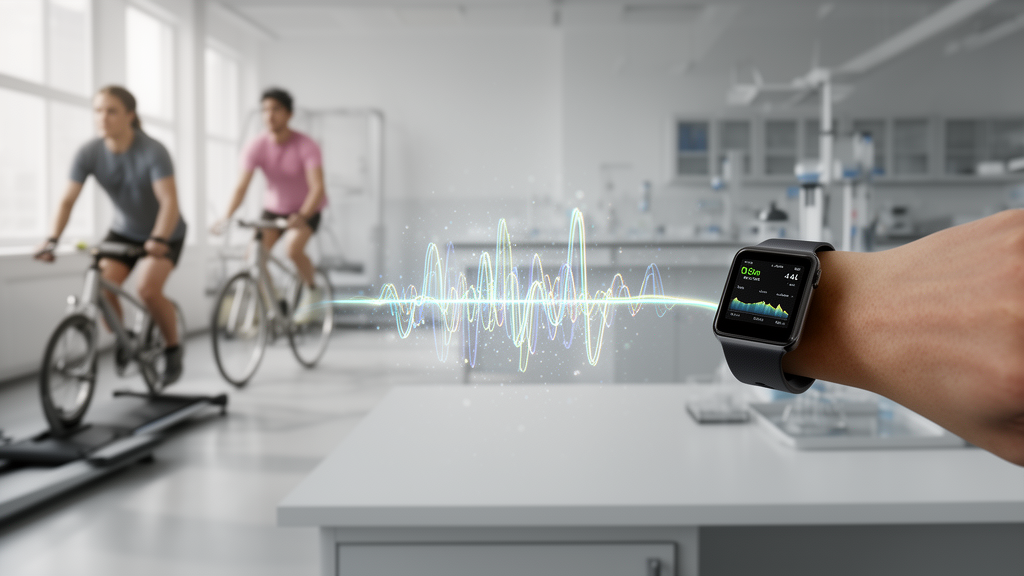
A compact feature-selection method improved the transfer of wearable activity-recognition models between two datasets, according to a pre-specified study of inertial and magnetic signals. The approach combined source-domain relevance with the stability of descriptors across the source and target datasets, reducing the representation from 270 features to 48 without using target activity labels for model development. It reached 0.9042 accuracy and 0.8753 macro-F1 on the PAMAP2 target dataset, outperforming both the full representation and a source-only selection method.

Researchers tested the strategy under a fixed MHEALTH-to-PAMAP2 transfer protocol. Five-second windows of wearable-signal data were converted into 270 handcrafted descriptors derived from inertial and magnetic measurements. Mutual information estimated each feature’s relevance to activity labels in the source dataset, while unlabeled source–target stability measured how consistently those descriptors behaved across the two domains. The two criteria were used jointly to select a “Stable-48” feature set. Lightweight classifiers were then trained using MHEALTH labels alone, meaning that PAMAP2 labels were withheld until final evaluation.

To make the activity categories comparable, the researchers harmonized the original labels into three broad states: sedentary, active, and vigorous. Within the source dataset, leave-one-subject-out evaluation with a Random Forest produced nearly perfect results: 0.9985 accuracy and 0.9984 macro-F1. The cross-dataset results were more demanding. Stable-48 achieved 0.9042 accuracy and 0.8753 macro-F1 on PAMAP2, compared with 0.8888 accuracy and 0.8436 macro-F1 for all 270 descriptors. Selecting 48 features using source-domain mutual information alone yielded lower scores of 0.8734 accuracy and 0.7940 macro-F1, indicating that the stability component contributed beyond source-label relevance in this experiment.

The researchers also froze all operating values and reversed the transfer direction, moving from PAMAP2 to MHEALTH. Stable-48 again ranked highest, with 0.5811 accuracy and 0.4400 macro-F1. The source-only 48-feature method reached 0.5720 accuracy and 0.4320 macro-F1, while the full 270-feature representation achieved 0.5445 accuracy and 0.4257 macro-F1. However, participant-level comparisons in the reverse direction were not significant after Holm adjustment, so the small numerical advantage should not be interpreted as definitive evidence of superiority. The compact method also performed better than tested shallow target-feature transformations and feature-level multilayer-perceptron adaptation within the same handcrafted descriptor space.

These results suggest that a relatively simple domain-aware selection procedure can make wearable activity models more portable while reducing their feature burden. The gains were not universal: performance fell substantially in the reverse transfer, underscoring the difficulty of transferring recognition systems when datasets differ in participants, sensor setups, acquisition conditions, and activity definitions. The study does not establish that the method surpasses raw-signal deep-learning approaches, and its conclusions are limited to the evaluated transfer protocols and three-state activity taxonomy. It also does not demonstrate clinical readiness. Even so, the findings offer a practical direction for cross-dataset monitoring: a model can be made more compact by selecting descriptors that are both informative in the source domain and stable in the unlabeled target data.

Subject of Research: Evaluation of compact target-aware feature selection for cross-dataset wearable activity recognition.

Article Title: Compact target-aware stability-based feature selection for cross-dataset wearable activity monitoring

Article References: Ayouni, S., Sliti, M., Abdulaziz Alghanem, A., Alhayan, F., & Maddeh, M. (2026). Compact target-aware stability-based feature selection for cross-dataset wearable activity monitoring. PLOS One, 21(10), e0359300. https://doi.org/10.1371/journal.pone.0359300

Image Credits: AI Generated

DOI: 10.1371/journal.pone.0359300

Keywords: wearable sensors, activity recognition, feature selection, domain adaptation, cross-dataset transfer, inertial signals, magnetic signals, machine learning, MHEALTH, PAMAP2, Compact, target-aware

Cite Scienmag News

Teresa Odom. (October 20, 2026). Compact feature selection improves wearable activity transfer across datasets. Scienmag. https://scienmag.com/compact-feature-selection-improves-wearable-activity-transfer-across-datasets/


Teresa Odom. "Compact feature selection improves wearable activity transfer across datasets." Scienmag, 20 October 2026, https://scienmag.com/compact-feature-selection-improves-wearable-activity-transfer-across-datasets/. Accessed 20 October 2026.

Teresa Odom. "Compact feature selection improves wearable activity transfer across datasets." Scienmag. October 20, 2026. https://scienmag.com/compact-feature-selection-improves-wearable-activity-transfer-across-datasets/

Tags: activity categorization in wearable devicesactivity recognitioncompactcross-dataset activity classificationcross-dataset transferdomain adaptationdomain adaptation in activity recognitionfeature selectionfeature selection for sensor datahandcrafted feature extractioninertial and magnetic signal analysisinertial sensor signal processinginertial signalslightweight classifiers for wearable dataMachine learningmagnetic signalsmHealthPAMAP2sensor data dimensionality reductionstability-based feature selectiontarget-awaretransfer learning in wearable sensorswearable activity recognitionwearable sensors
Share26Tweet16
Previous Post

Pentalinonsterol shows dual antileishmanial effects in preclinical evidence

Next Post

Research report: New findings of Prototherium ausetanum ( Mammalia , Pan-Sirenia ) from paving stones in Girona (Catalonia, Spain)?

Related Posts

Shrimp-shell liquefaction reaches 42.35% under optimized laboratory conditions
Science News

Shrimp-shell liquefaction reaches 42.35% under optimized laboratory conditions

October 20, 2026
Research report: New findings of Prototherium ausetanum ( Mammalia , Pan-Sirenia ) from paving stones in Girona (Catalonia, Spain)?
Science News

Research report: New findings of Prototherium ausetanum ( Mammalia , Pan-Sirenia ) from paving stones in Girona (Catalonia, Spain)?

October 20, 2026
Pentalinonsterol shows dual antileishmanial effects in preclinical evidence
Biology

Pentalinonsterol shows dual antileishmanial effects in preclinical evidence

October 20, 2026
Granulomatous lobular mastitis involving accessory breast tissue: a case report and review of the literature
Medicine

Granulomatous lobular mastitis involving accessory breast tissue: a case report and review of the literature

October 20, 2026
Morphological and genetic study identifies new Washington groundwater amphipod
Biology

Morphological and genetic study identifies new Washington groundwater amphipod

October 20, 2026
A plot-based analysis of the vegetation of the Northern Territory, Australia: a first assessment within the International Vegetation Classification framework
Science News

A plot-based analysis of the vegetation of the Northern Territory, Australia: a first assessment within the International Vegetation Classification framework

October 20, 2026
Next Post
Research report: New findings of Prototherium ausetanum ( Mammalia , Pan-Sirenia ) from paving stones in Girona (Catalonia, Spain)?

Research report: New findings of Prototherium ausetanum ( Mammalia , Pan-Sirenia ) from paving stones in Girona (Catalonia, Spain)?

  • Mothers who receive childcare support from maternal grandparents show more optimized

    Mothers who receive childcare support from maternal grandparents show more parental warmth, finds NTU Singapore study

    27656 shares
    Share 11059 Tweet 6912
  • University of Seville Breaks 120-Year-Old Mystery, Revises a Key Einstein Concept

    1061 shares
    Share 424 Tweet 265
  • Bee body mass, pathogens and local climate influence heat tolerance

    682 shares
    Share 273 Tweet 171
  • Researchers record first-ever images and data of a shark experiencing a boat strike

    546 shares
    Share 218 Tweet 137
  • Groundbreaking Clinical Trial Reveals Lubiprostone Enhances Kidney Function

    531 shares
    Share 212 Tweet 133
Science

Embark on a thrilling journey of discovery with Scienmag.com—your ultimate source for cutting-edge breakthroughs. Immerse yourself in a world where curiosity knows no limits and tomorrow’s possibilities become today’s reality!

RECENT NEWS

  • Shrimp-shell liquefaction reaches 42.35% under optimized laboratory conditions
  • Research report: New findings of Prototherium ausetanum ( Mammalia , Pan-Sirenia ) from paving stones in Girona (Catalonia, Spain)?
  • Compact feature selection improves wearable activity transfer across datasets
  • Pentalinonsterol shows dual antileishmanial effects in preclinical evidence

Categories

  • Agriculture
  • Anthropology
  • Archaeology
  • Athmospheric
  • Biology
  • Biotechnology
  • Blog
  • Bussines
  • Cancer
  • Chemistry
  • Climate
  • Earth Science
  • Editorial Policy
  • Marine
  • Mathematics
  • Medicine
  • Pediatry
  • Policy
  • Psychology & Psychiatry
  • Science Education
  • Science News
  • Social Science
  • Space
  • Technology and Engineering

Subscribe to Blog via Email

Enter your email address to subscribe to this blog and receive notifications of new posts by email.

Join 5,150 other subscribers

© 2025 Scienmag - Science Magazine

Welcome Back!

Login to your account below

Forgotten Password?

Retrieve your password

Please enter your username or email address to reset your password.

Log In
No Result
View All Result
  • HOME
  • SCIENCE NEWS
  • CONTACT US

© 2025 Scienmag - Science Magazine

Discover more from Science

Subscribe now to keep reading and get access to the full archive.

Continue reading