


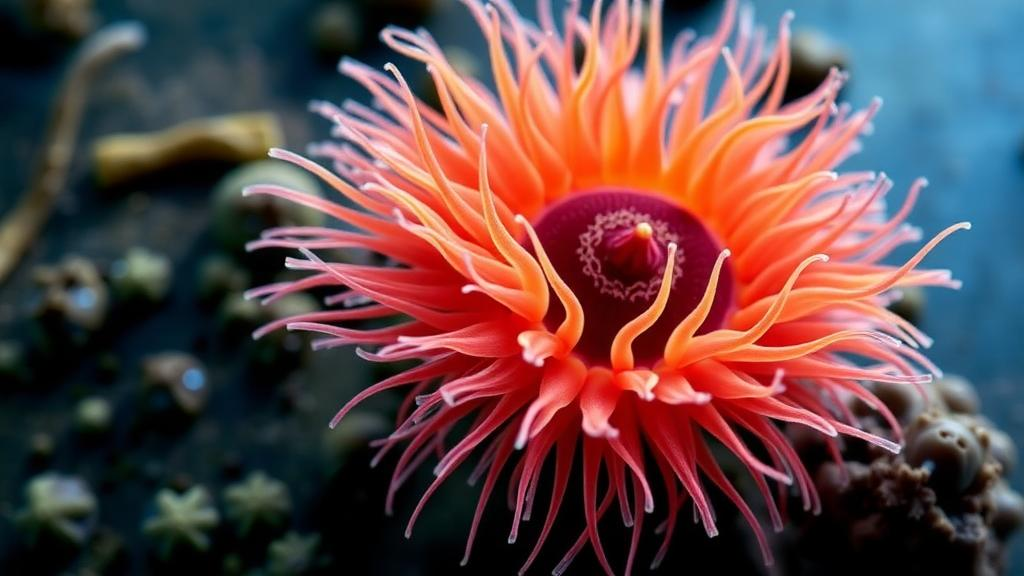
A bacterium isolated from the sea anemone Radianthus magnifica exhibited antioxidant, anti-inflammatory, antidiabetic and antiproliferative activity in laboratory tests, according to a genomic and bioactivity study. Researchers identified the isolate, designated Brevibacterium sanguinis AZMABM HM27, through whole-genome sequencing, phylogenetic comparison, functional annotation and prediction of biosynthetic gene clusters. The strain was recovered from an anemone collected on Samalona Island, Indonesia, and its genome contained 3,362 protein-coding genes, including 95 associated with secondary-metabolite biosynthesis. These findings describe potential sources of bioactive compounds rather than demonstrated treatments.
The researchers characterized strain AZMABM HM27 using whole-genome sequencing and related genomic analyses. They assigned it to B. sanguinis on the basis of phylogenetic and genome-based comparisons with the type strain, reporting an OrthoANI value of 97.37% and a dDDH value of 76.50%. Its genome comprised a single 3,834,082-base-pair chromosome. Functional analysis also identified five predicted biosynthetic gene clusters, including ones associated with ectoine, terpene and siderophore production. The study further used molecular docking to examine a lead compound against selected therapeutic targets. The compound, named 8,9,9,10,10,11-hexafluoro-4,4-dimethyl-3,5-dioxatetracyclo[5.4.1.0(2,6)0.0(8,11)]dodecane, showed strong predicted binding affinities, but the supplied results do not provide experimental confirmation of those interactions.
Laboratory assays showed that a crude extract of the bacterium had measurable antioxidant activity, with an reported IC₅₀ of 0.87 mg/mL. The extract also produced up to 60% inhibition in an anti-inflammatory assay and up to 40% inhibition of α-glucosidase in an antidiabetic test. In cell-culture experiments, the extract reduced the viability of MCF-7 breast cancer cells in a dose-dependent manner. At an extract concentration of 1 mg/mL, cell viability was 74.10%. This result is consistent with antiproliferative activity under the tested conditions, but the study did not establish a mechanism, establish that the extract is safe or effective in humans, or determine whether particular compounds were responsible for the observed effects.
The authors describe AZMABM HM27 as a promising marine symbiotic source of bioactive compounds with several types of potential therapeutic activity. However, the evidence is preclinical and combines genome predictions, docking calculations and in vitro assays. The researchers themselves call for further purification of active substances, structural elucidation and in vivo studies to validate the strain’s therapeutic potential. No animal or human efficacy data are reported, and the results should therefore not be interpreted as clinical evidence or as proof that the isolate can treat cancer, inflammation, diabetes or other diseases. The study instead links a well-characterized bacterial genome with several laboratory activity profiles and identifies a route for isolating and testing the compounds that may underlie them.
Subject of Research: Genomic and in vitro characterization of bioactive compounds in a sea-anemone-associated Brevibacterium sanguinis strain
Article Title: Whole-genome analysis of Brevibacterium sanguinis AZMABM HM27: a bacterial isolate from the sea anemone Radianthus magnifica and exhibiting promising multi-therapeutic properties
Article References: Manguntungi, B., Feraliana, F., Ramaniya, A. K., Trinugroho, J. P., Mustafawi, W. Z., Irawan, H., Putra, A. B. N., Palupi, K. D., Anggraeni, S. R., Wahab, M. F., & Mustopa, A. Z. (2026). Whole-genome analysis of Brevibacterium sanguinis AZMABM HM27: a bacterial isolate from the sea anemone Radianthus magnifica and exhibiting promising multi-therapeutic properties. Molecular Biology Reports, 53(1), Article 1513. https://doi.org/10.1007/s11033-026-12717-7
Image Credits: AI Generated
DOI: 10.1007/s11033-026-12717-7
Keywords: Brevibacterium sanguinis, Radianthus magnifica, whole-genome sequencing, marine microbiome, biosynthetic gene clusters, antioxidant activity, anti-inflammatory assay, α-glucosidase inhibition, cancer cell assay, molecular docking, Whole-genome, analysis
Cite Scienmag News
Morgan Morrow. (October 19, 2026). Sea anemone bacterium shows multi-target activity in vitro. Scienmag. https://scienmag.com/sea-anemone-bacterium-shows-multi-target-activity-in-vitro/
Morgan Morrow. "Sea anemone bacterium shows multi-target activity in vitro." Scienmag, 19 October 2026, https://scienmag.com/sea-anemone-bacterium-shows-multi-target-activity-in-vitro/. Accessed 19 October 2026.
Morgan Morrow. "Sea anemone bacterium shows multi-target activity in vitro." Scienmag. October 19, 2026. https://scienmag.com/sea-anemone-bacterium-shows-multi-target-activity-in-vitro/


