


For decades, synthetic pesticides have carried the burden of protecting crops from weeds and insect pests, but that protection has come at a cost. Many of these chemicals persist in soil and water, accumulate in food chains, and pose risks to human health. Worse, target organisms keep adapting: as of late October 2021, the International Herbicide Resistant Weed database listed 266 weed species resistant to 164 different herbicides. This escalating arms race has pushed scientists toward an alternative vision of crop protection built on plant-derived bioactive compounds that degrade rapidly and act with greater target specificity. A new study published in the journal BioRisk adds an important piece to that puzzle by dissecting exactly how oregano preparations attack plant cells at the genetic level.
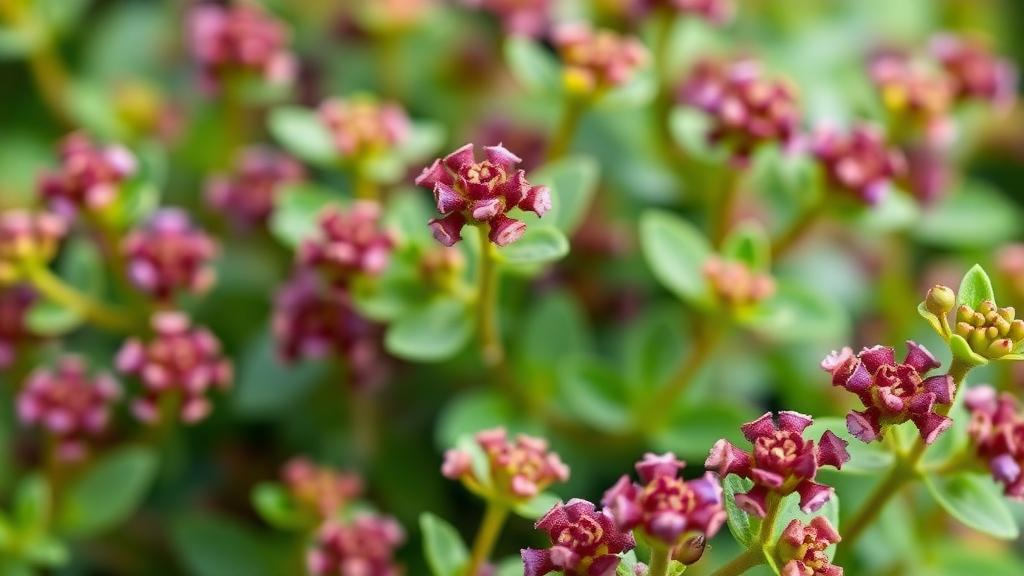
The research team, working with plant material from the ex-situ collection of the Institute of Biodiversity and Ecosystem Research at the Bulgarian Academy of Sciences, focused on Origanum vulgare subsp. hirtum, a Greek oregano famous for its pungent, carvacrol-rich chemistry. Their earlier work had shown that both a methanolic extract and an essential oil from this plant could kill peach aphids, Myzus persicae, depending on the concentration applied. The critical question they now asked was whether doses causing even low levels of aphid mortality would also harm plant cells—either by poisoning them, breaking their DNA, or triggering mutations. Any herbicide candidate, after all, must damage weeds without leaving a legacy of genetic damage in the wider environment.
To probe these effects, the researchers turned to Chlamydomonas reinhardtii, a single-celled green alga that has served as a robust workhorse of environmental mutagenesis testing for years. Its cells form colonies predictably under standard conditions, which makes it possible to measure survival with precision, and its genome responds to DNA-damaging agents in ways that are well characterized. The team prepared the essential oil by water distillation in a Clevenger apparatus and the methanolic extract by classical maceration, then analyzed both with gas chromatography–mass spectrometry, identifying components against the NIST spectral database.
The chemical profiles of the two preparations turned out to be strikingly different, and those differences foreshadowed everything that followed. The essential oil was dominated by the monoterpenoid phenol carvacrol at 74.34 percent, flanked by γ-terpinene at 10.66 percent, p-cymene at 9.46 percent, and smaller amounts of pinenes and carvacrol methyl ether. The methanolic extract told another story entirely: it was rich in primary metabolites such as glucose, fructose, and sucrose, along with rosmarinic acid at 6.06 percent and carvacrol at just 15.67 percent, supplemented by organic acids, phenolic acids, and trace flavonoids. In essence, the extract offered a diluted, chemically complex mixture, while the oil delivered a concentrated carvacrol payload.
Toxicity testing used a clonal assay based on colony-forming ability, with cells exposed to concentrations of 250, 500, 750, and 1000 parts per million. The controls behaved as hoped: neither the DMSO solvent nor the commercial insecticide Nurelle D significantly reduced algal survival compared with the negative control medium. The treatments, however, separated cleanly. The essential oil significantly reduced survival starting at 250 parts per million, with the survival fraction falling from 0.51 at the lowest dose to 0.09 at 750 parts per million. The methanolic extract only showed statistically significant killing at 750 and 1000 parts per million, its dose–response curve forming a plateau in the lower range. Calculated lethal doses made the contrast quantitative: roughly two-fold lower concentrations of essential oil were needed to achieve 20, 50, and 80 percent lethality compared with the extract.
The study’s most technically revealing experiment measured DNA double-strand breaks using constant field gel electrophoresis, a method that separates fragmented DNA from intact genomic DNA trapped in agarose wells and quantifies the fraction released. Here the two preparations diverged dramatically. The methanolic extract showed no DNA-damaging capacity at any tested concentration, with double-strand break levels indistinguishable from spontaneously arising breaks in untreated controls. The essential oil, by contrast, produced around two-fold higher levels of double-strand breaks than the negative control across the entire concentration range, with every increase statistically significant. The authors report, for the first time, this DNA-damaging capacity of oregano essential oil, and they point to the strong correlation between rising break levels and falling survival, suggesting that carvacrol, the oil’s dominant constituent, is the likely culprit.
Mutagenicity told a different story. Using a test of visible mutations, which scores surviving colonies for changes in size, morphology, and pigmentation, the team calculated a mutagenicity index for each treatment. With a spontaneous mutation level of 0.136 percent, both the extract and the essential oil yielded indices below 2, the threshold beneath which no mutagenic effect is identified. This absence of mutagenic activity aligns with earlier findings in other systems, including the Ames test and the SMART assay in fruit flies, and it matters enormously for practical applications: compounds that kill cells without corrupting their genetic instructions are far more attractive for deployment in agriculture than those that risk seeding heritable changes.
The authors propose that the divergent behavior of the two preparations flows directly from their chemical composition. The essential oil’s concentrated carvacrol content plausibly drives both its superior toxicity—roughly 1.4 to 2 times more genotoxic than the extract—and its capacity to shatter DNA, while the extract’s abundance of benign primary metabolites dilutes its active principles. They caution, however, that further experiments are needed to disentangle the contributions of major and minor constituents, since essential oils act as complex mixtures whose components may interact synergistically or antagonistically.
The findings arrive at a moment when the search for bioherbicides has acquired real urgency. Oregano essential oil already has a documented portfolio of effects—phytotoxic, antimicrobial, antifungal, insecticidal, and active against plant pathogens—and this study extends that spectrum to include concentration-dependent DNA damage in a plant model system. Paradoxically, the very aggressiveness that makes the oil a candidate green herbicide is bounded by its lack of mutagenic potential, which suggests it could suppress weeds without generating resistant or otherwise altered plant lineages in treated fields.
For now, the Bulgarian team’s work stands as a template for how biopesticide candidates should be vetted: not just for killing power against target organisms, but for the precise cellular mechanisms by which they act. An oil that breaks DNA cleanly without inducing mutations occupies a sweet spot between efficacy and safety, and as agriculture retreats from synthetic chemistry, that combination of properties may prove exactly what green technologies have been looking for. Oregano, long valued for flavoring pizzas and salads, may soon earn a second career protecting the crops it seasons.
Subject of Research: Genotoxic and mutagenic effects of oregano extract and essential oil on a model green alga
Article Title: On the mode of action of Origanum vulgare spp. hirtum methanolic extract and essential oil on Chlamydomonas reinhardtii
Article References: Todorova, M. D., Parvanova, P. N., Todorova, T. I., Dronchev, G. D., Nikolova, M. T., Berkov, S. H., & Chankova, S. G. (2022). On the mode of action of Origanum vulgare spp. hirtum methanolic extract and essential oil on Chlamydomonas reinhardtii. BioRisk, 17, 179-190. https://doi.org/10.3897/biorisk.17.77313
Image Credits: AI Generated
Keywords: oregano, essential oil, carvacrol, genotoxicity, Chlamydomonas reinhardtii, biopesticide, green chemistry, DNA damage, herbicide resistance, Origanum vulgare, mutation assay, plant protection
Cite Scienmag News
Alan Morgan. (October 19, 2026). Oregano Essential Oil Kills Plant Cells by Breaking DNA—Without Causing Mutations. Scienmag. https://scienmag.com/oregano-essential-oil-kills-plant-cells-by-breaking-dna-without-causing-mutations/
Alan Morgan. "Oregano Essential Oil Kills Plant Cells by Breaking DNA—Without Causing Mutations." Scienmag, 19 October 2026, https://scienmag.com/oregano-essential-oil-kills-plant-cells-by-breaking-dna-without-causing-mutations/. Accessed 19 October 2026.
Alan Morgan. "Oregano Essential Oil Kills Plant Cells by Breaking DNA—Without Causing Mutations." Scienmag. October 19, 2026. https://scienmag.com/oregano-essential-oil-kills-plant-cells-by-breaking-dna-without-causing-mutations/


