


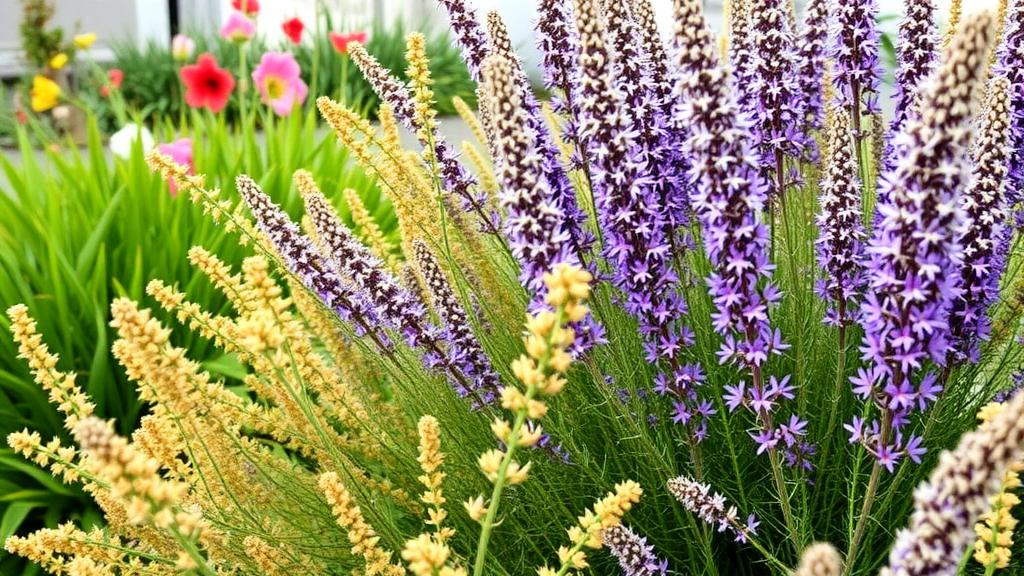
Italy’s alien vascular flora has grown a little more crowded, and a little more settled, according to the seventeenth installment of the Notulae to the Italian alien vascular flora, published in the journal Italian Botanist. The series, which functions as a rolling census of non-native plants establishing themselves across the country, documents new records and, more significantly, status changes in which species previously considered casual escapees are now formally recognized as naturalized. In the language of invasion ecology, naturalization is a threshold moment: a plant is no longer merely surviving on human goodwill but reproducing on its own and persisting through multiple generations. The new paper covers taxa in seventeen genera, from the velvet-leafed shrub Callianthe to the water lettuce Pistia, and its findings sketch a portrait of a landscape in which gardens, cemeteries, roadsides and abandoned industrial lots are quietly seeding the wild flora of tomorrow.
The distinction between a casual and a naturalized alien is not bureaucratic hair-splitting. A casual species may germinate from dumped garden waste or a stray seed and linger for a season or two before vanishing. A naturalized species, by contrast, sustains itself without human assistance, forming self-replacing populations that can persist for decades and, in some cases, graduate into invasiveness. The new records document exactly this transition for several species at the national level. Among them is Callianthe picta, a malvaceous shrub native to north-eastern Argentina, southern Brazil, Paraguay and Uruguay, now recorded as naturalized in Italy for the first time. Botanists working in Alghero, Sardinia, found roughly a dozen adult plants and a large number of seedlings colonizing a roadside ditch, a demographic profile that leaves little doubt the species is reproducing sexually in its new home.
Sardinia emerges as a particular hotspot in this installment. Alongside Callianthe, the island gained new naturalized records for Chamaeiris orientalis, an iris long cultivated for its ornamental value, found at Stintino in a dense stand of nearly one hundred flowering individuals apparently established after dispersal by water, with smaller stands scattered through canals and ditches around Sassari. Juglans nigra, the black walnut of North America, was confirmed as naturalized along the Rio Oridda near Domusnovas, where several adults at different growth stages, including seedlings, occupy roughly two hundred square meters of moist valley woodland. The location is telling: the area was historically used for experiments on the introduction of alien tree species in the 1940s and later for reforestation by the regional forest agency, a reminder that past forestry policy continues to shape present-day floras.
The grass Saccharum biflorum adds a historical dimension to the Sardinian story. Local residents of Assemini recall that farmers introduced the species in the second half of the 1960s to form hedges protecting crops. In cultivation it reproduces clonally, but its spread across the island, documented from Villasor, Capoterra and Elmas in records stretching back to 2009, reflects its capacity for both vegetative and sexual reproduction, as demonstrated in other regions where it grows as an alien. The authors accordingly elevated its status from undefined to naturalized for Sardinia, closing a sixty-year loop between agricultural practice and botanical independence.
Ornamental horticulture looms over nearly every record in the paper. Chamaecyparis lawsoniana, the Lawson cypress, was first noted as a casual alien in Piemonte only in 2022; by November 2023, botanists surveying near a cemetery in the town of Alto found an uneven-aged woody patch of plants five to seven meters tall, regularly fruiting, with dozens of seedlings beneath them, all derived from seeds of ornamental specimens planted in the nearby burial ground. Freesia leichtlinii subsp. alba underwent a similar transition in a cemetery in Chieti, Abruzzo, where several expanding individuals now cover about ten square meters along a regularly mowed footpath. The authors note that cemeteries, with their stable management regimes and continuous supply of cultivated plants, frequently harbor alien species that later spread into the surrounding landscape, making these quiet spaces unexpected front lines of biological change.
Urban infrastructure provides equally hospitable habitat. In Campobasso, Molise, Erigeron karvinskianus, a daisy-like composite from Mexico and Central America, was found growing by the dozens in the gaps between limestone blocks of a south-east-facing retaining wall at the city’s railway station, spanning approximately five hundred square meters alongside native and naturalized companions such as Dittrichia viscosa and Parietaria judaica. In Viterbo, Lazio, the delicate Argentine tussock grass Nassella tenuissima, previously casual, now grows in multiple generations in street-tree trenches and sidewalk curb joints, producing seeds that progressively colonize ever more distant stretches of pavement. In Termoli, the hybrid succulent Kalanchoë ×houghtonii has taken hold in remarkable abundance on the abandoned concrete apron of a derelict industrial complex near the Biferno river, thriving in the thin layer of accumulated debris that is all such surfaces offer.
Two of the newly documented species carry a heavier regulatory weight than the rest. Ludwigia hexapetala, a water primrose, was recorded for the first time in Toscana, where extensive populations were found both in the water and along the banks of the Canale Fossa Maestra at Marina di Carrara, covering a large stretch of the canal. The species is listed as an invasive alien of European Union concern under Regulation 1143/2014 and is currently invading many Italian waterbodies, where it degrades water quality, displaces native plant communities and threatens the most vulnerable species. Pistia stratiotes, the water lettuce, likewise appears on the EU list, with its inclusion taking effect from August 2, 2024. In Rome’s Villa Doria Pamphilj, botanists counted about twenty individuals along a disturbed canal in summer; within a few months the population had more than doubled, growing alongside Lemna minor and other aquatic plants, prompting the formal status change from casual to naturalized for Lazio.
The remaining records fill in the map from north to south. In Trentino-Alto Adige, Physocarpus opulifolius, a rosaceous shrub of North American origin, was found with about fifteen individuals at different developmental stages, including numerous seedlings, in the periodically submerged vegetation of the Rio Valsura near Merano, with further individuals of varying ages downstream at the confluence with the Adige, evidence that the species propagates autonomously by seed in the region. The same region saw Setaria italica subsp. pycnocoma, a foxtail grass, elevated to naturalized on the strength of populations widespread along roadsides, peri-urban prairies and vineyard rows across several localities. Paulownia tomentosa, the empress tree, was recorded as naturalized for the first time in Calabria, flowering and fruiting within a riparian woodland of white willow and white poplar in the Vallone Acquafredda near Molochio. In the same region, Vachellia farnesiana, the sweet acacia, first reported as casual in 2019, now forms dense, impenetrable, fertile populations within steppe grasslands that qualify as a priority habitat under the European Habitats Directive, a direct encroachment on protected vegetation.
Campania contributes a long-view case study in Hemerocallis fulva, the orange daylily, first reported in the region as far back as 1890 and now formally recognized as naturalized there. The species has been expanding for years around Roccamonfina and Sessa Aurunca in the province of Caserta, with populations roughly four kilometers apart along roadside margins within chestnut woodland. Cotoneaster pannosus, a silver-leaved shrub from China, rounds out the picture in Veneto, where a few individuals of distinctly different sizes in a hedgerow beside cultivated fields near Verona were found flowering and fruiting simultaneously, clear evidence of sexual reproduction and dispersal from the original planted stock.
Taken together, the seventeen notulae illustrate how the pipeline from ornamental cultivation to self-sustaining wild populations operates across radically different Italian environments, from alpine riverbanks to Mediterranean steppes. The series itself is a model of distributed monitoring: contributors submit short electronic notes on new records, status changes, exclusions and confirmations, with voucher specimens deposited in the FI Herbarium in Florence, while nomenclatural novelties are handled separately. Supplementary material in the current installment compiles nomenclatural and distribution updates drawn from a dozen other recent publications. For ecologists and land managers, the practical message is that the window for cheap intervention closes at naturalization; once a species reproduces across multiple generations and multiple sites, eradication gives way to long-term management. For everyone else, the paper is a reminder that the plants spilling from cemetery beds, station walls and garden ditches are not merely garden escapes but the early chapters of new ecological histories being written across the Italian landscape.
Subject of Research: Naturalization of alien vascular plant species in Italy
Article Title: Notulae to the Italian alien vascular flora: 17
Article References: Galasso, G., Domina, G., Bacchetta, G., Barberis, D., Bartolucci, F., Cancellieri, L., Ceschin, S., Ciaramella, D., Croce, A., Cuena-Lombraña, A., Del Guacchio, E., Di Lernia, D., Fois, M., Fontana, D., Franzoni, J., Giacò, A., Laface, V. L. A., Lallai, A., Lonati, M., … Lastrucci, L. (2024). Notulae to the Italian alien vascular flora: 17. Italian Botanist, 17, 43-53. https://doi.org/10.3897/italianbotanist.17.126768
Image Credits: AI Generated
DOI: 10.3897/italianbotanist.17.126768
Keywords: alien flora, invasive species, Italy, naturalization, botany, Ludwigia hexapetala, Pistia stratiotes, ornamental plants, biodiversity, Sardinia, plant records, invasion ecology
Cite Scienmag News
Drew Townsend. (October 19, 2026). Seventeen New Alerts Show Ornamental Plants Turning Wild Across Italy. Scienmag. https://scienmag.com/seventeen-new-alerts-show-ornamental-plants-turning-wild-across-italy/
Drew Townsend. "Seventeen New Alerts Show Ornamental Plants Turning Wild Across Italy." Scienmag, 19 October 2026, https://scienmag.com/seventeen-new-alerts-show-ornamental-plants-turning-wild-across-italy/. Accessed 19 October 2026.
Drew Townsend. "Seventeen New Alerts Show Ornamental Plants Turning Wild Across Italy." Scienmag. October 19, 2026. https://scienmag.com/seventeen-new-alerts-show-ornamental-plants-turning-wild-across-italy/


