


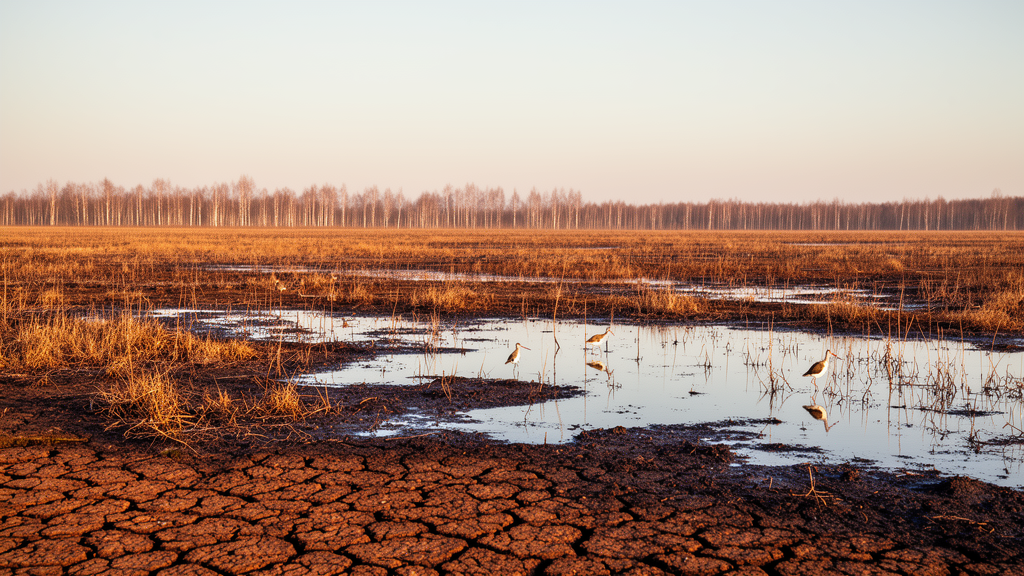
European riverine and coastal wetlands, though occupying a small fraction of the continent’s land area, serve as critical hubs for biodiversity and climate regulation. These dynamic transition zones between land, freshwater, and marine systems support unique species assemblages and provide essential ecosystem services, including clean water, food provision, and flood mitigation. However, a comprehensive review published in Nature Conservation reveals that these ecosystems are under severe pressure. Only 12% of EU riverine and coastal wetland habitat types are currently in favourable condition, while the majority continue to deteriorate. This decline is mirrored by substantial drops in wetland-dependent species, highlighting a urgent need for rethinking these landscapes as multifunctional assets rather than peripheral environments.
The historical extent of European wetlands has been drastically reduced over the past two and a half centuries. Estimates suggest that between 45% and 80% of these habitats have been drained, altered, or reclaimed for agriculture, urban development, and flood control. In large river floodplains, the construction of dikes and the straightening of rivers, such as the Rhine in the 19th century, have disconnected water bodies from their natural flood pulses. Today, 70% to 90% of European floodplains are disconnected from characteristic flooding dynamics. Furthermore, the fluvial network is fragmented by more than 1.2 million instream barriers across 36 countries, with less than 23% of large European rivers remaining free-flowing. This physical alteration has profound implications for the hydrological integrity of these systems.
Climate change is exacerbating these existing pressures, creating a complex web of challenges that vary significantly across European biogeographic regions. Rising average temperatures, changing precipitation patterns, and the increasing frequency of extreme weather events are altering the hydrological cycles that wetlands depend on. In snow-affected catchments in Central and Eastern Europe, high flows are expected to appear earlier in the year, reducing the duration and volume of inundation. This shift threatens to diminish habitat for fish, vertebrates, and floodplain-specific vegetation. Conversely, in Southern Europe, intensifying droughts and water shortages pose a severe threat, with summer drought frequency in the Mediterranean potentially rising by up to 40% by 2100 under high-emission scenarios. These regional disparities demand tailored adaptation strategies that account for local hydrological and climatic conditions.
The biodiversity loss in these wetlands is stark and multifaceted. Approximately 45% of waterbird populations along the Africa–Eurasia flyway show declining trends, while migratory European freshwater fish populations have dropped by 75% in recent decades due to habitat loss and fragmentation. Amphibians, which are highly dependent on shallow aquatic habitats, face some of the most profound declines, with nearly one-third of species considered threatened. Invertebrates such as dragonflies and damselflies are also at risk, with 21% of assessed species threatened by water abstraction, pollution, and channelisation. These declines are not isolated incidents but are part of a broader trend where wetland species populations have decreased by 81% globally since 1970, underscoring the critical role these ecosystems play in sustaining global biodiversity.
Coastal wetlands face unique threats from sea-level rise, which is projected to be the primary driver of change along the Atlantic coast. Under high-emission scenarios, between 20% and 90% of today’s coastal wetland areas could be lost by 2100, depending on the magnitude of sea-level rise and the region’s capacity for inland migration. Human-made structures such as dikes and seawalls often prevent the natural inland migration of wetlands, a phenomenon known as coastal squeeze. In Denmark, for instance, predictions suggest that almost half of all coastal wetlands will be permanently inundated by 2120 under a medium sea-level rise scenario. In the Mediterranean, studies indicate that one-third to more than half of analysed coastal wetlands could be submerged by 2100, further exacerbating the loss of habitat and ecosystem services.
Despite these challenges, wetlands offer significant opportunities for climate mitigation and adaptation. As natural sponges, they regulate the water cycle by storing excess water during floods and releasing it during droughts, thereby enhancing resilience to hydrological extremes. Restored wetlands can also act as long-term carbon sinks, sequestering atmospheric carbon through photosynthesis and storing it in soils. European wetlands are estimated to hold vast carbon stocks, equivalent to 3–8 years of regional greenhouse gas emissions. However, human degradation, such as drainage and land conversion, can reverse this function, turning wetlands from carbon sinks into sources of carbon dioxide and other potent greenhouse gases like methane and nitrous oxide. Therefore, maintaining the ecological integrity of these systems is crucial for their continued role in climate regulation.
Policy frameworks are increasingly recognizing the importance of wetlands in addressing these dual crises. The EU’s Nature Restoration Regulation, which entered into force in 2024, sets binding targets for restoring degraded ecosystems, including wetlands, by 2030. This regulation aims to restore at least 20% of the EU’s land and sea areas, with the ambition to extend these efforts to all ecosystems in need of restoration by 2050. Additionally, the EU Biodiversity Strategy for 2030 calls for restoring at least 25,000 km of rivers to a free-flowing state and reducing pesticide use by 50%. These policies emphasize the need for integrated, cross-sectoral approaches that coordinate environmental, agricultural, and climate strategies to effectively protect and restore wetland habitats.
Effective implementation of these policies requires a shift in how wetlands are perceived and managed. They must be viewed not only as vulnerable systems but as pivotal Nature-based Solutions for achieving climate resilience and halting biodiversity loss. This involves rethinking wetlands as complex socio-ecological systems that provide multiple benefits, including water purification, flood mitigation, and cultural value. Restoration efforts should focus on improving ecological connectivity, reducing anthropogenic pressures, and enhancing the multifunctionality of these landscapes. By integrating strict protection of remaining intact wetlands with adaptive management practices that incorporate sustainable human uses, Europe can unlock the full potential of its riverine and coastal wetlands to support both human well-being and ecological health.
Subject of Research: Conservation status and climate vulnerability of European riverine and coastal wetlands
Article Title: European riverine and coastal wetlands under pressure: biodiversity and climate change
Article References: Kaden, U. S., Schmid, S., Vieweg, M., Scholz, M., & Dufour, S. (2026). European riverine and coastal wetlands under pressure: biodiversity and climate change. Nature Conservation, 62, 13-45. https://doi.org/10.3897/natureconservation.62.163636
Image Credits: AI Generated
DOI: 10.3897/natureconservation.62.163636
Keywords: wetlands, biodiversity, climate change, ecosystem services, Nature-based Solutions, EU policy, habitat restoration, hydrology, carbon sequestration, coastal squeeze, European, riverine
Cite Scienmag News
Margaret Porter. (October 18, 2026). European Wetlands Face Climate and Biodiversity Crisis. Scienmag. https://scienmag.com/european-wetlands-face-climate-and-biodiversity-crisis/
Margaret Porter. "European Wetlands Face Climate and Biodiversity Crisis." Scienmag, 18 October 2026, https://scienmag.com/european-wetlands-face-climate-and-biodiversity-crisis/. Accessed 18 October 2026.
Margaret Porter. "European Wetlands Face Climate and Biodiversity Crisis." Scienmag. October 18, 2026. https://scienmag.com/european-wetlands-face-climate-and-biodiversity-crisis/


