


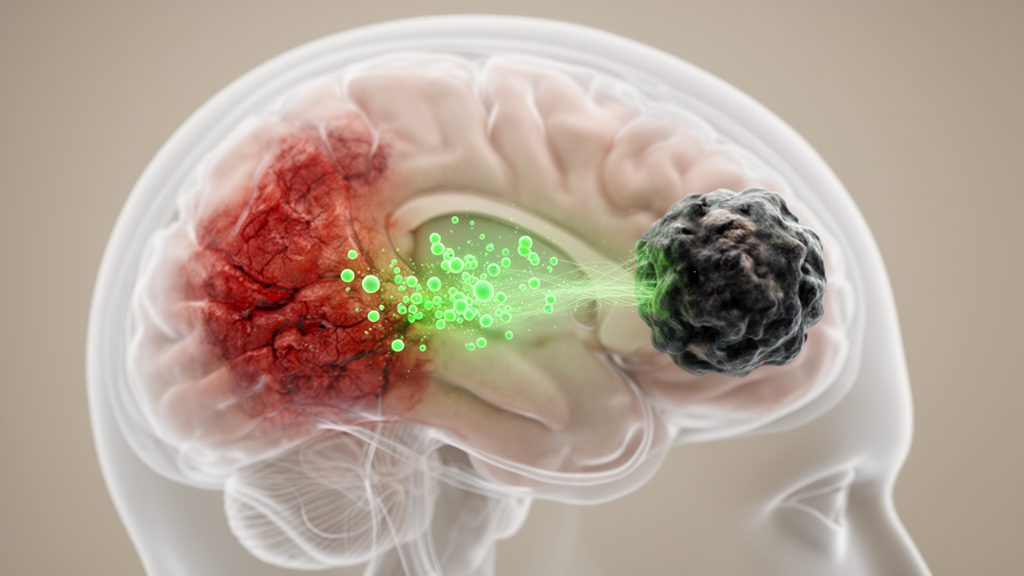
A stroke leaves behind more than damaged tissue. According to a new study from researchers at Texas Children’s Hospital’s Duncan Neurological Research Institute, Baylor College of Medicine and collaborating institutions, the injury itself can become fertile ground for malignant brain tumors. Publishing in Nature Cancer, the team shows that stroke promotes the growth and spread of glioma, the most common and aggressive malignant brain tumor in adults, and identifies the cellular and molecular mediators that connect brain injury to cancer progression.
The clinical motivation behind the work is striking. Epidemiological and clinical studies suggest that patients with a history of stroke or traumatic brain injury face an increased risk of developing brain tumors, a risk that can be roughly three-fold to seven-fold depending on the age and sex of the patient. Yet despite these observations, the mechanism linking brain injury and cancer has remained unclear. The researchers set out to determine whether stroke actively promotes glioma growth and to uncover the factors mediating the connection, working with both human and mouse models.
First authors Dr. Qi Ye and graduate student Christine Madamba from the laboratory of corresponding author Dr. Hyun Kyoung Lee focused on stroke as the injury and glioma as the tumor. Glioma carries a devastating five-year survival rate, and the team found that stroke made its course even worse. In both human and mouse glioma models, stroke promoted tumor infiltration into injured brain regions and reduced overall survival. When the researchers examined the cellular and molecular makeup of the tumors more closely, they discovered that stroke triggers a remodeling of the tumor microenvironment, the complex ecosystem of cells and signals that surrounds and supports cancer cells.
At the heart of this remodeling was the emergence of a distinct population of brain cells called tumor-associated astrocytes, or TAAs. Astrocytes are star-shaped glial cells that normally support neurons by regulating blood flow, neurotransmitter uptake and the blood-brain barrier. In the stroke-injured tumor environment, however, astrocytes took on new physiological and molecular characteristics, including diminished calcium activity. Calcium signaling in astrocytes is a key communication channel that governs how these cells interact with their surroundings, and its reduction marked the TAAs as functionally distinct from their normal counterparts.
The TAAs did not act alone. The researchers observed that they were accompanied by the accumulation of two other cell types: remodeled tumor-associated microglia, the brain’s resident immune cells, and immune cells called macrophages, together known as tumor-associated macrophages or TAMs. Microglia and macrophages are known players in the brain’s response to injury, clearing debris and coordinating inflammation, but in this context they appeared to be recruited into a tumor-promoting alliance alongside the astrocytes.
The most consequential findings came from experiments that tested whether these cell populations were merely bystanders or active drivers of cancer progression. When the team restored calcium signaling in the tumor-associated astrocytes, or removed the TAMs, stroke-induced glioma progression was suppressed. These results identify both populations as critical mediators of the stroke response, proving that the injury-induced changes in the brain actively communicate with cancer cells and influence tumor behavior rather than simply marking time after damage.
The implications reach beyond glioma. Neuron-tumor interactions have previously been shown to contribute to cancer growth, but this study demonstrates that other brain cells, astrocytes, also seem to communicate with brain cancer cells and shape their behavior. As Lee notes, astrocytes should be considered when studying cancer mechanisms and therapies, adding to growing evidence pointing at a role for these glial cells in brain tumor growth. The work reframes the brain’s non-neuronal cells as active participants in cancer biology, not passive scaffolding.
Therapeutically, the findings suggest that the injury-induced, tumor-promoting pathways uncovered in this study are potential targets. If the astrocyte and macrophage responses that follow brain injury can be modulated, the risk of glioma growth in patients with a history of stroke or traumatic brain injury might be reduced. The researchers emphasize that this supports continuing research into strategies that could intervene in these pathways before tumors take advantage of the injured brain environment.
For patients and clinicians, the study provides a biological explanation for a clinical pattern that has long been observed but never mechanistically understood. Brain injury can now be considered a risk factor for brain cancer, and the cellular mediators of that risk, tumor-associated astrocytes with reduced calcium activity and tumor-associated macrophages, offer concrete starting points for prevention and treatment research. The work was a broad collaboration involving investigators from Baylor College of Medicine, Duncan NRI at Texas Children’s Hospital, Virginia Tech, Pennsylvania State University, Houston Methodist Research Institute, Weill Cornell Medical College, the University of Rhode Island and the University of Texas Health Science Center at Houston, among others, with first authors Qi Ye and Christine Madamba leading the experimental effort under Lee’s direction.
Subject of Research: Neuroscience and Cancer Research
Article Title: Researchers link brain injury to brain tumors
Article References: Researchers link brain injury to brain tumors. (n.d.). Original publication
Image Credits: AI Generated
DOI: Not provided
Keywords: glioma, stroke, brain injury, brain tumor, astrocytes, tumor microenvironment, Nature Cancer, neuroscience, cancer research, Texas Children's Hospital, Researchers, link
Cite Scienmag News
Cassandra Pierce. (October 18, 2026). How Stroke Injury Feeds the Brain’s Deadliest Tumors. Scienmag. https://scienmag.com/how-stroke-injury-feeds-the-brains-deadliest-tumors/
Cassandra Pierce. "How Stroke Injury Feeds the Brain’s Deadliest Tumors." Scienmag, 18 October 2026, https://scienmag.com/how-stroke-injury-feeds-the-brains-deadliest-tumors/. Accessed 18 October 2026.
Cassandra Pierce. "How Stroke Injury Feeds the Brain’s Deadliest Tumors." Scienmag. October 18, 2026. https://scienmag.com/how-stroke-injury-feeds-the-brains-deadliest-tumors/


