


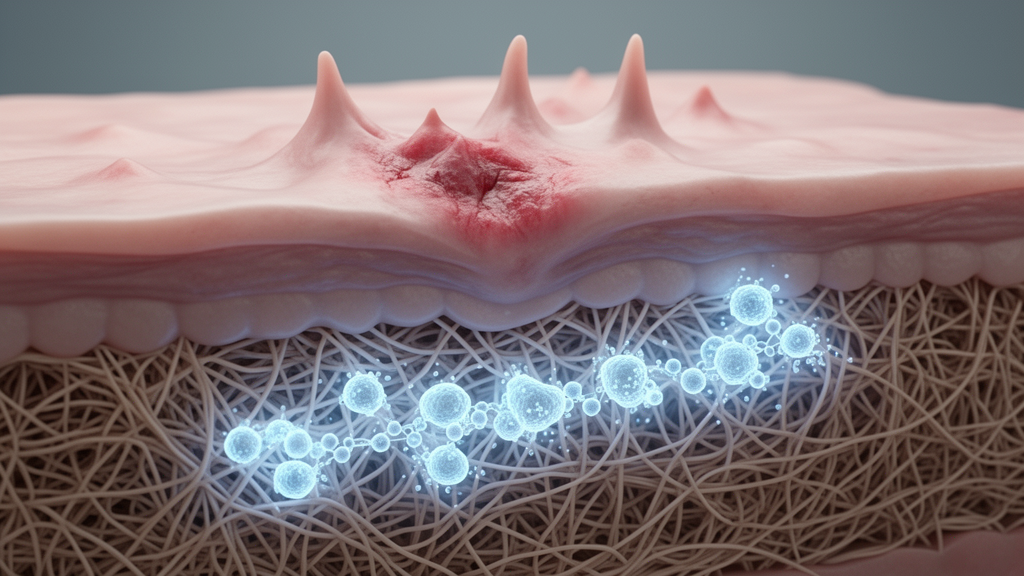
Keloids represent a persistent clinical challenge for dermatologists and plastic surgeons, manifesting as benign dermal tumors that extend beyond the boundaries of the original wound. Unlike normal scars, which typically regress over time, keloids continue to grow and rarely resolve spontaneously, causing significant physical discomfort, pain, and psychological distress for patients. Current treatment options, including corticosteroid injections, radiotherapy, and surgical excision, often yield inconsistent results, with high recurrence rates plaguing long-term management. This therapeutic failure stems largely from an incomplete understanding of the molecular mechanisms driving keloid pathogenesis, particularly the uncontrolled proliferation of fibroblasts that characterizes the condition.
Researchers from Xi’an Jiaotong University have identified a novel signaling pathway that drives this abnormal tissue growth, offering a new avenue for targeted therapies. Published in the journal iScience, the study reveals that the protein CD147, also known as Basigin or EMMPRIN, plays a critical role in promoting keloid formation. By activating the centromere protein F (CENPF) signaling pathway, CD147 stimulates the hyperproliferation of keloid fibroblasts, the primary cell type responsible for the excessive deposition of extracellular matrix in these lesions. This discovery bridges a gap in our understanding of how specific molecular signals translate into the tumor-like growth patterns observed in keloids.
CD147 is a glycosylated transmembrane protein that has previously been associated with aggressive human cancers, where it promotes cell proliferation and invasion. In the context of keloids, the study demonstrates that CD147 is significantly overexpressed in keloid fibroblasts compared to normal fibroblasts. The researchers found that both membrane-bound CD147 and its soluble form, sCD147, are elevated in keloid tissues. Through co-immunoprecipitation assays, they confirmed that soluble CD147 can bind directly to membrane-bound CD147 on the surface of fibroblasts, triggering intracellular signaling cascades that enhance cell bioactivity. This homophilic interaction suggests that CD147 functions in both autocrine and paracrine manners, amplifying the proliferative signals within the keloid microenvironment.
To investigate the downstream effects of CD147 activation, the team utilized recombinant human CD147 protein to treat keloid fibroblasts in vitro. The results showed a dose-dependent increase in cell proliferation, migration, and invasion. Western blot analysis revealed that CD147 stimulation activated the PI3K-Akt signaling pathway, a well-known regulator of cell survival and growth. Additionally, the treatment upregulated the expression of integrin β1, matrix metalloproteinase-2 (MMP-2), and α-smooth muscle actin (α-SMA). These markers are indicative of myofibroblast activation and increased extracellular matrix remodeling, processes that are central to the fibrotic nature of keloids. The activation of these pathways by CD147 provides a mechanistic link between the surface protein and the aggressive behavior of keloid fibroblasts.
Conversely, inhibiting CD147 with the small-molecule compound AC-73 reversed these pathological phenotypes. The inhibitor suppressed fibroblast proliferation in a time- and concentration-dependent manner, reduced the secretion of soluble CD147 and MMP-2, and increased the rate of apoptosis. TUNEL assays confirmed that AC-73 treatment led to a significant increase in apoptotic cells, suggesting that blocking CD147 restores the balance between cell growth and cell death. Furthermore, the inhibitor downregulated the expression of integrin β1, MMP-2, and α-SMA, effectively reversing the myofibroblast-like characteristics of the keloid fibroblasts. These findings highlight the potential of CD147 inhibitors as therapeutic agents for managing keloid progression.
To uncover the specific molecular targets of CD147, the researchers performed RNA sequencing on keloid fibroblasts treated with AC-73. The analysis identified 2,646 differentially expressed genes, with CENPF emerging as the most significantly downregulated gene. Kyoto Encyclopedia of Genes and Genomes (KEGG) pathway enrichment analysis revealed that these genes were primarily involved in cell cycle regulation, DNA replication, and the PI3K-Akt pathway. Gene ontology analysis further indicated that the affected genes were enriched in biological processes such as chromosome segregation and mitotic cell cycle phase transition. This bioinformatics approach pinpointed CENPF as a key mediator of CD147-driven proliferation, linking the surface receptor to fundamental cellular processes governing division and growth.
CENPF is a nuclear matrix protein that plays a crucial role in regulating mitosis and the cell cycle. Its expression peaks during the G2 and M phases of the cell cycle, and it is rapidly degraded upon mitotic completion. In keloid tissues, CENPF was found to be significantly overexpressed compared to normal skin, correlating with the increased proliferative capacity of keloid fibroblasts. The study demonstrated that CD147 inhibition led to a decrease in CENPF expression, which in turn arrested the cell cycle at the G2/M phase. This arrest was accompanied by changes in the expression of p53 signaling-related proteins, including an increase in p53 and Bax levels and a decrease in MDM2 expression. MDM2 is a negative regulator of p53, and its reduction suggests that the p53 tumor suppressor pathway is reactivated in the absence of CD147 signaling.
Further experiments using small interfering RNA to knock down CENPF expression confirmed its functional role in keloid fibroblast proliferation. Silencing CENPF reduced cell viability and induced G2/M phase arrest, mirroring the effects of CD147 inhibition. Importantly, CENPF knockdown rescued the downregulation of p53 and Bax induced by CD147, indicating that CENPF acts downstream of CD147 to suppress the p53 pathway. The downregulation of cell cycle regulators such as cyclin A1, cyclin B1, and CDK1 upon CENPF knockdown further supports the notion that CENPF is essential for maintaining the rapid cell division characteristic of keloids. These results establish a clear regulatory axis where CD147 promotes keloid formation by modulating CENPF-mediated suppression of p53.
The identification of the CD147-CENPF signaling pathway offers a promising target for future therapeutic interventions. While the study provides compelling evidence for this mechanism in vitro, the authors acknowledge limitations, including the small sample size of human tissues and the lack of assessment for sex-related effects. Additionally, the role of other CD147 ligands, such as integrin β1 and caveolin-1, in keloid pathogenesis remains to be fully explored. The humanized anti-CD147 antibody meplazumab, which has been approved for the treatment of severe SARS-CoV-2 infection, may offer a complementary approach to small-molecule inhibitors like AC-73. Combination therapies targeting both membrane-bound and soluble forms of CD147 could potentially enhance the efficacy of keloid treatment.
In summary, this study elucidates a previously unrecognized mechanism by which CD147 drives keloid formation through the CENPF signaling pathway. By promoting fibroblast proliferation and suppressing apoptosis, this pathway contributes to the uncontrolled growth and persistence of keloids. Targeting this axis could lead to the development of more effective treatments for keloid patients, addressing the current unmet medical need for therapies that prevent recurrence and improve quality of life. Further clinical trials are required to validate these findings in humans, but the molecular insights gained from this research provide a strong foundation for the next generation of keloid therapies.
Subject of Research: Molecular mechanisms of keloid fibroblast proliferation via CD147 and CENPF signaling
Article Title: CD147 drives keloid formation by promoting fibroblast proliferation via the CENPF signaling pathway
Article References: Diao, J.-S., Han, X.-N., Du, H.-C., Wu, J., Jia, J., Zhang, Z., Rahman, M. A., & Shu, M.-G. (2026). CD147 drives keloid formation by promoting fibroblast proliferation via the CENPF signaling pathway. iScience, 29(11), Article 117927. https://doi.org/10.1016/j.isci.2026.117927
Image Credits: AI Generated
DOI: 10.1016/j.isci.2026.117927
Keywords: keloids, CD147, CENPF, fibroblasts, cell cycle, p53 pathway, dermatology, signaling pathways, tissue repair, iScience, drives, keloid
Cite Scienmag News
Denise Maddox. (October 18, 2026). New Pathway Identified in Keloid Formation. Scienmag. https://scienmag.com/new-pathway-identified-in-keloid-formation/
Denise Maddox. "New Pathway Identified in Keloid Formation." Scienmag, 18 October 2026, https://scienmag.com/new-pathway-identified-in-keloid-formation/. Accessed 18 October 2026.
Denise Maddox. "New Pathway Identified in Keloid Formation." Scienmag. October 18, 2026. https://scienmag.com/new-pathway-identified-in-keloid-formation/


