


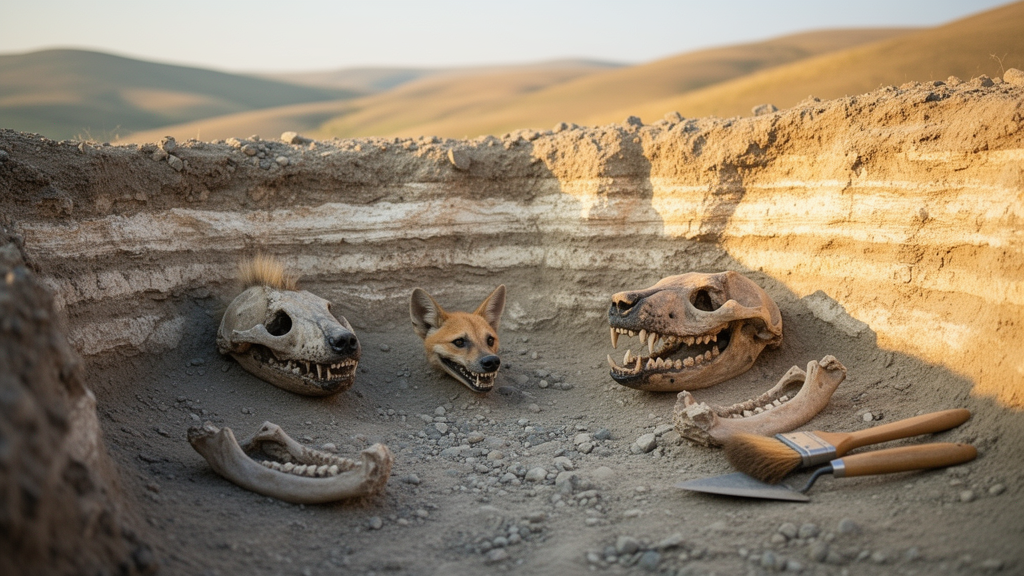
The Pliocene Epoch, spanning approximately 5.33 to 2.58 Ma, represents a pivotal transitional phase in Earth’s climatic history, bridging the relatively warm conditions of the Miocene with the pronounced cooling and glacial–interglacial oscillations of the Pleistocene. During this epoch, global climates underwent a gradual yet sustained shift towards increased seasonality, continental aridification and polar cooling, driven by a complex interplay of tectonic activity, changes in oceanic circulation and long-term variations in atmospheric greenhouse gas concentrations. Collectively, these processes reshaped global heat distribution and contributed to the emergence of modern climate patterns, including the intensification of latitudinal thermal gradients and the establishment of permanent Northern Hemisphere polar ice sheets by the end of the epoch. A particularly significant interval within the Pliocene is the Mid-Pliocene Warm Period, occurring between approximately 3.3 and 3.0 Ma, during which global mean annual temperatures are estimated to have been 2 to 4 °C higher than pre-industrial levels, with atmospheric CO2 concentrations ranging between 350 and 450 ppm. Despite elevated global temperatures and CO2 levels, the Mid-Pliocene Warm Period was not marked by extreme climatic instability, making it a valuable palaeoclimatic analogue for assessing the potential long-term equilibrium responses of Earth’s climate system to sustained warming. Nevertheless, this period demonstrates that even moderate increases in CO2 can trigger large-scale environmental transformations, including irreversible ice sheet loss and significant sea-level rise, providing a critical baseline for evaluating long-term thresholds and feedback mechanisms in a warming world.
The South Caucasus sits at the biogeographic junction between Europe and Asia and likely acted as a dispersal corridor during the Pliocene, yet well-dated carnivoran assemblages from this region remain rare. The Jradzor locality in Armenia comprises a stratigraphically constrained Pliocene vertebrate record with several fossiliferous horizons dated by Lazarev and colleagues in 2023. The carnivoran material derives from horizons JZ–3s, JZ–13 and JZ–15, dated to 4.16–3.98 Ma, and from horizon JZ–7, dated to 3.3 ± 0.03 Ma. The horizon JZ–7 is interpreted as a lahar deposit, a high-energy volcaniclastic mudflow that transported remains over relatively short distances, whereas the remaining layers represent the medium tail of pyroclastic flow. The associated vertebrate assemblage is dominated by taxa typically linked to open habitats, suggesting predominantly open landscapes in the local catchment, including Cremohipparion longipes, Gazellospira sp., Caprini indet. and a new hyracoid. Further, two additional forms from the JZ–7 horizon, Bufotes sp. and Mimomys cf. davakosi, suggest also the presence of open habitats. Here, new occurrences of carnivorans from Jradzor across multiple fossil horizons are documented, using dental and mandibular functional morphology together with morphometrics to discuss trophic ecology and community structure of the carnivoran guild in a regional biogeographic framework.
This study is based on anatomical and taxonomic analysis of the Late Pliocene carnivoran fauna from Jradzor, Armenia. The referred material, including 15 specimens, is stored in the collections of the Institute of Geological Sciences of the National Academy of Sciences of Republic of Armenia. Extant and fossil specimens used for the comparative study are stored in collections across Switzerland, Italy, France and Spain. Measurements of the cranium and mandible follow established protocols, taken with a digital caliper to the nearest 0.1 mm. A Principal Component Analysis was performed on the mesiodistal length and buccolingual width of the p3, p4 and m1 of the mandible of Chasmaporthetes from Jradzor, in comparison with extant hyaenids and selected fossil species from Eurasia, Moldova, France, the Zanda Basin and North America. The deciduous premolar of the hyaenid from Jradzor was compared with those of Pliocrocuta perrieri and Pachycrocuta brevirostris from the Late Pliocene and Early Pleistocene. Analyses were performed in the R environment using RStudio software, with the PCA performed using the prcomp function and plots obtained using ggplot.
Among the five carnivoran taxa reported from Jradzor, the canid Nyctereutes urartuensis is represented by a fairly well-preserved cranium and a right lower jaw from horizon JZ–7, dated to 3.3 ± 0.03 Ma. The cranium is considerably elongated rostrocaudally and large, characterised by a marked postorbital constriction, a vulpine crease on the dorsal surface of the zygomatic processes of the frontals, marked parasagittal and sagittal crests, rugose parietals, squared-shaped nuchal crests, an evident subangular lobe, short canine crowns and enlarged crushing surfaces of the molars with additional or enlarged cuspulids. The attribution to the genus Nyctereutes is maintained by the presence of general features of Vulpini, such as the vulpine crease, and diagnostic features for the genus, including the short-crowned canines and the presence of a rounded and evident subangular lobe on the caudoventral side of the mandible. The development of features shown by the Jradzor sample is intermediate between primitive raccoon dogs like Nyctereutes tingi and Nyctereutes donnezani and more derived forms like Nyctereutes sinensis and Nyctereutes megamastoides. Analyses of morphological, morphometric, endocranial and ecological parameters suggest the Jradzor specimens belonged to a new species, described in a companion paper by Bartolini-Lucenti and colleagues in 2026.
The mustelid Baranogale helbingi is represented by a fragment of left maxilla with P3–P4 from horizon JZ–13 and a fragment of left mandibular body with m1 from horizon JZ–15, both dated to 4.16–3.98 Ma. The maxilla fragment displays a large and round infraorbital foramen, with the P2 alveolus being two-rooted, indicating a moderately reduced tooth. The P3 is elongated and irregularly oval-shaped, with a prominent protocone pushed slightly mesially and situated centrally. The elongated and narrow P4 has a straight crown, with a moderately high paracone bearing a thin ridge across the mesial border and a long, rectangular protocone. The large and rather narrow m1 has a low and short paraconid, a prominent and short protoconid, a strongly developed metaconid clearly separated from the protoconid, and a long, trenchant talonid narrower than the trigonid. The Jradzor mustelid differs distinctly from Psalidogale altenburgensis, from both species of the genus Vormela, and from the highly evolved Oxyvormela maisi, instead strongly resembling Baranogale helbingi in all features of the P3–P4 and m1. The plotted index of total length and trigonid breadth of the m1 of B. helbingi individuals showed three non-overlapping sets of data, with the Jradzor specimen interpreted as a female based on its smaller m1 length of 6.6 mm.
A lynx-sized felid is represented by one mandibular corpus with canine and p3–p4 from horizon JZ–3s and one isolated m1. The corpus is stout and high below the premolars, with a mesiodistally short diastema between the canine and the premolars. The m1 is sharp, buccolingually compressed and with an absent metaconid and talonid. The size and morphology of the mandibular corpus and the lower carnassial are consistent with a lynx-sized felid; however, the fragmentary nature of the material does not allow a confident species-level attribution, and the specimens are therefore referred to cf. Lynx sp. pending additional material and a dedicated taxonomic treatment.
Two large hyaenids from horizon JZ–7 represent distinct feeding strategies. The hunting hyaena Chasmaporthetes lunensis is represented by two well-preserved hemi-mandibles belonging to the same individual, displaying a single mental foramen below the p2, a slightly lingually curved tooth row, a deep masseteric fossa, asymmetric crowns of the i2 and i3 with enlarged main cuspids, premolars slightly tilted backwards with sharp protoconids, and an m1 with a vestigial metaconid and a mesiodistally reduced talonid bearing a well-developed hypoconulid. Compared to the stoutly built extant hyaenas, representatives of Chasmaporthetes display more slender dentition and more elongated, slender post-cranial bones, leading to their inclusion in the category of hunting hyaenas for their inferred cursorial abilities. The Jradzor specimens display several morphological affinities with Ch. lunensis, including a curved tooth row, unicuspid talonid, large mesial accessory cuspulid on the p4, and presence of a mesial accessory cuspulid on the p2. In the PCA on lower teeth, the first principal component explains 76.69% and the second about 9.17% of the variability, and the two Jradzor specimens fall perfectly within the variability of Ch. lunensis.
The bone-cracking hyaena Pliocrocuta perrieri is represented by a right p4 and m1 and a right dp4 from horizon JZ–7. The occlusal outlines of the p4 and m1 are buccolingually wide, with the p4 displaying a high protoconid and two accessory cuspulids, and the m1 bearing a large paraconid and protoconid of equal height and an individualised but small metaconid. Pliocrocuta perrieri is a large bone-cracking hyaena commonly recorded in Early to Middle Villafranchian European assemblages, with a known chronological range from 4.2 to 2.0 Ma, distributed across Europe, Asia and Africa. From a phylogenetic viewpoint, Pliocrocuta is considered a sister-taxon of Pachycrocuta brevirostris. The morphology of the dp4 from Jradzor has a fairly extended talonid with evident cuspulids, contrasting with the more generalised deciduous dentition of P. brevirostris. Considering the morphological features of the adult dentition consistent with Pliocrocuta, the deciduous specimen is suggested to belong to the same species, a suggestion metrically confirmed when compared to other deciduous premolars of Pliocrocuta and Pachycrocuta.
Both large hyaenid species recorded from Jradzor are known to have had different dietary habits. Although both were hypercarnivores, Chasmaporthetes lunensis was a hunting hyaena, while Pliocrocuta perrieri was a bone-cracking species. Antón and colleagues in 2006 suggested that the limited fossil record of Ch. lunensis could reflect its solitary lifestyle, while P. perrieri is more abundant and its fossil record could reflect a group-denning scavenger. However, based on the shape of the muzzle and the elongated, gracile fore-limbs, Chasmaporthetes would still have required group action to kill medium and large prey. Considering the similarities in body size and the presence of adaptations for bone cracking in both species, competition between the two for carcasses was likely mitigated by ecological complementarity: if P. perrieri, due to its greater bone-cracking abilities, did not hunt actively and was well adapted to scavenging carcasses, Ch. lunensis would have used its crushing premolars on its own prey rather than consuming scavenged carrion, explaining why P. perrieri has been more abundantly found at sites where hyaenid presence correlates with their capacity to scavenge carcasses of other animals.
The carnivoran assemblage from Jradzor represents a significant contribution to understanding Pliocene faunal dynamics in western Asia and, more broadly, within the framework of European palaeobiogeography. The European Pliocene, often referred to as the dark epoch, remains comparatively less understood than the preceding Miocene and the subsequent Pleistocene, with well-documented carnivoran guilds virtually non-existent or excavated in the 19th century without proper stratigraphic control. The presence of a primitive form of Nyctereutes at Jradzor is particularly noteworthy: the m2/m1 ratio of 0.62 is considerably high and consistent with the range of individual variance of omnivorous species, suggesting a more omnivorous diet than that of its extant relatives and an ecological profile more consistent with jackal-like canids such as the golden jackal, potentially capable of forming transient foraging groups. The record of Baranogale helbingi significantly increases knowledge of this species both temporally and spatially: regarded so far as a European endemic, this archaic mustelid has a much broader geographical scope than previously thought, with the Jradzor material being the earliest from the Caucasus and Asia and the easternmost occurrence of the species. Like other European Ictonychini, B. helbingi vanished during the Early Pleistocene, most likely due to competition with small, ecologically plastic Mustelinae. Taken together, the carnivoran fauna of Jradzor offers a compelling snapshot of Pliocene ecosystems in a historically under-represented region, reflecting a transitional phase in carnivore evolution marked by increasing specialisation, geographic dispersal and adaptation to changing environmental conditions, and highlighting the strong links between the Jradzor assemblage and the Eastern Paratethyan record, particularly the southern margin of the Eastern Paratethys in the dispersal of vertebrate assemblages between Asia and Europe.
Subject of Research: Pliocene carnivoran palaeontology and palaeoecology at the Jradzor locality, Armenia
Article Title: Pliocene carnivorans from Jradzor, Armenia
Article References: Bartolini-Lucenti, S., Madurell‑Malapeira, J., Marciszak, A., Meyer, M., Becker, D., & Vasilyan, D. (2026). Pliocene carnivorans from Jradzor, Armenia. Swiss Journal of Palaeontology, 145, 579-596. https://doi.org/10.3897/sjp.145.180311
Image Credits: AI Generated
Keywords: Pliocene, Armenia, South Caucasus, carnivorans, Nyctereutes urartuensis, Baranogale helbingi, Chasmaporthetes lunensis, Pliocrocuta perrieri, palaeoecology, biogeography, Jradzor, scientific research
Cite Scienmag News
Gavin Prescott. (October 18, 2026). Pliocene carnivorans from Jradzor, Armenia. Scienmag. https://scienmag.com/pliocene-carnivorans-from-jradzor-armenia/
Gavin Prescott. "Pliocene carnivorans from Jradzor, Armenia." Scienmag, 18 October 2026, https://scienmag.com/pliocene-carnivorans-from-jradzor-armenia/. Accessed 18 October 2026.
Gavin Prescott. "Pliocene carnivorans from Jradzor, Armenia." Scienmag. October 18, 2026. https://scienmag.com/pliocene-carnivorans-from-jradzor-armenia/


