


Late Miocene Ukrainian Fossils Reveal Diverse Squamates and Possible Climatic Buffering
Paleontologists analyzing newly identified squamate fossils from Grytsiv in western Ukraine have documented a diverse assemblage of lizards and snakes ...
Paleontologists analyzing newly identified squamate fossils from Grytsiv in western Ukraine have documented a diverse assemblage of lizards and snakes ...

Hominin dental fossils and multi-method dating reveal that Homo erectus survived in southern Chinese rainforest environments until approximately 184 thousand ...

High-resolution pollen analysis from Bronze Age Terramare settlements in northern Italy reveals four centuries of cyclical woodland coppicing that left ...

A new executive report from the Max Planck Institute of Geoanthropology argues that biodiversity has been shaped over millennia by ...

High-resolution pollen records from Terramare settlements in northern Italy show that Bronze Age communities managed oak woodlands through recurrent selective ...
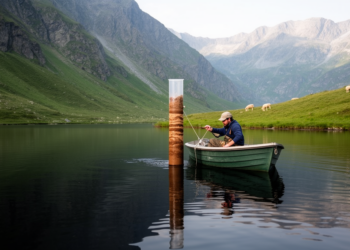
A 25,000-year sediment record from Tramacastilla Lake shows that Pyrenean subalpine grasslands were first opened by Neoglacial cooling and then ...
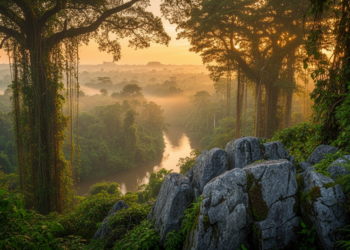
A comprehensive review reveals that West African rainforest refugia, from Mount Nimba to the Niger Delta, sheltered species through millions ...
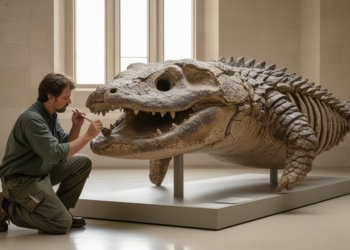
A complete fossil growth series reveals how the five-metre Triassic amphibian Mastodonsaurus giganteus developed from 12-millimetre larvae into the apex ...
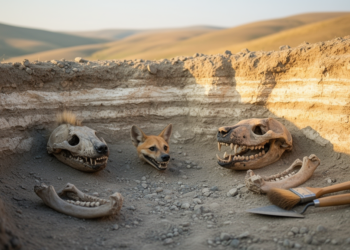
A stratigraphically constrained Pliocene carnivoran assemblage from Jradzor, Armenia, spanning 4.16–3.98 Ma and 3.3 ± 0.03 Ma, documents five taxa ...
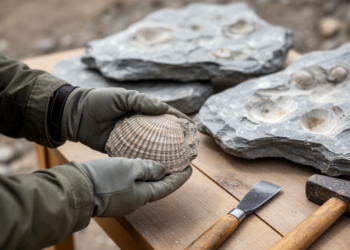
High in the Himalayas of northern India, black shales that accumulated on the floor of a vanished ocean are yielding ...


Embark on a thrilling journey of discovery with Scienmag.com—your ultimate source for cutting-edge breakthroughs. Immerse yourself in a world where curiosity knows no limits and tomorrow’s possibilities become today’s reality!