


Where rivers meet the sea, some of the planet’s most productive and most threatened ecosystems come into being. Estuaries, the dynamic mixing zones of freshwater and saltwater, are found on every continent and at nearly every latitude, and they sustain an extraordinary concentration of life while performing services that reach far beyond their shorelines. A newly launched peer-reviewed journal, Estuarine Management and Technologies, published by Pensoft, has set out with an ambitious agenda: to unite estuarine research, cutting-edge technology, and practical management science in a single venue dedicated to the survival and sustainable use of these environments. The journal’s inaugural editorial, published on 25 January 2024, lays out both the ecological stakes and the technological toolkit that the field will need as environmental pressures intensify through the twenty-first century.
The ecological case for estuaries is difficult to overstate. The mingling of riverine and marine waters creates a mosaic of habitats, including mangrove forests, salt marshes, and tidal flats, that serve as sanctuaries and breeding grounds for a vast array of species. Many commercially important fish species depend on estuaries as nurseries, which links the health of these systems directly to global food security. Beyond biodiversity, estuaries act as natural buffers that mitigate the impacts of storms and function as filters, trapping and transforming pollutants carried downstream from upstream regions. They also participate in nutrient cycling and carbon sequestration, making them significant players in the planet’s climate system. Yet the same features that make estuaries biologically rich, their position at the land-sea interface, also concentrate human pressures: pollution, habitat loss, overfishing, and the cascading impacts of climate change all converge in these waters.
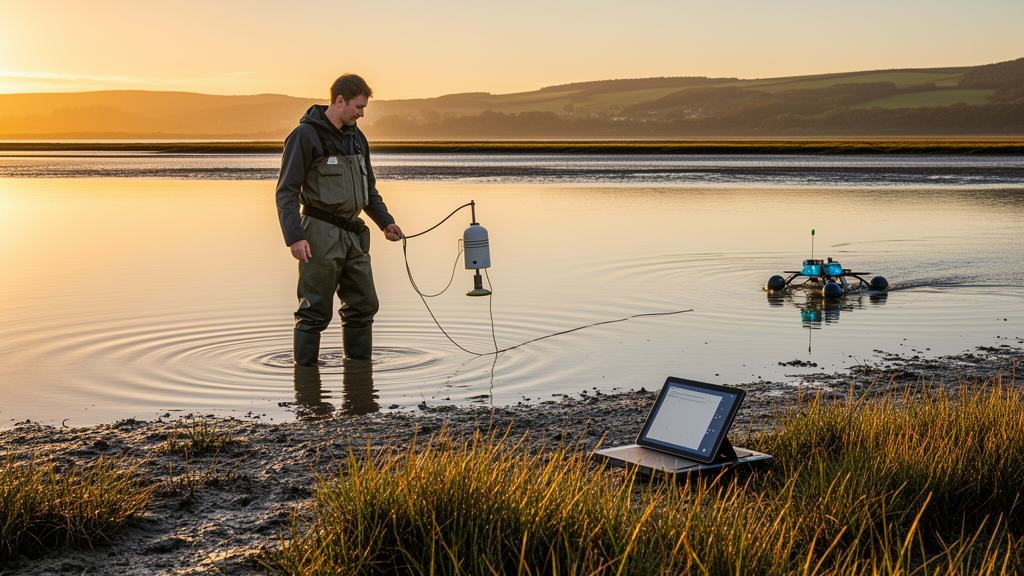
The editorial argues that traditional conservation approaches alone cannot keep pace with these threats. Instead, it calls for a transformation in how scientists and policymakers observe, understand, and manage estuaries, one built on the seamless integration of advanced technologies. Remote sensing, satellite imagery, and aerial surveys can track changes in water quality, vegetation, and land use across entire estuarine basins. Sophisticated measuring devices and drones offer new perspectives for monitoring and assessing estuarine health at resolutions that were previously unattainable. Big data analytics, in turn, can extract valuable insights from these observation streams, helping researchers decipher the complex ecological interactions that govern estuarine function and formulate evidence-based management strategies.
Among the most consequential tools highlighted is environmental DNA analysis, a molecular technique that allows researchers to detect and identify the species present in an area simply by analyzing environmental samples such as water or sediment. The approach is non-invasive and comprehensive, offering an unprecedented window into estuarine biodiversity without the need to capture or observe organisms directly. Genetic technologies also help scientists track population dynamics and assess the impacts of environmental change over time. Combined with isotopic techniques, which trace the flow of energy and nutrients through food webs, these molecular methods provide insights into estuarine ecosystems with a precision that traditional survey methods could never achieve.
Real-time observation is another pillar of the proposed way forward. Deploying sensor networks throughout estuarine regions enables continuous monitoring of critical parameters such as water temperature, salinity, dissolved oxygen, and nutrient levels, allowing early detection of changes before they escalate into ecological crises. Geographic Information Systems provide the spatial backbone, analyzing and visualizing data on habitat distribution, identifying vulnerable areas, and planning conservation strategies. Autonomous underwater vehicles and remotely operated vehicles extend the reach of research into depths and locations that are challenging or impossible for human divers, collecting data from the submerged portions of estuarine systems that have historically remained poorly sampled.
Predictive capability may ultimately prove the most powerful addition to the estuarine manager’s arsenal. Computational models, supported by artificial intelligence and machine learning algorithms, can simulate a wide range of scenarios and predict the outcomes of management interventions before they are implemented. These models incorporate data on hydrodynamics, sediment transport, contaminant transport, and ecological processes to better understand how estuarine systems function and respond to various influences. By anticipating the impacts of human activities and climate change, decision-makers can shift from reactive crisis management to proactive stewardship, intervening in ways that protect ecosystem health while accommodating responsible resource use.
The editorial is equally emphatic that technology alone cannot save estuaries. Citizen science and community engagement play a pivotal role in estuarine management, and collaborative efforts involving local communities in monitoring and conservation initiatives can enhance the effectiveness of management strategies while fostering a sense of stewardship among the people who depend directly on these ecosystems for their livelihoods. Successful estuarine management, the authors contend, requires collaboration among scientists, policymakers, local communities, and industry stakeholders. Engaging communities in citizen science projects and involving them in decision-making processes creates shared ownership of estuarine health, transforming conservation from an external mandate into a collective commitment.
Educational outreach and policy innovation round out the agenda. Building public awareness about the importance of estuarine ecosystems is crucial for garnering support, and outreach programs can mobilize communities to participate in conservation initiatives. On the governance side, the editorial stresses that governments and regulatory bodies need to adopt forward-thinking policies that prioritize long-term environmental sustainability while promoting responsible resource use, balancing ecological conservation with socio-economic development. Practical applications of technology also feature prominently in this vision, from water treatment systems such as desalination and purification technologies that manage water quality for both ecological health and human use, to habitat restoration projects deploying artificial reefs, bioengineering techniques, and the cultivation of native vegetation to rebuild degraded estuarine ecosystems.
The scope of the new journal reflects the breadth of the field it aims to serve. It welcomes research articles, reviews, data papers, software descriptions, methods and technologies contributions, expert views, rapid communications, mini-reviews, and even 180-second video papers, spanning topics that range from the application of remote sensing and GIS in estuarine studies to estuarine bio-resource systems, pollution and control, water quality assessment, ecology and biodiversity, estuary and coastal aquifer interactions, micro- and nanoplastic detection and remediation, climate change impacts, estuarine circulation, sedimentary processes, and the numerical and analytical modeling of estuarine processes. It also addresses the physics, chemistry, geology, and biology of estuaries, contaminant sources and transport, estuarine economics, and the development of national and international policies on estuaries, positioning itself as a comprehensive platform for a rapidly evolving discipline.
As environmental challenges mount, the launch of Estuarine Management and Technologies arrives at a decisive moment for a field that has long needed a dedicated home. By providing an avenue for the publication of cutting-edge research on technological advancements and management strategies, the journal positions itself at the forefront of estuarine science, with the stated goal of fostering collaboration and knowledge sharing among researchers worldwide. The editorial’s core message resonates as both warning and invitation: estuaries are indispensable to planetary health, the tools to understand and protect them are advancing at remarkable speed, and the future of these ecosystems will depend on how quickly science, technology, policy, and communities learn to work as one.
Subject of Research: Estuarine Management and Technologies: A way forward for estuarine research
Article Title: Estuarine Management and Technologies: A way forward for estuarine research
Article References: Haddout, S., Priya, K. L., Casila, J. C. C., Hoguane, A. M., Ljubenkov, I., Israelsson, P. H., Kantamaneni, K., Carvalho Junior, O., Kurniawan, T. A., Rathnayake, U., Khajenoori, L., Esteban, M. D., Zhang, J., Hait, S., Soeprobowati, T. R., & Aksun Tümerkan, E. T. (2024). Estuarine Management and Technologies: A way forward for estuarine research. Estuarine Management and Technologies, 1(1), 1-6. https://doi.org/10.3897/emt.1.116778
Image Credits: AI Generated
DOI: 10.3897/emt.1.116778
Keywords: estuaries, environmental DNA, remote sensing, artificial intelligence, estuarine management, biodiversity, climate change, sensor networks, citizen science, habitat restoration, Estuarine, Management
Cite Scienmag News
Gavin Prescott. (October 18, 2026). New Journal Charts a Technology-Driven Path Forward for Estuarine Science. Scienmag. https://scienmag.com/new-journal-charts-a-technology-driven-path-forward-for-estuarine-science/
Gavin Prescott. "New Journal Charts a Technology-Driven Path Forward for Estuarine Science." Scienmag, 18 October 2026, https://scienmag.com/new-journal-charts-a-technology-driven-path-forward-for-estuarine-science/. Accessed 18 October 2026.
Gavin Prescott. "New Journal Charts a Technology-Driven Path Forward for Estuarine Science." Scienmag. October 18, 2026. https://scienmag.com/new-journal-charts-a-technology-driven-path-forward-for-estuarine-science/


