


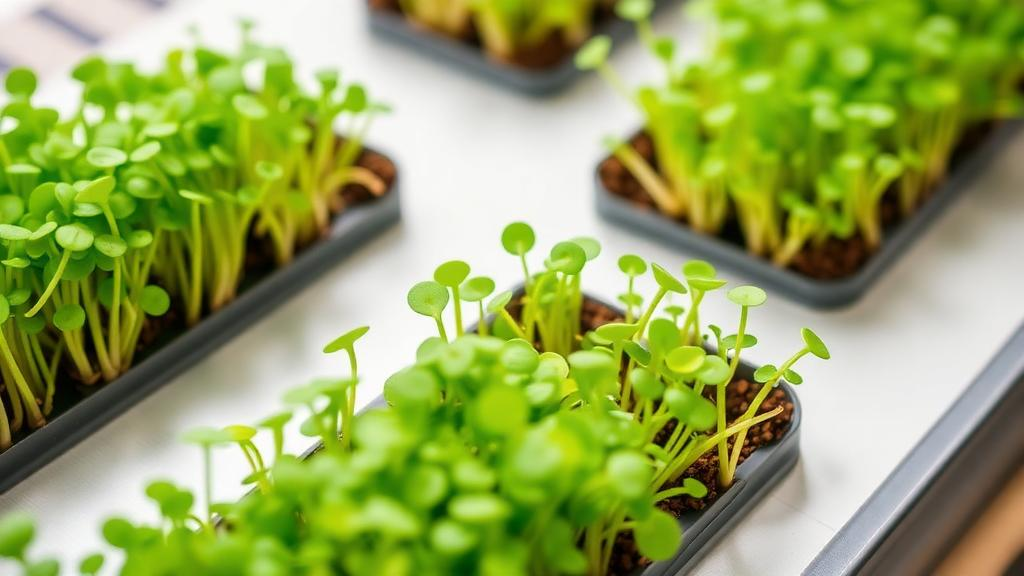
In the trendy world of nutrition science, few foods have attracted as much viral attention as microgreens, the tiny seedlings of vegetables and herbs that pack remarkable concentrations of vitamins, minerals, antioxidants, and fibre into a few centimetres of green growth. Celebrated by chefs, urban farmers, and health influencers alike, these young seedlings are widely recognised as functional foods, meaning plant-derived products that offer measurable health benefits beyond basic nutrition. Yet a new questionnaire-based survey of 198 adults in Northeastern Bulgaria, published in Pharmacia, reveals a striking paradox: although most respondents readily identified microgreens as edible and generally acknowledged their nutritional value, actual consumption and home cultivation remained surprisingly limited. The findings suggest that awareness alone is not enough to turn a celebrated superfood into an everyday dietary staple.
The study, led by researchers affiliated with the Medical University of Varna, was designed to answer three deceptively simple questions: to what extent are consumers aware of the edibility and health benefits of microgreens, how frequently are these seedlings consumed among adults in Northeastern Bulgaria, and what perceptions and attitudes influence their use as an alternative nutrient source. Bulgaria presents a compelling case study because national dietary surveys consistently report insufficient vegetable intake, unbalanced dietary patterns, and suboptimal adherence to nutritional recommendations among Bulgarian adults, particularly in urban populations. These dietary characteristics have been identified as contributing factors to the national burden of chronic non-communicable diseases, making the search for accessible and nutrient-dense alternative sources of essential nutrients increasingly urgent.
To capture consumer behaviour, the researchers conducted a cross-sectional survey using two recruitment approaches: an online questionnaire distributed via social media platforms and a paper-based questionnaire administered in public locations. The structured, self-administered instrument covered sociodemographic characteristics such as gender, age group, education, place of residence, monthly household budget, and employment status, alongside items on awareness and recognition of microgreens and other non-traditional edible plants, consumption patterns, forms of intake, nutritional knowledge, perceived market availability, and home cultivation. The questionnaire was pilot-tested with 20 adults to ensure clarity and content validity, after which minor wording adjustments were made. Participation was voluntary and anonymous, informed consent was obtained from all respondents, and ethical approval was granted by the Ethics Committee of the Medical University of Varna in accordance with the principles of the Declaration of Helsinki.
The demographic profile of the sample was predominantly urban, female, and relatively young. Of the 198 respondents, 68.7 percent were female and 31.3 percent male, while the largest age group was 18 to 30 years, accounting for 44.9 percent of participants. More than half of the respondents had higher education, including bachelor’s, professional bachelor’s, master’s, or doctoral degrees, and 96.0 percent lived in cities or towns rather than villages. The most frequently reported monthly family budget was 2000 to 3000 BGN, reported by 41.4 percent of respondents, while permanent employment was reported by 56.6 percent and student status by 32.8 percent. The researchers emphasise that because participants were recruited through convenience sampling via open channels and public recruitment, the resulting sample should not be considered representative of the general population.
Recognition of the listed plant species was generally high, with the most familiar microgreens being leeks at 63.4 percent, buckwheat at 58.5 percent, peas at 52.4 percent, and spelt grass at 51.0 percent. Most respondents, 82.9 percent, correctly indicated that all listed plants were edible, while only 4.8 percent reported uncertainty regarding their edibility. Among respondents who answered the nutritional knowledge section, vitamins were the most frequently cited benefit at 53.8 percent, followed by minerals at 48.3 percent, fibre at 47.6 percent, and antioxidants at 42.7 percent. However, a considerable proportion, 35.7 percent, reported no knowledge of any specific benefits, revealing that general awareness of healthfulness coexists with significant gaps in detailed nutritional understanding.
To move beyond simple percentages, the researchers employed exploratory factor analysis using principal axis factoring with varimax rotation to identify latent dimensions of respondents’ knowledge and familiarity. Sampling adequacy was confirmed using the Kaiser–Meyer–Olkin measure, which reached 0.80, and Bartlett’s test of sphericity was statistically significant, indicating suitability for factor extraction. Two factors with eigenvalues greater than 1.0 emerged, explaining 56.7 percent of the total variance. Factor 1, labelled nutritional awareness, was characterised by strong loadings on knowledge of at least one health benefit, identification of vitamins and fibre as nutritional attributes, and awareness that the listed species are produced on Bulgarian farms. Factor 2, labelled exposure and plant familiarity, loaded strongly on recognition of plant species, exposure to microgreens in retail settings, home cultivation, and identification of minerals and antioxidants as nutritional attributes. The resulting structure reveals a clear distinction between a knowledge-based dimension of nutritional awareness and an exposure-related dimension reflecting familiarity and market interaction.
Factor scores were then used to perform K-means cluster analysis, which identified three distinct consumer profiles. Cluster 1, representing 32.1 percent of respondents, scored highest on both factors and was characterised by strong nutritional awareness, frequent exposure to microgreens in retail settings, a comparatively higher likelihood of home cultivation, and regular consumption of multiple microgreen species. Cluster 2, the largest group at 41.5 percent, demonstrated intermediate levels of nutritional knowledge, moderate species recognition and market familiarity, and expressed interest in microgreens without consistent long-term behavioural engagement. Cluster 3, accounting for 26.4 percent, showed low levels of nutritional awareness, minimal market familiarity, infrequent consumption, and little or no engagement in home cultivation. Based on the number of different microgreen species consumed, respondents were categorised as regular consumers consuming more than three species, occasional consumers consuming one or two species, or non-consumers consuming none. Occasional consumers formed the predominant group at 52.0 percent, regular consumers accounted for 28.0 percent, and non-consumers constituted 20.0 percent of the sample.
Across species, consumption patterns were selective, with the highest intake reported for leeks at 37.1 percent, buckwheat at 36.4 percent, peas at 32.1 percent, and spelt grass at 28.6 percent, suggesting that consumer choices are driven by familiarity and perceived ease of use. Among respondents who reported consumption methods, 50.7 percent consumed microgreens in fresh form while 49.3 percent used them after thermal processing, with regular consumers showing a stronger preference for fresh intake. Market accessibility varied considerably: 26.0 percent of respondents reported no retail exposure to microgreens, 43.6 percent reported having seen only leafy-vegetable microgreens, and encounters with specific species such as buckwheat or leeks ranged from 17.1 to 30.0 percent depending on the species. More than 80 percent of respondents reported that they did not cultivate microgreens at home, and awareness of Bulgarian producers was strikingly low, with 61.4 percent reporting that they did not recognise any domestic producer.
The comparative analysis across consumer groups reinforces the central message of the study. Regular consumers demonstrated consistently higher awareness and stronger engagement with microgreens across all indicators, recognising microgreens at 78 percent versus 60 percent for occasional consumers and 35 percent for non-consumers. Knowledge of vitamins reached 68.0 percent among regular consumers compared with 52.0 percent among occasional consumers and just 27.0 percent among non-consumers, while 67.0 percent of non-consumers reported not knowing any benefits at all. Home cultivation was reported by 21.0 percent of regular consumers, 12.0 percent of occasional consumers, and only 3.0 percent of non-consumers, while market availability encountered ranged from 57.0 percent among regular consumers down to 14.0 percent among non-consumers. These patterns indicate that familiarity, accessibility, and repeated exposure play a decisive role in shaping consumer behaviour, consistent with earlier consumer research on functional plant-based foods demonstrating that perceived health benefits alone are insufficient to ensure regular consumption.
The authors argue that several interacting factors explain the low level of regular consumption despite relatively high awareness. Economic considerations appear to play an important role, as microgreens are often perceived as premium products with higher prices compared to conventional vegetables, which may limit their suitability for everyday use. Limited and inconsistent availability in retail settings reduces opportunities for repeated exposure and habitual purchase, while established culinary traditions and a lack of familiarity with preparation methods may discourage consumers from incorporating microgreens into routine meals. Similar combinations of price sensitivity, availability constraints, and culinary uncertainty have been identified as major barriers to the adoption of novel plant-based foods across Europe. The researchers suggest that improving availability through urban farming initiatives, expanded retail distribution, and the development of processed microgreen formats such as freeze-dried powders or extracts may facilitate their integration into daily diets, noting that both fresh and dried microgreens retain substantial levels of bioactive compounds. Taken together, the results indicate that increasing nutritional awareness alone is unlikely to lead to substantial changes in consumption patterns, and that integrated strategies combining improved market visibility, consistent availability, competitive pricing, and clear culinary guidance are required to support the transition from occasional use to the habitual inclusion of microgreens in everyday diets. The authors also caution that the sample was restricted to Northeastern Bulgaria, was not nationally representative, displayed a high proportion of urban and younger respondents, and relied on self-reported data that may be affected by recall and social desirability bias. Nevertheless, as nutrient-dense, fast-growing, and accessible plant foods, microgreens retain genuine potential to contribute to improved dietary quality and nutritional intake, particularly in urban environments where access to fresh produce may be restricted.
Subject of Research: Nutrition and public health
Article Title: Awareness, consumption, and home cultivation of microgreens in northeastern Bulgaria: a questionnaire-based survey
Article References: Stoycheva, T., Merdzhanova, A., Peycheva, K., Panayotova, V., Stancheva, R., Markova, N., Hristova, T., & Dobreva, D. A. (2026). Awareness, consumption, and home cultivation of microgreens in northeastern Bulgaria: a questionnaire-based survey. Pharmacia, 73, Article e188629. https://doi.org/10.3897/pharmacia.73.e188629
Image Credits: AI Generated
DOI: 10.3897/pharmacia.73.e188629
Keywords: Awareness, consumption, home, cultivation, microgreens, northeastern, Bulgaria, questionnaire-based, survey, scientific research
Cite Scienmag News
Daisy Hatcher. (October 18, 2026). Microgreens Are Famous in Bulgaria, but Few People Actually Eat Them. Scienmag. https://scienmag.com/microgreens-are-famous-in-bulgaria-but-few-people-actually-eat-them/
Daisy Hatcher. "Microgreens Are Famous in Bulgaria, but Few People Actually Eat Them." Scienmag, 18 October 2026, https://scienmag.com/microgreens-are-famous-in-bulgaria-but-few-people-actually-eat-them/. Accessed 18 October 2026.
Daisy Hatcher. "Microgreens Are Famous in Bulgaria, but Few People Actually Eat Them." Scienmag. October 18, 2026. https://scienmag.com/microgreens-are-famous-in-bulgaria-but-few-people-actually-eat-them/


