


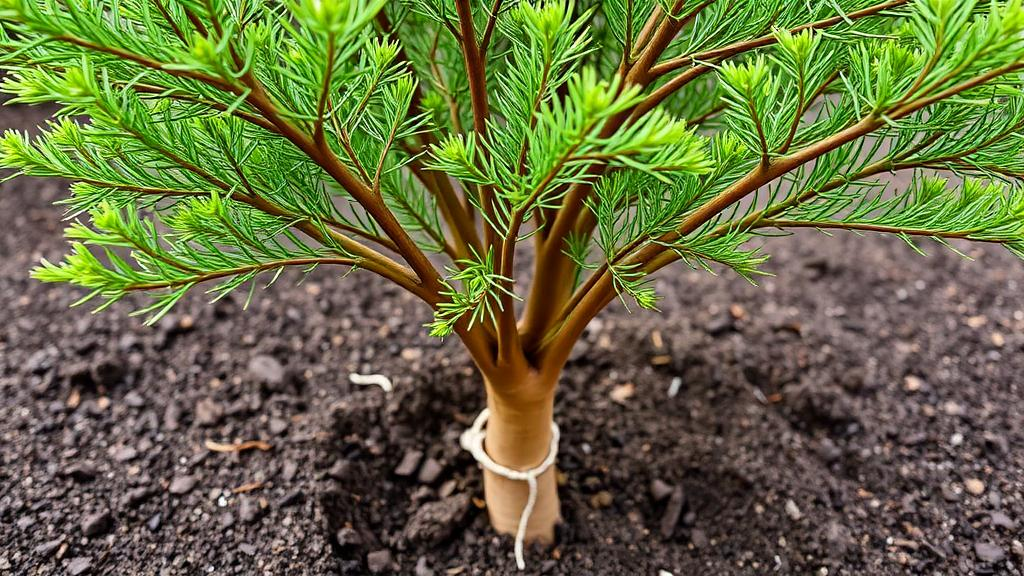
High in the Andes, a spindly tree called tara or guarango — known scientifically as Caesalpinia spinosa — has quietly become one of South America’s most valuable multipurpose species. Its pods yield polyphenolic compounds for the cosmetic and pharmaceutical industries, tannins for leather processing, and biopesticides for agriculture, while the tree itself stabilizes degraded soils and captures fog in dry mountain forests. Yet despite this versatility, C. spinosa regenerates poorly in nature, and its populations are being eroded by deforestation, desertification, invasive species and the steady expansion of agricultural and urban frontiers. A new study published in One Ecosystem offers a detailed technical roadmap for propagating the species in the laboratory, showing that the exact phenological stage of the seed and the type of mechanical scarification applied are decisive for producing healthy seedlings in vitro.
The research, carried out at the Biotechnology Laboratory of Politécnica Salesiana University in Cuenca, Ecuador, set out to answer a deceptively simple question: which seeds of C. spinosa are actually worth planting? Pods were collected between November 2022 and June 2023 from randomly selected trees in the Monay parish of Cuenca and from the only two trees in the Jima parish of Sigsig, both in Azuay Province. Based on pod colour — red with greenish-yellow tones, light red with yellow, or dark red — the seeds were sorted into three phenological categories: immature, mature and overripe. This classification matters because seed physiology changes dramatically as pods ripen, and the researchers suspected that timing the harvest could make the difference between vigorous germination and total failure.
To assess seed quality, the team turned to the tetrazolium test, a classic technique that indirectly measures the respiratory capacity of living seed tissues. Embryos and cotyledons extracted with a scalpel were immersed in a 1% aqueous tetrazolium salt solution for five hours in the dark. The salt is reduced by dehydrogenase enzymes active in living cells, staining viable tissues pink or red while leaving dead tissue unstained. The results were striking: immature seeds achieved an average viability of 97.72%, mature seeds 73.45%, and overripe seeds only 26.76%. Under the microscope of visual inspection, immature and mature seeds displayed uniform light pink embryos with firm textures — hallmarks of vigour — whereas overripe seeds showed deteriorated, deep red embryos and soft cotyledon tissues riddled with decay.
Water content emerged as the critical variable underlying these differences. Using thermogravimetric analysis in a halogen moisture analyser set at 105°C, the researchers determined that immature seeds contained 52.23% water on average, compared with just 7.60% in mature seeds. The statistical analysis confirmed a significant effect of phenological stage, with the water content of immature seeds 1.63 and 4.42 times higher than that of mature and overripe seeds, respectively. This finding aligns with a broader pattern in seed biology: seeds of the Caesalpinia genus are considered recalcitrant, meaning they lose viability and germination capacity when their moisture content falls below roughly 20%. Recalcitrant seeds detach from the tree metabolically active and must remain hydrated to sustain the enzymatic reactions that keep them alive.
The consequences of dehydration at the cellular level are severe. As recalcitrant seeds dry, respiration declines, toxins accumulate and DNA degrades. Extreme dehydration alters the water film that envelopes cellular structures, exposing membrane macromolecules such as lipids and proteins to attack by reactive oxygen species. Free radical damage breaks down genomic integrity within the nucleus, a process accelerated because antioxidant defences — including ascorbic acid and glutathione, the main redox buffer in plant cells — weaken during maturation. Researchers have even proposed that the glutathione redox state serves as a universal marker of plant cell viability: once it crosses a threshold of -160 mV, the seed is effectively doomed. In C. spinosa, the overripe seeds in this study appear to have crossed that line, with viability collapsing to barely a quarter of the population.
With seed quality established, the team moved to germination trials under sterile conditions. Seeds were disinfected with Tween 20 for ten minutes, 70% ethanol for one minute and 1.5% sodium hypochlorite for ten minutes, then subjected to one of three pre-germinative treatments: a cut in the distal region of the cotyledon, complete removal of the seed coat, or no intervention at all as a control. The seeds and cotyledons with embryos were placed in a semi-solid Murashige and Skoog basal medium supplemented with Gamborg vitamins, 30 grams per litre of sucrose, 7 grams per litre of agar and 500 milligrams per litre of polyvinylpyrrolidone, adjusted to pH 5.8 and sterilized at 121°C. Cultures were maintained in a growth chamber at 20 ± 2°C with a 12-hour light-dark photoperiod and LED irradiance of 10 micromoles per square metre per second.
Germination was evaluated daily for ten days, with the radicle required to penetrate one centimetre through the seed coat to count as germinated. The results revealed a powerful interaction between phenological stage and scarification. Immature seeds with the seed coat removed achieved a germination speed of 48.55% at just four days after sowing, and in the factorial analysis of stage and scarification, this same treatment reached the highest overall germination percentage at 93.16%. Mature seeds with testa removal followed at 84.52%, while the corresponding cotyledon-cut treatments yielded 48.84% and 44.75% for immature and mature seeds, respectively. Control seeds with intact coats germinated at 0% across all stages, confirming that physical dormancy imposed by the seed coat is the principal barrier to rapid germination in this species. Overripe seeds performed poorly regardless of treatment, with testa removal and cotyledon cut achieving only 32.40% and 27.03%.
These findings echo and extend earlier work across the Caesalpinia genus. In C. cacalaco, germination began at three days with a small cut in the testa; in C. platyloba, rubbing seeds on sandpaper produced germination starting at one day and peaking at four; and in C. ferrea, mechanical scarification on an abrasive surface delayed germination to between seven and ten days. The Ecuadorian study suggests that both the cotyledon cut and the testa removal are effective at breaking dormancy in C. spinosa, but that removing the seed coat entirely — particularly in immature seeds — delivers the fastest and most complete germination. Because germination began just two days after sowing and peaked at four days, the protocol offers a substantially compressed timeline compared with conventional nursery propagation.
Seedling growth, assessed 21 days after sowing as the combined length of epicotyl and hypocotyl, ranged from 52.26 millimetres for immature seeds with cotyledon cut to 64.79 millimetres for mature seeds with the same treatment. Interestingly, the statistical analysis detected no significant differences among the growth treatments, indicating that once germination occurs, the seedlings develop similarly regardless of how they were obtained. The growth figures are technically impressive: comparable woody species such as Anacardium othonianum and Pinus pseudostrobus achieved seedling lengths of only 20.00 and 30.26 millimetres when evaluated at 30 days, making the 21-day performance of C. spinosa notably superior.
The practical implications reach far beyond the laboratory bench. By demonstrating that immature and mature seeds — harvested at the right phenological moment and scarified by testa removal — can produce quality seedlings in vitro in a fraction of the usual time, the study lays a technical foundation for mass propagation of C. spinosa. This capability could be deployed in reforestation programmes across the Andean Basin, where the tree’s ability to grow in degraded soils unsuitable for conventional agriculture makes it an ideal candidate for ecological restoration. It could also support conservation of remaining natural populations, whose low regeneration rates currently threaten the species’ future, and underpin sustainable economic development built on the tree’s industrial biomolecules. For a species that stabilizes slopes, captures fog and feeds multiple industries, the ability to multiply it rapidly from seed may prove the single most important step toward securing its place in restored Andean landscapes.
Subject of Research: Viability, germination and in vitro growth of Caesalpinia spinosa from seeds at different phenological stages
Article Title: Viability, germination and in vitro growth of Caesalpinia spinosa from seeds at different phenological stages
Article References: Mancheno Cárdenas, M., Malo, I., León, M., Muñoz, J., Solorzano, J., & Rojas, J. (2025). Viability, germination and in vitro growth of Caesalpinia spinosa from seeds at different phenological stages. One Ecosystem, 10, Article e153308. https://doi.org/10.3897/oneeco.10.e153308
Image Credits: AI Generated
DOI: 10.3897/oneeco.10.e153308
Keywords: Viability, germination, vitro, growth, Caesalpinia, spinosa, seeds, different, phenological, stages, scientific research
Cite Scienmag News
Alan Morgan. (October 17, 2026). Seed timing and scarification unlock rapid germination of Andean tara tree. Scienmag. https://scienmag.com/seed-timing-and-scarification-unlock-rapid-germination-of-andean-tara-tree/
Alan Morgan. "Seed timing and scarification unlock rapid germination of Andean tara tree." Scienmag, 17 October 2026, https://scienmag.com/seed-timing-and-scarification-unlock-rapid-germination-of-andean-tara-tree/. Accessed 17 October 2026.
Alan Morgan. "Seed timing and scarification unlock rapid germination of Andean tara tree." Scienmag. October 17, 2026. https://scienmag.com/seed-timing-and-scarification-unlock-rapid-germination-of-andean-tara-tree/


