


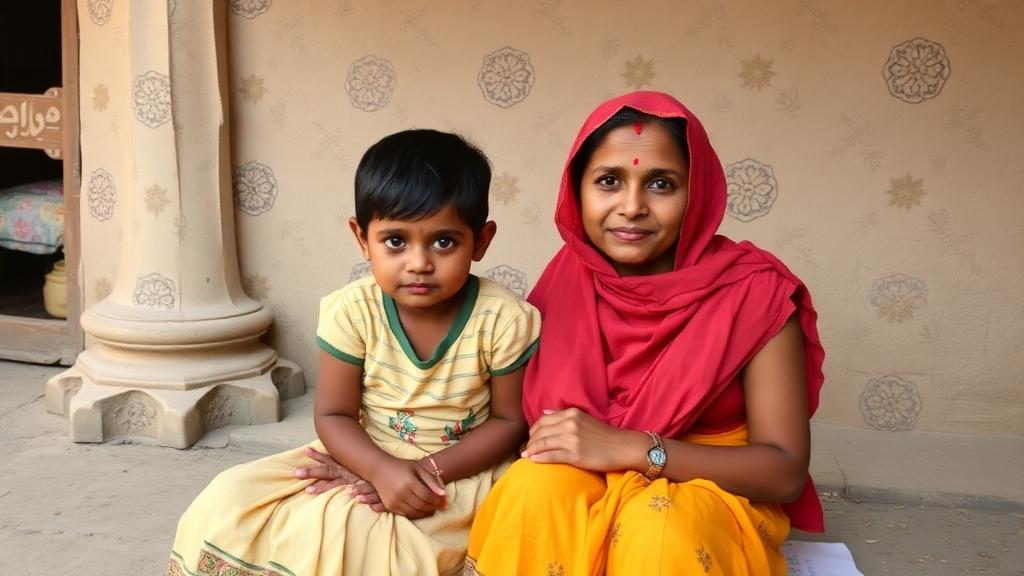
In the dusty villages surrounding Madurai in southern Tamil Nadu, a quiet revolution in early childhood education is unfolding, and it is being driven not by government mandates or NGO campaigns, but by the changing minds of mothers. A new qualitative study published in BMC Pediatrics reveals that India’s Anganwadi Centres, long viewed by educated families as welfare outposts for the poor, are experiencing an unexpected revaluation. Some of the most educated parents in rural Madurai are now deliberately choosing these public preschools over private alternatives, drawn by their child-centered, pressure-free learning environments. This counternarrative, emerging from twenty-five in-depth interviews, offers a striking technical insight into how public early childhood care and education spaces can regain social trust and reshape enrollment patterns across rural India.
The research team, led by Muthu Maheswaran and colleagues at the SRM School of Public Health, conducted their investigation through an interpretive paradigm, holding in-depth interviews with mothers of children aged two to six years. Crucially, the sample included both users and nonusers of Anganwadi services, allowing the researchers to capture the full spectrum of perceptions shaping enrollment decisions. Anganwadi workers were also interviewed, providing a dual perspective on the barriers and facilitators operating at the community level. Data were analysed thematically following Braun and Clarke’s framework, a rigorous qualitative methodology that involves systematic coding, theme generation, and iterative refinement of categories until coherent patterns emerge from the raw testimony.
What makes the study technically significant is its analytical scaffolding. The researchers guided their thematic analysis using Andersen’s behavioural model, a well-established health services framework that classifies utilization determinants into three categories: predisposing factors, enabling factors, and need-based factors. Predisposing factors include maternal education, sociocultural norms, and perceptions of class identity, all of which the study found to influence enrollment decisions in measurable ways. Enabling factors encompassed the physical proximity of Anganwadi Centres, trust in Anganwadi workers, and the play-based pedagogy that fostered children’s curiosity, socialization, and behavioural skills. Need-based factors, the third pillar of the model, reflected the developmental requirements of children that parents recognized and sought to address through preschool participation.
The Integrated Child Development Services scheme, under which these centres operate, is India’s cornerstone programme for early childhood care and education, delivered through a vast network of Anganwadi Centres across the country. Despite its extensive reach, enrollment and attendance remain stubbornly uneven, a disparity that has puzzled policymakers for decades. Understanding parental perceptions, barriers, and emerging motivations is therefore crucial to strengthening participation and advancing the National Education Policy 2020 goals, which emphasize equitable, play-based early childhood education. The Madurai study provides granular evidence on why some families embrace these services while others abstain, and why the calculus is shifting in unexpected directions.
Among the most technically interesting findings is the role of maternal education as a double-edged determinant. In conventional development narratives, higher maternal education correlates with greater utilization of formal health and education services, and this pattern held for many respondents. Yet the study uncovered a countercurrent: educated parents who might be expected to bypass Anganwadi preschools in favour of private English-medium alternatives instead preferred them for their pressure-free, child-centered environments. This deliberate preference reflects an emerging revaluation of public early childhood spaces, suggesting that as awareness of play-based pedagogy spreads, the class-based stigma attached to these centres may erode rather than deepen.
Sociocultural norms and perceptions of class identity emerged as powerful predisposing factors shaping enrollment decisions. Some mothers perceived the Anganwadi Centres as spaces associated with particular socioeconomic groups, a perception that deterred enrollment even when services were accessible and of reasonable quality. This finding underscores a technical point about service utilization that quantitative surveys often miss: the subjective meaning families attach to a service can be as decisive as its objective characteristics. Proximity, by contrast, functioned as a robust enabling factor, with families living close to centres far more likely to enroll their children, a pattern consistent with accessibility research across rural service delivery contexts.
Trust in Anganwadi workers proved to be another pivotal facilitator. Mothers described relationships with these frontline workers built over years of interaction through antenatal care visits, immunization drives, and supplementary nutrition distribution, interactions that accumulated into social capital that could be leveraged for preschool enrollment. The workers themselves, embedded in village life and accountable to Child Development Project Officers, served as trusted intermediaries who could reassure hesitant families. This trust infrastructure, the study suggests, is a form of pedagogical support that operates alongside formal curriculum and infrastructure, and strengthening it can amplify the positive shift the researchers observed.
Parents also recognized the role of Anganwadi Centres in inculcating empathy, cooperation, and discipline, underscoring their contribution to holistic child development beyond academics. This value-based framing of early learning challenges the narrow academic metrics that dominate private preschool marketing and suggests that rural families evaluate early childhood services through a multidimensional lens. The study’s authors argue that positioning Anganwadi Centres as inclusive, community-driven institutions aligns with the National Education Policy 2020’s emphasis on equitable, play-based early childhood education, and that strengthening infrastructure, pedagogical support, and social trust can consolidate this emerging consensus.
The implications ripple outward from Madurai to the national stage. As India pursues the National Education Policy 2020 goals, the study offers a technical roadmap for policymakers: the same behavioural model that explained utilization barriers can guide intervention design, targeting predisposing factors through community dialogue on class identity, enabling factors through infrastructure investment and worker training, and need-based factors through parent education on child development milestones. The evolving perspective in rural communities, where Anganwadi Centres are increasingly viewed not merely as welfare centres but as nurturing, value-based spaces for holistic early learning, represents a rare window of opportunity for public early childhood education in India.
For a scheme that reaches millions of children through a sprawling network of village-level centres, the Madurai findings suggest that the future of public preschool in India may depend less on expanding coverage and more on transforming perception. The counternarrative of educated parents choosing Anganwadi preschools for their child-centered pedagogy offers proof that these spaces can compete on quality rather than merely on accessibility. If this revaluation spreads, India’s cornerstone early childhood programme could achieve the equitable, play-based learning environment that the National Education Policy 2020 envisions, one village and one trusting relationship at a time.
Subject of Research: Perceptions, barriers and facilitators of ICDS preschool enrollment among mothers in rural Madurai, Tamil Nadu, India
Article Title: Perceptions, barriers and facilitators of ICDS preschool enrollment among mothers in rural Madurai, Tamil Nadu, India
Article References: Maheswaran, M., Sree, S., Palanisamy, B., & Sivakumar, S. P. (2026). Perceptions, barriers and facilitators of ICDS preschool enrollment among mothers in rural Madurai, Tamil Nadu, India. BMC Pediatrics. https://doi.org/10.1186/s12887-026-07554-3
Image Credits: AI Generated
DOI: 10.1186/s12887-026-07554-3
Keywords: Perceptions, barriers, facilitators, ICDS, preschool, enrollment, mothers, rural, Madurai, Tamil, Nadu, India
Cite Scienmag News
Ophelia Keating. (October 17, 2026). Perceptions, barriers and facilitators of ICDS preschool enrollment among mothers in rural Madurai, Tamil Nadu, India. Scienmag. https://scienmag.com/perceptions-barriers-and-facilitators-of-icds-preschool-enrollment-among-mothers-in-rural-madurai-tamil-nadu-india/
Ophelia Keating. "Perceptions, barriers and facilitators of ICDS preschool enrollment among mothers in rural Madurai, Tamil Nadu, India." Scienmag, 17 October 2026, https://scienmag.com/perceptions-barriers-and-facilitators-of-icds-preschool-enrollment-among-mothers-in-rural-madurai-tamil-nadu-india/. Accessed 17 October 2026.
Ophelia Keating. "Perceptions, barriers and facilitators of ICDS preschool enrollment among mothers in rural Madurai, Tamil Nadu, India." Scienmag. October 17, 2026. https://scienmag.com/perceptions-barriers-and-facilitators-of-icds-preschool-enrollment-among-mothers-in-rural-madurai-tamil-nadu-india/


